"Finding the Movement: Queer Space, Dance, and Survival, 1970s"
More transcript goss on the 1970s dykes of the Upper Midwest with Finn Enke.

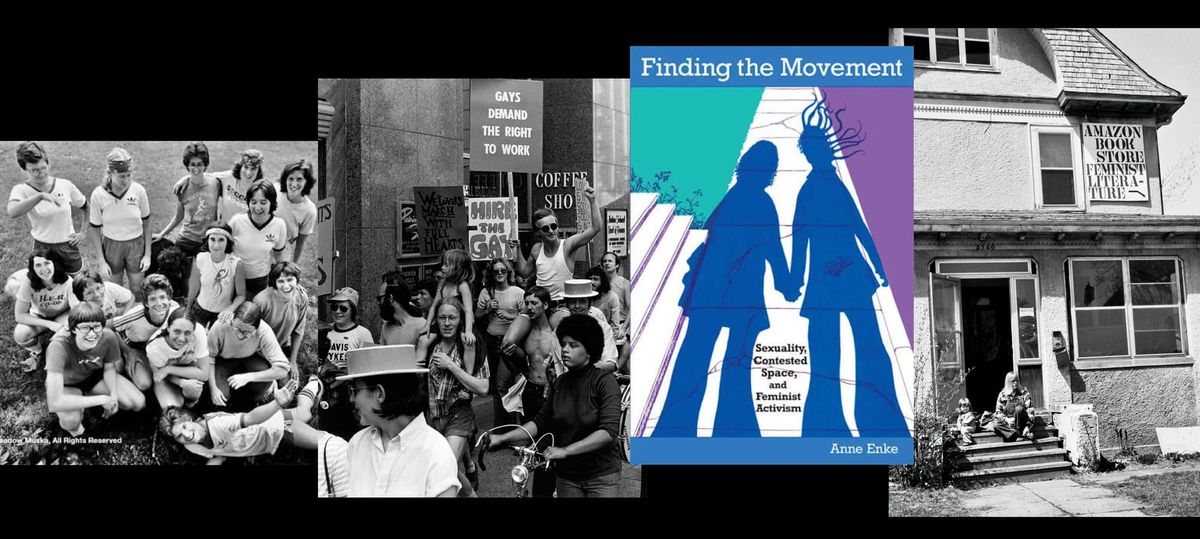
More transcript pleasures from the 1970s, woohoo.
In part two of their conversation about the 1970s (first part here!), Jack Gieseking and Finn Enke travel through Chicago, Detroit, and Minneapolis to ask what it meant to find—and build—lesbian, queer, trans, feminist, and dyke worlds. Public space was never simply public, especially for lezbiqueertrans people: it was a maze of bars, parties, lesbian lines, softball fields, coffee houses, feminist presses, bookstores, shelters, and the pathways between them. Together, Jack and Finn talk about the racial segregation and exclusion built into bars, the violence of ID checking and “looks,” and the ways white feminist spaces often failed to recognize Black, brown, working-class, and trans gender expression. From the Wilder Ones softball team to the protests over the Town House bar, these spaces could last only a few years and still change lives. Finally, Jack and Finn turn toward disability, access, trans presence, aging, and the question of what it means to build spaces where more of us can actually be.
Jack Gieseking - Narrator: [00:00:00] Welcome to Our Dyke Histories. I'm your host, Jack Gieseking, historian, geographer, and environmental psychologist. We dive into the past and present of lez, queer, trans, sapphic, enby communities decade by decade in collaboration with multicultural lesbian literary and art journal Sinister Wisdom. This season, we're all about dyke bars, with an asterisk, lesbian bars, queer parties, and trans hangouts, the structures that made them necessary, the lives they made possible, and the worlds we made from them. Our Dyke Histories: come for the history, stay for the revolution, gossip, and desire that built us
We are back again today talking about the 1970s in Chicago, Detroit, and Minneapolis. We continue to hold all of the upper Midwest in our hearts of hearts. We support you in protests all over the country, and we mourn the loss of Rene Good, a fellow lezbi queer trans person murdered by ICE. As we think about these protests and actions, Rene was white, and the last time queers and trans protested something this big across the country, it was the death of another white queer, Matt Shepard And I wonder a lot about who might be lezbiqueertransgay, intersex, asexual, and so on already locked up by ICE, murdered by ICE.
When people are described as people of color, Blackness and brownness often erase gender and sexuality, and that is in fact what I talked to Finn Enke about going back to the 1970s. We will dig into the race and racism of carding and the segregation of lezbiqueertrans bars, parties, and other spaces, as well as the ways that transness and disability could or couldn't show up in these spaces.
We'll find out that these spaces absolutely had trans people in them. We'll talk a [00:02:00] lot about the financing of these spaces, what we could or couldn't afford, about a time when women couldn't even get credit cards. What? And we'll dig into talking about disability in lezbiqueertrans bars and parties, how much more we need to still recognize and act on disability in a much wider critical framework to actually make accessible spaces.
As a reminder, this is part two of two. Lez dive in.
Finn Enke: We call this public space, but it's actually this incredibly fractured... It's m- maybe for many people acts more like a maze. There's walls around where you go and where you don't go, and how you do the going, right? One of the most powerful stories for me that really brought that up was the story that I start my book with, this American Indian woman, Eileen Hu- Hudon, who was in an abusive marriage and knew that there was this thing called The Women, and knew that The Women would help her, but she didn't know how to find The Women.
And the only resource she had at hand was a phone book. Ugh. And she'd go looking through the phone book and say, "How do I look for The Women? How do I find the women who can help?" Um, and she didn't access that until a chaplain or minister took her and her children to a women's shelter at one point. And she's mopping the floors the next morning, 'cause that's the job that she has for being in the shelter, and she's overhearing all of these conversations that are clearly- Ugh
The Women having the conversations. She's like, "How can I possibly have access to these conversations?" She's in the women's shelter. She's hearing these conversations, and on the one hand, she's right there, but there's something in the conversations that Suggests a certain amount of mobility that isn't available to her.
That even just to be having those conversations about how you build this resource, that resource, [00:04:00] the other resource Like
Jack Gieseking: the privilege and the entitlement of what you can or get.
Finn Enke: Yeah, yeah, yeah. That there was something, something that really implied a great deal of mobility that, that at the time was unimaginable to her.
But while she was there, she did get hooked in.
Jack Gieseking: Yay.
Finn Enke: And she got connected, and then she went on to start creating these resource-
Jack Gieseking - Narrator: Hudon also said when she was staying at Women's Advocates, a newly opened shelter for battered women, "The next morning," she recalled, "I overheard all these different conversations going on between the shelter staff.
I remember thinking, 'Why can't I be in those conversations? I finally found the women's movement, and here I am mopping the bathroom.'" To her it, quote, "Seemed unattainable." And yet listen to what happens to Aileen. Y'all, it's incredibly moving what she accomplished. She's currently the co-founder and organizer for the Elders Lodge Sexual Assault Council, but she also founded several vital important organizations that continue to thrive, including Mending the Women of Nations, Minnesota Indian Women's Sexual Assault Coalition, and Mending the Sacred Hoop.
What an extraordinary, wonderful person
Finn Enke: She got connected, and then she went on creating these things that were very much inspired by her own experience of not having access to this thing that she sort of knew vaguely was, was out there and was gonna be helpful. Oh, this is cool. She got together with some other women and were like, "We need to be creating Battered Women's Shelter Resource Center for Indigenous Women.
There's such a great need for this." She's connected with the American Indian Movement, but they're at that time not really addressing some of these gender issues. So she's like, "We really need to create these resources for indigenous women." They printed matchbooks. Ah. They made hundreds and hundreds of matchbooks that had a [00:06:00] definition of abuse written on the inside and a hotline phone number.
They rented the hotline from a church, right? This was a phone. This is a different era, but they got access to a phone line that they could use for free or for almost no cost. They printed hundreds or thousands of these matchbooks, and they distributed them everywhere they knew indigenous women went. So they, they left them in laundromats.
They left them in grocery stores. They left them in bars. They left them kinda wherever they knew indigenous women would be going. Whatever the local grocery store was in the neighborhood that had a high concentration of indigenous people. I mean, they got into people's hands, and all it had in it was a phone number and a definition of abuse.
Jack Gieseking: That's so beautiful.
Finn Enke: Right? And they ended up building and building and building. It became a statewide resource center that they ended up creating, but that's how it started. They just thought- How-
Jack Gieseking: Mm-hmm ...
Finn Enke: do we plant a seed? How do we get a phone number to people who might need it?
Jack Gieseking: It's so powerful. And also at this time, something that is spreading and you would've totally seen word of in a bar, anywhere else you would've gone, was lesbian lines.
Like, there's like the, the, the various different- There's like The gay switchboard becomes the gay and lesbian switchboard at some point. There's a lesbian switchboard. There's national numbers. There's local numbers. Yep. People are just, um- There's a new book called Calling the Lesbian Line where you can, you can read some of the stories of what people called about.
People would just call to be like, "Are you gay? I've never met a gay person," just to be on the line, and just what that meant.
Finn Enke: Yes. '
Jack Gieseking: Cause just as this world building has happened, if you don't go to those spaces, if you don't go in there or can't go in there and look around or know where they are or what's happening, if you don't know where the women are, you can't even imagine it.
Yeah. They're [00:08:00] beautiful stories.
Finn Enke: Right. Right. Yeah, I think that world building, right, that that is in a sense a travel story.
Jack Gieseking: Amen.
Finn Enke: Even if all you're doing is picking up a phone, but somewhere you got that number, right? There's such a physical geographical aspect to all of these experiences. Even when people might not actually be physically moving around that much, they're also moving around 'cause they're figuring out where to go or they're figuring out where to not go.
Like you said, you wanna get from this resource to center to this bar, but- You know what side of the street you need to walk down, and that's a physical geographical knowledge, right? That's a community-based knowledge
Jack Gieseking: Generations of, of, of Brooklyn lesbians just live on the F train. Well, you'll find... Right?
Or which bus line to live on or which stop- Right ... to live on or, you know, just go find the mission, right? You know, people moving there, like word of mouth, like what neighborhood to land in and what places to go.
Finn Enke: Yes!
Jack Gieseking: Right. And then getting there and wandering around and then seeing each other. Somebody once online called it- Right
the dyke nod, and I've loved that. When you see another homo transsexual on the street and you nod at each other like, "I see you." Yeah. Or there's the flirtation- Mm ... like, "Hey, what's up?" Yeah. But the- Yeah ... those are happening, too, outside these spaces. Right. So the public space is changing, that there can be recognition and flirtation.
Finn Enke: Right. Right. That, right, and that was something also that was very exciting for me in thinking about this as travel stories that are experiencing these social geographical environments that are sometimes incredibly nuanced, too.
Jack Gieseking: Yeah.
Finn Enke: Like, I don't feel at home here, but there's another one. I mean, it, it happens- Yeah
kind of wherever you go, is people sussing out what is the nature of this, of this space and how that feels. Is this environment built in a way that can accommodate me, or [00:10:00] is it built in a way that explicitly attempts to exclude me, or something in between?
Jack Gieseking: Yeah. And I, I wonder, too, what were the other kind of like racial class dynamics in party spaces or bars?
Jack Gieseking - Narrator: As we talked about in the other '70s episode, people were not only getting carded, were not only getting kicked out of bars because of their race and the racism, particularly Black and brown women, but they were also not even let into bars, people asking for multiple forms of ID. I've heard in different cities sometimes up to five forms of ID.
Who the heck carries five forms of ID, especially in the 1970s? I don't even think they have pictures on their driver's license. And by the way, you should know that's when some inane person decided to put a gender marker on a driver's license. They made it up. It wasn't even there to begin with because gender wasn't there to begin with.
And it wasn't just about the gendered look of what someone was wearing. As Finn notes, public geographies were organized a great deal around, quote, "looks," end quote. People's mobility in the marketplace had much to do with gender expression and racial appearance. White feminists sought to increase their mobility in the public world.
They did so in part by politicizing gender expression in ways that made it difficult for them to recognize studs and ladies in Black bars or butches and femmes in dyke bars as feminists. They thus stood on whiteness as a privileged vantage point from which to evaluate the politics of gender expression in place while defining feminist sensibility.
In other words, white androgyny came to rule the lesbian feminist movement, but it belittled white working class sensibilities around butch femme, and it also ridiculed Black working class sensibilities around studs and femmes. It even became hostile. Before Finn and I talk about how bad carding was, I do want to get in this quote from Finding the Movement.
In an all-white neighborhood on the very far North Side of Chicago, the Up North, a bar, wasn't a pick for all. North Side bars notoriously required women of color to show, quote, "50 IDs," end quote, at the door. According to Gray, "If I [00:12:00] went to a North Side bar, I had this, my driver's license, but that's not enough.
They'd say, 'You need your Social Security card. You need your communion card. Ha ha ha. You have a passport?'" But despite the concerns of women of color, the local white feminist lesbian newspaper, CLL News, promoted the Up North as the most hospitable bar in town and the place for Monday night socializing.
Between '69 and '72, Monday night meetings had helped make bars a particular cultural home for emerging feminist lesbians, encouraging diverse women to stake a claim in the nighttime marketplace and extend it to all nights of the week. At the same time, they contributed to the development of a new lesbian bar culture shaped around racial segregation and gender hierarchy.
Ugh, gross. I
Finn Enke: mean, one thing that comes up really a lot with bars is, um, ID checking
Jack Gieseking: Oh God, yeah. Even then.
Finn Enke: Yeah, not only even then, but it's like, "Oh, let's just make our own little mini police state here," right? Who needs a police state? We can do this to ourselves, right?
Jack Gieseking: Finn sought that their focus on bars did not romanticize historical queer bars as spaces apart or describe a now lost moment of utopian possibility.
What a shout-out to Joan Nestle, who told us not to romanticize the violence of the past in our desperation to find IRL community today.
Finn Enke: So that was a commonly utilized practice of racial exclusion, um-
Jack Gieseking: Of keeping people out.
Finn Enke: Or- Of keeping people out.
Jack Gieseking: And then kicking them out And kicking them out. Yeah.
Yeah. People, people of color. Yeah.
Finn Enke: Yeah.
Jack Gieseking: And, and indigenous people too. Right And, and Black and brown people. We talk about that also- Right ... in the '70s episode, but that's really where the protests kick off. The only time that dykes protest anything- Mm ... in New York City that's not about something horribly homophobic, racist in the heteronormative world, is they're protesting their own bars for being racist over the years.
That was happening- Yeah ... everywhere. Mar- the brilliant gay Black artist Marion Riggs, who died way too young, in his- Yeah ... short film Tongues Untied, which is so [00:14:00] beautiful, um, talks about, he has, he's interviewing someone, they talk about- Yeah ... flipping the bar. Yeah. "That they won't let too many of us in," says this, this Black gay man, because then we'll be, quote- Mm
"flipping the bar", and they wanted it to- Yeah ... to seem white. Bar owners were saying, "Well, we, uh, we're sorry, we can't 'cause then the police will come in here and they'll target us." But there's no solidarity. There's no anti-racism. There's hiding in whiteness.
Finn Enke: Right.
Jack Gieseking - Narrator: Um, just plain old white supremacy.
Finn Enke: Right.
There are anti-racist conversations happening among white people, um, and, you know, a lot of conversations. Well, I mean, this was one of the really exciting things for me about doing those softball chapters, which I wasn't gonna do when I started my book 'cause- Oh,
Jack Gieseking: please go on about your softball chapters.
I love that.
Finn Enke: Yeah, I wasn't gonna do softball when I started the book. There were a number of different- Ooh ... kinds of things that were in the running. Theater was a hard one to give up- ... 'cause I talked with a lot of very charismatic theater people, and I got really hooked on the significance of feminist and queer theater.
But, uh, but I wasn't gonna do softball because softball felt like such a lesbian cliche. You know? Yes, and now there's, like- Really phenomenal, phenomenal reasons for that, and it's an incredibly exciting cultural location. Especially in the '70s, it became so diverse. Especially the Twin Cities was a real leader in encouraging women's athletics and girls' athletics to an extent that was not the case in many other places.
But most other places, there was a long history of fast-pitch softball throughout the Midwest, going way back. You had women's teams, and some of the teams were predominantly African American, some of the teams were predominantly white. And the experience of playing in spaces where that might be segregated most of the time, but softball provided an opportunity actually for a moment be in a less [00:16:00] segregated- Wow
space. So people were learning things about a life that they otherwise didn't have any access to. Because, because- Yeah ... segregation was so profoundly powerful, right? A lot of women were saying, "Wow, I didn't realize that if we went- Yeah ... to this bar after our game, you wouldn't be able to get in."
Jack Gieseking: Like, the white players are not realizing their Black player friends are not gonna get in.
Finn Enke: Yeah, yeah, and that there's a variety of different kinds of lines of segregation like that as well. Class distinctions are also very much at play. So softball ended up being very, very fascinating, and then when people started creating named, sort of, or distinctly feminist, distinctly dyke teams in the '70s.
There's The Wilder Ones in Minneapolis, was a specifically-
Jack Gieseking: Yeah.
Finn Enke: Lesbian dyke feminist team. Yeah, uh, I think that makes it into, um, dykes to watch out for as well. Not by name.
Jack Gieseking: Oh, that's so cool.
Jack Gieseking - Narrator: What's fantastic is Finn starts their chapters with being in situ and go back to the moment. So let's go back to Parade Stadium, Downtown Minneapolis, 1971.
Softball players on two of the most distinctive Class AA teams in the nation shake hands, laughing, at the end of a well-played game. The Avantas of Minneapolis are a nationally ranked team of predominantly working class white women who bear the reputation of being one of the dykiest looking teams in the Midwest.
They thrill to host the Motown Soul Sisters of Detroit, an African American team also nationally ranked and, the Avantas know from experience, source of fun times both on and off the field. In the stands, a small group of white emerging feminists swoon over star athletes, turning them into icons of sexual self-determination.
As the feminists leave the stadium, they practice the athletes' gaits and mannerisms and discuss the visible intimacy among team members. They decide to create Minnesota's first, quote, "out lesbian recreational league softball team," and they name it The Wilder Ones. I didn't realize how much [00:18:00] softball, too, was an effort to get us to have physical movement in the world when women's bodies had been so restricted and so limited for so long.
I was shocked to read in my translation of the 1928 Lesbian Guide to Berlin that, that Damenklub Violetta actually also had the same. They had not softball. I, what would, I don't know what they would've played. Maybe like a, like a footy? I don't know. Like a little soccer? Gosh, I have to ask my German friends.
But that they're also thinking how actually we have to get women to move around. Yeah. We have to get trans people to move around. No idea. There's also trans masc tug of war, which was very hot to hear about in the 1920s, which we should have brought back in the '70s and every time. Yeah.
Finn Enke: Uh-huh.
Jack Gieseking: I was like, "This is hot. This is great."
Finn Enke: Wow. I had no idea. Um- Amazing. One of the most significant things actually from a contemporary point of view about all of these spaces, that first people were creating coffee houses, which sometimes were about events and dancing, programming. That's what they meant by coffee houses. But sometimes were also restaurants, little restaurants and, like, cafes that serve a lot of food and that sort of thing, too, in all of these cities.
And they're creating bookstores, and they're creating different kinds of resource centers and bars.
Jack Gieseking - Narrator: While we also talked about this in the previous 1970s episodes, it's really mind-blowing when you take in how many spaces and places that lezbiqueer trans people were creating in the 1970s. This kind of wild expansionism, such a growth model.
I don't even know if we could imagine right now, even as we're in a moment of a renaissance or revitalization of bar spaces and other types of spaces that are growing cost of food, services, labor, property to be able to do what they did then. Now, there's just not the political economy. But living in a moment of both a sense of it's closed now and we're sort of having a renaissance definitely requires a new geographical [00:20:00] imagination.
For me, the '70s inspire so much of that. As Finn writes, "Equally important were the pathways between these kinds of institutions and other less distinctly feminist spaces." In terms of the kind of lines Finke finds in their work, they wrote, "More than I could have anticipated, the chem-free coffee house began in part as an alternative to bars, and yet many coffee house participants helped create and defend bars for women.
Few women sheltered at Women's Advocates cared foremost about lesbian activism at bars, but many did frequent a gay bar within walking distance of the shelter 'cause they figured that there they would not be hit on." People did not stay in place, and neither were spaces unrelated. Feminism found itself in part in bars and along pathways to them, and those processes directly shaped the movement.
What a constellation.
Finn Enke: That is really significant that I feel like has shifted so, so dramatically, um, is that it was actually possible to do it then. It was possible to live on very little money in the '70s, and when I say that, I'm talking about, okay, people are paying very little rent for their apartments.
They might also be living, you know, five, six people to a two-bedroom apartment, too, and that might be a crash pad and whatever, but people were living on very little money.
Jack Gieseking: Rent was, like, 10% of your income maybe then, I think is the number, and now it heading towards half of what we pay for having housing.
Finn Enke: Right. So that was a dramatic difference in that you could rent a, an inexpensive place to start a little business, or you could start a business out of a back porch. That's how Amazon Books got started. Initially, it was just boxes of books on somebody's back porch, and from that proliferates, uh, you know, a whole world of print media and presses, right?
So you get feminist presses, and you get dyke presses. All of these things are really starting- Yeah ... to proliferate in ways that are very, very difficult now.
Jack Gieseking: Yeah, and keeping it open, the queer feels about someone didn't keep their space [00:22:00] open. Ruby Fruit Wine Bar, you know, has to issue an apology when they close, and even, even when The Lexington Club closed in 2016, you can still see the Facebook post.
There's an apology coming from the owner saying, "I'm sorry," because people are very hurt and upset, but financially- Yeah ... there's a queergeographies.com post called It's Closed Now about things just like this, but the cost of rent and now the cost of food and alcohol, keeping anything open, and what kind of queerness does that create?
It's also creating, like, a permanent queer underclass in that way, too, when we don't have the ability to connect to one another. Mm-hmm. And social media is so-
Finn Enke: Mm-hmm.
Jack Gieseking: ... Surveilled and regulated. I think about it every day. Yeah.
Finn Enke: And so I think in that way we're back to the brilliance of pop-ups
Jack Gieseking: And this is it, one, one of the reasons that we heroize lesbian bars and parties too, because this idea of their fixity- Mm-hmm
and that supposedly all are welcome there. Although we just talked about how much that was not the case.
Finn Enke: It was not the case. Yeah, and it wasn't the case in any of these sorts of spaces, transphobia and racism and ableism and- Yeah ... all of these things that are also structuring these spaces at the same time.
But specifically with this longevity question, there's this notion that there's a fixity- Mm ... to a lesbian space, like a lesbian bar or something like that. Most of them didn't have very much longevity.
Jack Gieseking: No.
Finn Enke: Right? Most of them didn't last that long, but they still became these iconic institutions. You might have something that lasts a little bit longer, like 12 years.
When I first started doing this project, there were some older feminists who said things like, "Well, it didn't last very long, and I measure significance by how long something lasted, and it only lasted until 1987- Wow ... and then it closed." You can look at it that way, but you can also say, "This thing lasted for 14 years.
That is incredible."
Jack Gieseking: Yeah. To us especially, yeah.
Finn Enke: Yeah, yeah, and when you think about the significance [00:24:00] of something lasting maybe even only three years, for somebody who's in their early 20s, that's a significant chunk of time. So on one hand, I think- We're looking at a lot of these things in the 70s, 80s that, that might have only lasted for a few years, but became very iconic.
But also that there were many and they were sort of coming and going. And that part of what's a little bit difficult now when the last lesbian bar closes, it is that. It's that there aren't- Right ... 15 more waiting to sort of come fill that gap. I think people overall are feeling that there used to be something, and now whatever it is is very different.
I-
Jack Gieseking - Narrator: in the early 80s, Gregor Mattson says there were over 200, and the lowest we ever got was 16 lesbian bars. But we actually started with five in 1939. Mm-hmm. So, you know, we could go back to 1935 with the two- I shouldn't go ... and be like, "Well, that was fancy," you know? Actually, I know of more 1930s dyke bars than that, but that is for the book.
I'm working on it, y'all. Finn actually was inspired to understand the widespread and popular nature of the women's movement. When it came to feminism, Finn writes, "Feminism found itself in part through struggles. Bars acted as a mainstay of public space, organized sociality, social status, and social norms.
Thus, they became key sites of women's activism around public space itself." Finn wrote a lot about the Town House. From 1970 to '78, while Minneapolis ordinances strictly limited the number of bars in the city, a number of new bars in St. Paul came to figure prominently. Most women, however, proclaim the Town House Bar on University Ave as the women's bar of the 70s.
Oh, I just have to read this, like, hot goss about The gay bar Town House As diverse women steadily built their presence at the Town House, they also noted they were not entirely welcome. By early '74, the hints culminated in a physical turf war. Tables on the women's side had dwindled until one night women arrived [00:26:00] to find that their furniture was missing altogether, replaced by a cigarette machine and an expanded dance area.
In protest, they sat on the floor. Within an hour, 51 women and 12 men, well done, were sitting on the floor around the cigarette machine, and they agreed that the manager had systematically diminished the women's side of the bar and had generally made women feel unwelcome. I bet they did. When they demanded the furniture be returned, the bar manager ordered the police to bodily remove every woman, but none of the men from the bar, with the charge that they were being highly disruptive.
Following the melee, Shirley Higher led women of the Town House on a weekly picket on the busy strip outside the bar. They also filed and won a human rights suit against the bar, taking advantage of St. Paul's newly passed gay rights ordinance. If the city had outlawed discrimination against gays, they reasoned, how could a gay bar discriminate against lesbians?
Anyway, in the end, by 1976, the number of women patronizing the Town House far exceeded the number of women going to gay bars during the entire 1960s. How extraordinary. Now back to feminist spaces.
Finn Enke: Well, the historian in me, and, and this is partly because of doing this project, um, and, and focusing on things that weren't necessarily named feminist or named lesbian, but looking at these other sorts of spaces, I'm thinking that in the '30s they were also all over the place, but they-
Jack Gieseking: Oh, yes.
Finn Enke: They were coded in a way that wasn't gonna get pegged that way by a historian. How do we as historians find these places that were, that were so coded and that maybe only lasted six months, but they changed somebody's life?
Jack Gieseking: Usually people are depending on arrest records- Oh ... and using what's in the newspaper for police targeting certain places- Right, right
in our history to keep focusing on, but it's also d- n- amazing to know that these places existed. The first Black lesbian bar Roie Thorpe talks about-
Finn Enke: Right--
Jack Gieseking: ... when I got to talk to her, was in Detroit in 1939. Mm-hmm. The Sweetheart Bar. That-
Finn Enke: Yeah ...
Jack Gieseking: fills my heart with joy. And they thought [00:28:00] they were behind the times.
Yeah. They were like, "Oh my God, everybody had all these amazing bars and parties in Harlem. We need to catch up." And actually they're opening the first Black lesbian bar, Black queer women's bar, which is extraordinary.
Finn Enke: Yeah.
Jack Gieseking: Is there anything you wanted to say about, like, Minneapolis and Detroit are, like, different than other places that are happening, like, in the world?
Like, of, like, why they're different than New York or, or Chicago? Oof da.
Finn Enke: I mean, there are cultural differences definitely. There's some economic differences, too. The Rust Belt in Michigan That just was quite dramatic. It's hard to even describe the extent to which the auto industry and the move of m- many of that industrial labor affected Chicago and Detroit-
Jack Gieseking: And the '70s
Finn Enke: financial crisis- and
Jack Gieseking: the Twin Cities as
Finn Enke: well, Um, yeah.,
Jack Gieseking: Yeah ... it was just so devastating to so many people. Which is also why they can afford property. They can, like, afford to make stuff.
Finn Enke: Yeah, yeah.
Jack Gieseking: Cause we're all in a financial crisis.
Finn Enke: That's right.
Jack Gieseking - Narrator: We're almost to the end of our podcast, and Finn and I closed out by talking about access.
Access is a really powerful concept. My friend, colleague Amy Hameruis writes really brilliantly about this as of yet unrealized notion of universal access, when most of the ways we design spaces are never thinking about disability in the myriad of ways disability works for us, and in an ableist world, too often against us.
But access is a core concept when it comes to disability, and also transness.
Finn Enke: But I'll, I'll tell you the thing that I've been just very eager to at least put into this interview that hasn't exactly directly come up yet, is had I started this book at the moment I ended the book, what would've been there that wasn't there?
Jack Gieseking: Oh my gosh, please, yes. I have one of those too. What is yours?
Finn Enke: I was just itching so, so very badly about the lack of disability analysis that was in it, 'cause here's a whole book that's really [00:30:00] about different kinds of mobilities, right? And I felt it all the way through, but I didn't really have the, the kind of framework.
Even though it came up in interviews, people would talk about accessibility in every kind of way, all the different types of barriers that are in the built environment, and the ways that people were creatively navigating those inclusions and exclusions. And the other thing, of course, that came very much to the fore was the trans lens.
Um, there's a lot in the book about gender expression and how much difference that made in exclusions and inclusions in different kinds of spaces. But there was much more trans presence in all of these locations than I really named.
Jack Gieseking: When you say there were trans people in the bars, were, were there trans people in all of the bars?
Were, were, were trans people kept out? How did that work then in the '
Finn Enke: 70s? There was an idea, and it was contested in many spaces, but there were trans women in many feminist spaces, and there were trans men in many feminist spaces, and-
Jack Gieseking: Hot dog.
Finn Enke: Um, and dyke spaces, and kinda how that laid out was very... Um, I mean, I wanna say they're everywhere, right?
And some of what has shifted is the language that people use, right? 'Cause I looked at my book a little bit recently, and I was very surprised to see that I used the term passing woman- I hadn't, I, like, I didn't know I used that word It's very 2007 It feels like an incredibly Yeah ... old-fashioned word. I think it's actually very 1990s even like Or your interviewees using passing woman as a language I mean, yes, okay, 2007, but they often did, yes.
Yes, they often did use that language. But it wasn't that the language of trans was lacking, it just wasn't as elaborated and developed- Yeah ... and embraced. Um, something that to me was very interesting about looking at feminist activism [00:32:00] and queer activism at the time was just how diversely feminine is present in the book.
Jack Gieseking: Me coming into my transness, you know, writing my book, I, oh, it was so easy to talk about femmes, and I am a trans masc, and it was much easier to talk about the identities I didn't have. Now it's much easier the more I come into myself, but, like, we're also dependent on author and the historian and the writer and the researcher and the activist- Yeah, yeah
like being self-aware, which, you know, that's a lot of therapy. We're doing our best. All the EMDR in the world. Um, yeah, amen. And with disability too, things like asthma, the fixation on going to the bar, but at this time everyone still smoked till the early aughts in, in spaces like that. People who were kept out, um, being deaf.
People immediately think of wheelchair users, you know, 'cause the idea of a bar is something you stand and lean against, or these really high stools. As someone who was in chronic pain for eight years, sitting on a stool was devastating. It was agonizing. I couldn't go to those spaces. Where can you be?
Where can you make a space? And bars today, most people will say that lesbian bars you age out when you're 35, but they're really targeting younger people who drink more, who go out more, who have less elder c- childcare volunteer responsibilities, and who might be up for disposing their income in, in alcoholic ways or mocktails and enjoying themselves like that and-
Finn Enke: Mm-hmm
Jack Gieseking: --and buying food there. But that also, the ageism of the space is, is profound too.
Finn Enke: Yeah. I remember my, my, uh, narrators- right ... would often talk about the noise. Like, "Oh, I used to go to the bars, but they're so loud I can't go anymore." And I thought, well, you know, yeah, our bodies change, and our capacities change-
Jack Gieseking: Mm-hmm.
Finn Enke: --And our economic situations change, and our lives change, and, you know, that's not s- it's not a sad thing. It's just a fact.
Jack Gieseking: You know, my girlfriend's always like, "Where's that 2:00 PM bar? [00:34:00] I'll be there. I gotta get home by 4:00 PM for the kids."
Finn Enke: Right. Yeah. Yeah, no, I'm feeling that all the time. Oh, gosh, totally.
All the good music is way past my bedtime. Yeah, absolutely!
Jack Gieseking: Yeah. Um, Or I can't hear anything when the good music is playing. Like, "What'd you say?" Thinking about this fixation on bars, Finn writes, "The 1950s represents an era of accessible bars, visible lesbian erotics, and expansive gender transgression, whereas lesbian life in the '70s seems conditioned by interiority, invisibility, and sex/gender repression.
A focus on the nighttime marketplace during the '70s, however, shows that bars proliferated rather than shrank in number. They were an ongoing site of struggle, and lesbian life still took place in bars and house parties. New lesbian bars simultaneously expanded and decentralized bar life as, I would say, the primary site of visible lesbian sexuality."
Finn Enke: Yeah. Yeah. But I think there is, there is a real longing still for, like, dance spaces, like sober dance spaces too.
Jack Gieseking: Um- Oh, god, yeah.
Finn Enke: You know, and what you say about, wow, what happened to dancing? Everybody used to dance. Why aren't we dancing anymore, and-
Jack Gieseking: Yeah ... um- Well, so we're, we're gonna end with bringing back dancing then.
Yeah. Yeah. Yeah. We should. Hot damn. Far out, yes.
Finn Enke: Far out.
Jack Gieseking: Thank you so much, Finn Enke. What a gift to finally hang out with you and chat about your dope work.
Finn Enke: Likewise. Likewise, Jack. It's just a real pleasure to actually meet you and see your face after I don't know how many decades we've been corresponding.
Yeah.
Jack Gieseking: Two. I think I wrote you a fan note in grad school. I was like, "Oh, I'm not alone."
Finn Enke: Thank you. I think you're right. Yeah. Anyway, thank you so much. This is just really, really a pleasure. Yay. Finding the movement is awesome. Far out.
Jack Gieseking: Thank you so much, Finn Enke. And thank you, listeners, for surfing through the 1970s past of the upper Midwest with me.
You betcha, don't ya know, and oof da to the state of the world right now. I hope you're keeping warm in the Northern Hemisphere and cool in the Southern. I look forward to seeing you next week [00:36:00] when, wait for it, we explore so much more about 70s spaces and even beyond. We're gonna keep having a blast because we can't get all the energy we need for resistance from the present.
We have to draw on our ancestors and trancestors to keep on swimming. Have a great day, y'all.
**
Thanks for tuning in to Our Dyke Histories in collaboration with Sinister Wisdom.
Connect with us on Instagram and Facebook at @ourdykehistories. Follow and support me, Jack Gieseking, via my newsletter, Queer Geographies, at queergeographies.com. It's packed with everything we couldn't fit into this podcast. Our Dyke Histories is run by a queer, dykey, and mighty team. ODH is hosted, edited, and produced by Jack Gieseking, co-produced and co-edited by Cade Waldo, and co-edited by Mel Whitesell.
Our social media manager is Audrey Wilkinson, and our fabulous interns include Michaela Hayes, Syd Guntharp, Paige LeMay, Sophie McLean, and Sarah Parsons. Our theme song, Like Honey, was graciously gifted to us from Kit Orion at kitorion.com. We're forever grateful to our co-producer, Julie Enzer, and the entire team at Sinister Wisdom.
Publishing since 1976, Sinister Wisdom recognizes the power of language to reflect diverse, multicultural lesbian experiences, and to enhance our ability to develop critical judgment as lesbians evaluating our community and our world. We share Our Dyke Histories so we know more about who we are, how we were, and what we fight to never forget.
Lez keep doing it, y'all.