Why We’re Stuck on the Last Ditch
Why does the public delight in watching lesbian bars unravel?

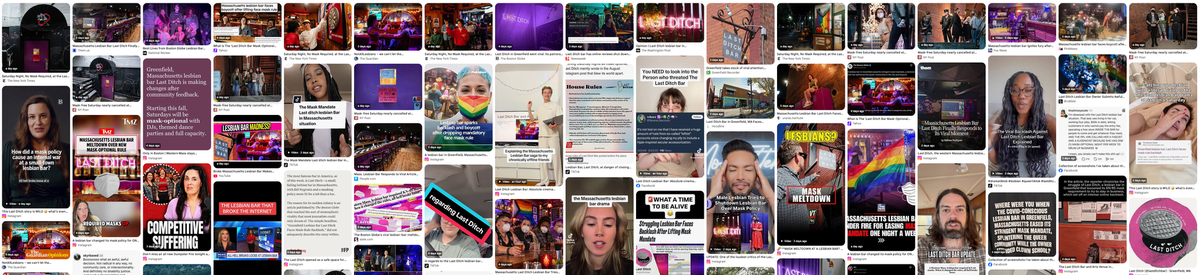
Another lesbian bar went viral. Socials blew up with the saga of a supposedly weak-willed, woman bar owner in a leftist city who couldn’t seem to keep her bar open. Her patrons are unmoored, devastated, and angry at the loss. Right-wing media and social feeds tout the owners, staff, and patrons’ efforts as “woke” to mix politics with business. Leftist media is infighting about how to act. Within a day, the bar can’t stay open amidst the pressure.
Of course it’s 2022 and, first, I'm talking about Doc Marie’s in Portland, Oregon. The bar opened with two-block long lines waiting for hours to get in – and then closed the next day. The entire staff quit to create a worker’s collective in the face of unfair conditions. Rumors spread on lesbian, bi, queer, and trans social media that the owners were racist, drunk, and even belligerent. Right-wing media sprawled that the “woke” staff couldn’t even let the bar stay open for more than a night. While the bar reopened, it would take a year for any reporting to cover the real story. The bar closed permanently in 2025.

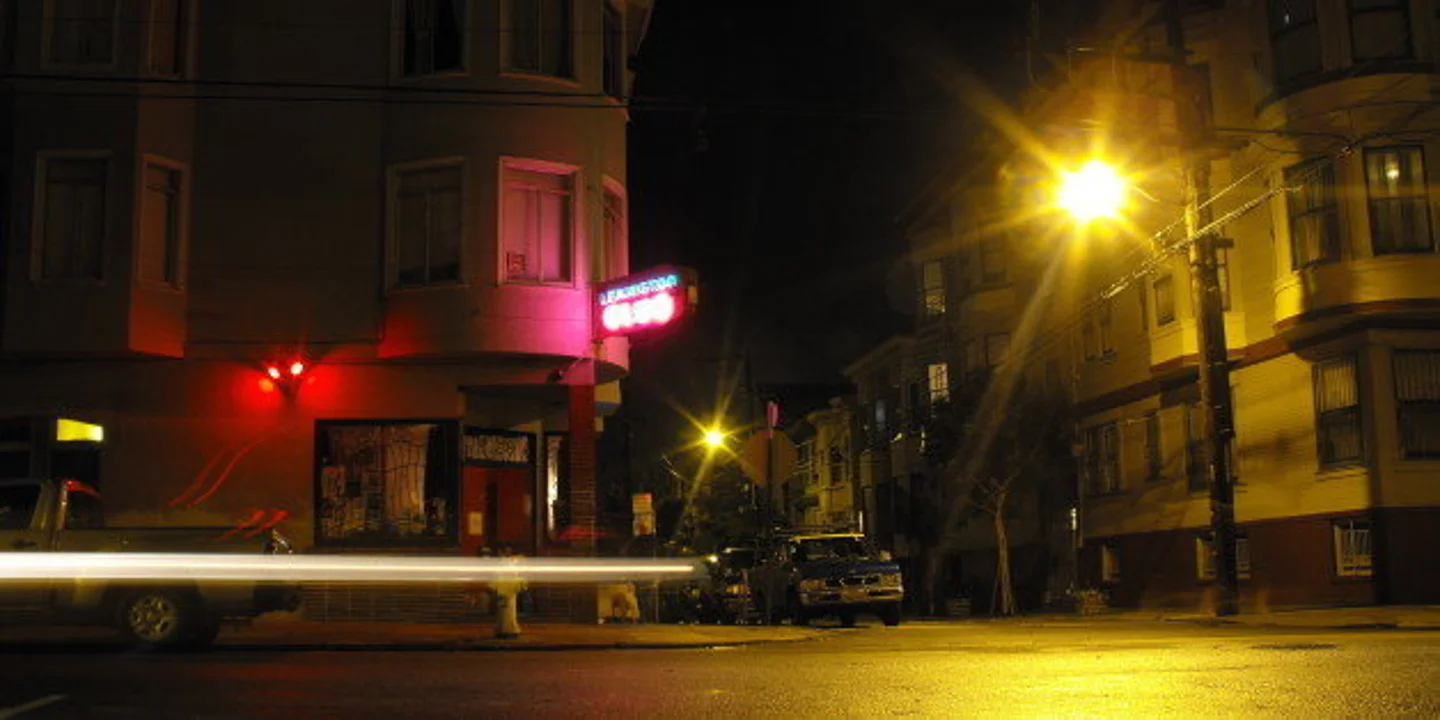
Of course it’s 2016 and I'm also talking about the Lexington Club, “the last lesbian bar” in San Francisco. Owner Lila Thirkield wrote a long Facebook post to explain the closure the staff and all lesbians, bisexuals, queers, and trans people who laid claim to the only remaining dyke bar in America’s gayest city. She detailed the role of gentrification, rising costs, declining alcohol use, and increasing sobriety. Mainstream media announced the end of lesbian identity itself, assuming that lesbians didn’t need their bars anymore and without lesbian bars, many mainstream journalists wondered, why would there possibly be lesbians? Of course there would be.
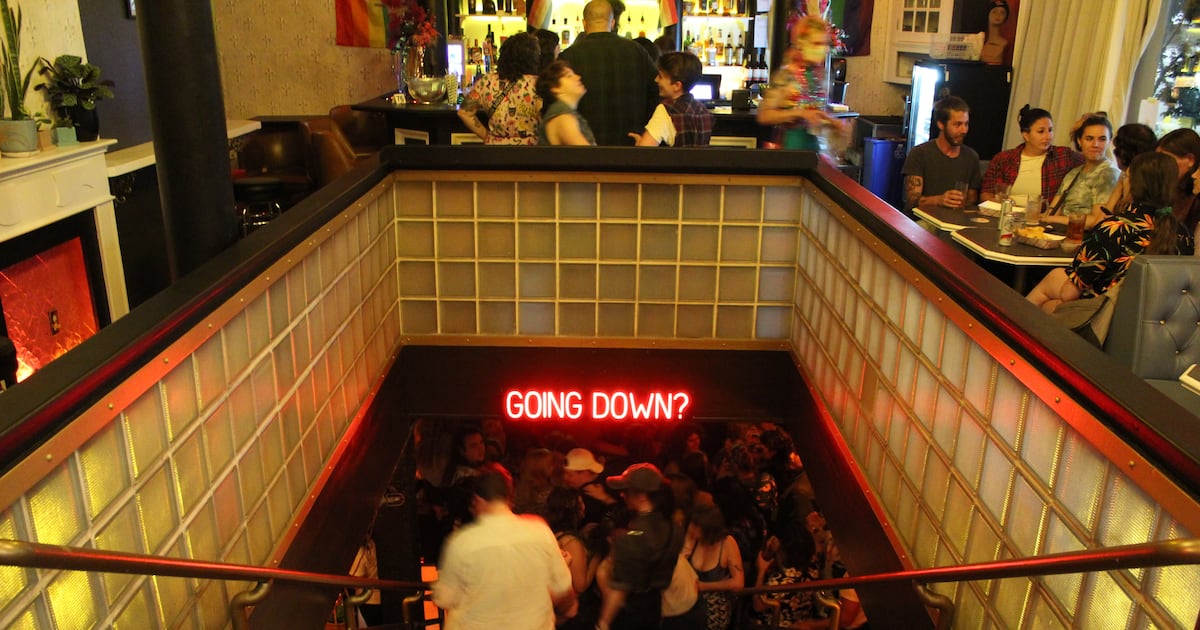
But, really, it’s 2026. If you opened socials as a lgbtq+ person this week, you can tell that I'm really talking about the viral coverage of the Last Ditch lesbian bar in Greenfield, a western Massachusetts small city. The drama has made it into People, Newsweek, FOX, NYTimes, WaPo, and more, as well as every corner of socials. As I've said on Our Dyke Histories many a time, I'm a resident of western Mass. This my personal queer geography. As I write a book and record a podcast about dyke bars*, the Last Ditch is one of my local lesbian bars.
From western Mass and with a hundred history of dyke bars in my brain and notes, I can tell you that the real questions we need to ask are:
Why does the public delight in watching lesbian bars unravel? And why do lesbian bars continue to be so few and close so often, for a century?
The public watching the lesbian bar unravel by unraveling the lesbian bar
ICYMI the most recent lesbian bar saga gone viral, “Greenfield Lesbian Bar Last Ditch Faces Mask-Rule Backlash,” focused on another type of cancellation: the cancel culture aimed at the bar for removing their mask mandate, one night a week. It all began when Last Ditch owner Jackie Matellian received hundreds of critical comments from supposed locals on the bar’s Instagram for removing the bar’s mask requirement. Generally, they were disability activists alleging that the bar wasn’t keeping its values. She owes $3,900 in back rent to a known slumlord and is sleeping in her car. The owners offered a "community" Zoom conversation to discuss their plans to lift their long-held mask requirement one night a week, which some patrons claimed the bar as racist and ableist.
The Zoom was a disaster. Among other speakers, Soe Noire, a local, Black, trans bargoer and long COVID survivor, replied in the meeting’s chat. They called out the bar’s ableism for this one-day-a-week shift. When Matellian began to cry, overwhelmed at her financial situation, Noire dubbed it “incredibly racist and deflecting behavior” that failed to center disabled, BIPOC patron’s feelings. (Read Ru Anderson's delightful, open-access, annotated version of the BG piece here.)
But the real disaster was the mocking reporting, comments, and follow-up hot takes about some 20somethings who are learning in public. A reporter for the fifth largest newspaper attended the Zoom in the U.S. covered the meeting in part cruel mocking and part reporting. This feature incited right-wing claims of “wokeness.” Some far-right commentators claim a weakness of character so profound in leftists that some are claiming the Left is unfit to govern. It also earned the Boston Globe over 1,000 subscribers in one day. Commenters from Rachel Maddow to Fox News outlets weighed in, and the story, like the bar, just won’t die – yet.
As a western Mass resident, I can tell you that this mask-only bar has both a small turnout for events and limited sales with an often-financially struggling population. Matellian earnestly believed a public Zoom gathering with a mediator would help. And as someone who spent over two years working for a social justice think tank who studies the Far Right, I can tell you we need to ask: why is this story making headlines now?
My research also shows us that leftist or rightist comment wars attached to the article, follow-up pieces, and social media hot-takes disturbingly miss the point of what lesbian bars have been up against for a century, and the rarity of what they offer.
Just look at how they began to know how we got here
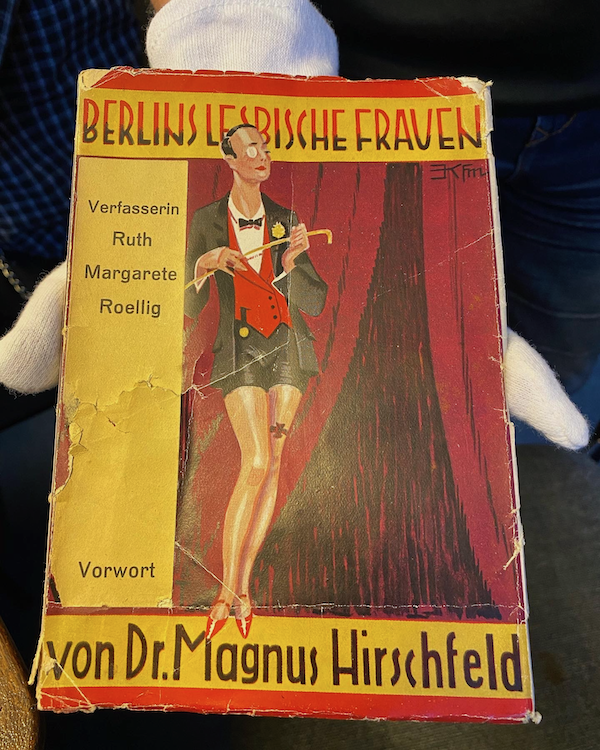
The beginning of lesbian bars and other publicly-known LGBTQ+ bars seemed brilliant. The world’s first lesbian bar scene thrived in 1920s Berlin and Paris. There were over 80 LGBTQ+ bars in Berlin alone, along with cabarets, cafés, brasseries, restaurants, and other hangouts. The world still revels in this era though the long-running musical Cabaret.

The first U.S. lesbian bar, Eve’s Hangout, opened in 1925 Greenwich Village as an artist’s hangout, populated with owner Eve Adams’s lesbian friends, co-organizers, and acquaintances. The slight release of gender and sexual restrictions and the post-WWI financial instability made it possible for women to open businesses, organize publicly for birth control, and even gain the right to vote. As an incredibly efficient lesbian, Eve herself went so far as to write and publish the first lesbian community study as Lesbian Love, which reads like the stories of 1920s L Word-saga inspired by her exes and friends.
 Jack Gieseking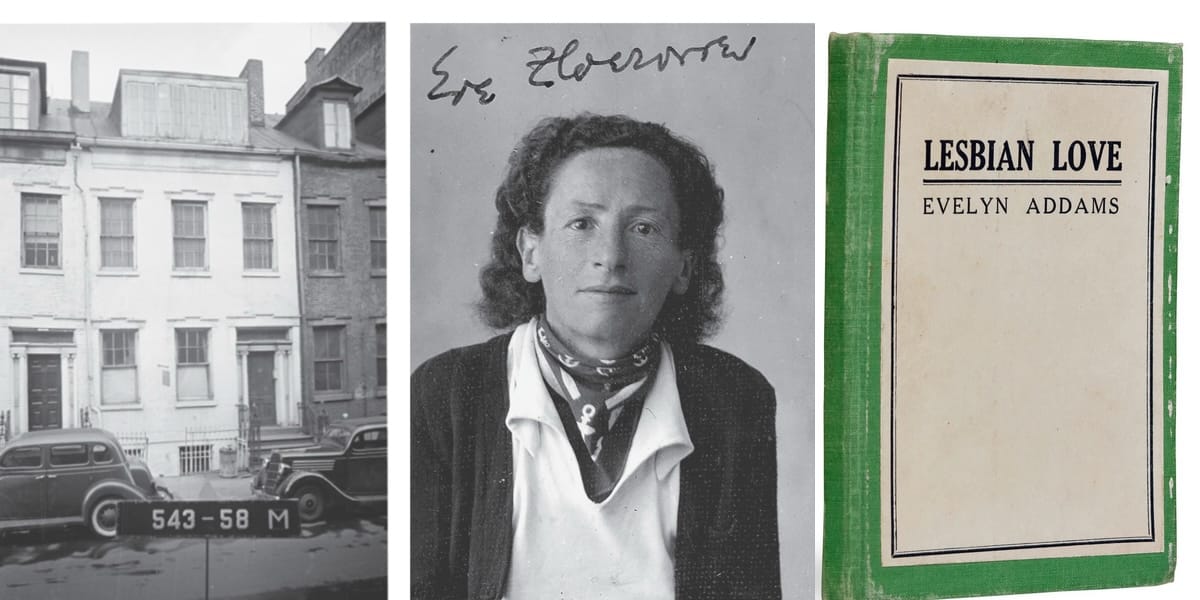
But then the Nazis came to power. Queer Berlin spaces were shuttered, and anyone who cared to keep organizing and meeting was imprisoned or worst. When the Nazis took Paris in 1939, some queer Paris was closed while other spaces became “must see” attractions for sexual tourism. What couldn’t happen at home would be entertainment abroad.
Eve’s Hangout wasn’t even open a full year. By 1927, Adams was targeted not only for her bar, but also for writing the first lesbian community study, deemed “obscene.” Edgar J. Hoover listed her in his Radical Activities Index as participating in “radical activities.” After a year and half in prison, Adams was deported but made her way to Paris – only to be forced into hiding upon the Nazis arrival. She would eventually be captured. She was murdered at Auschwitz with her lover.
Lesbian bars, though, persisted. Navigating the McCarthyism-fed Lavender Scare, many LGBTQ+ people remained closeted, turned to substance abuse, or didn’t survive. By the early 1980s, there were over 200 lesbian bars. Since then, they’ve been in decline. In 2019, lesbian bars reached the height of virality when there were a mere 16 lesbian bars remaining in the U.S. It's basic math but I've never seen anyone else say that means that lesbian bars were about .002% of the 60,000+ bars in the country. That the number of these queer social spaces has doubled since – to a mere 0.004% – is a miracle.
When you have a handful of places in the country for people like you to find other people like you IRL, it’s common sense that lesbians and the bisexuals, queers, and/or trans people who attend these spaces want to make sure others feel welcome in a world they are not welcome in.
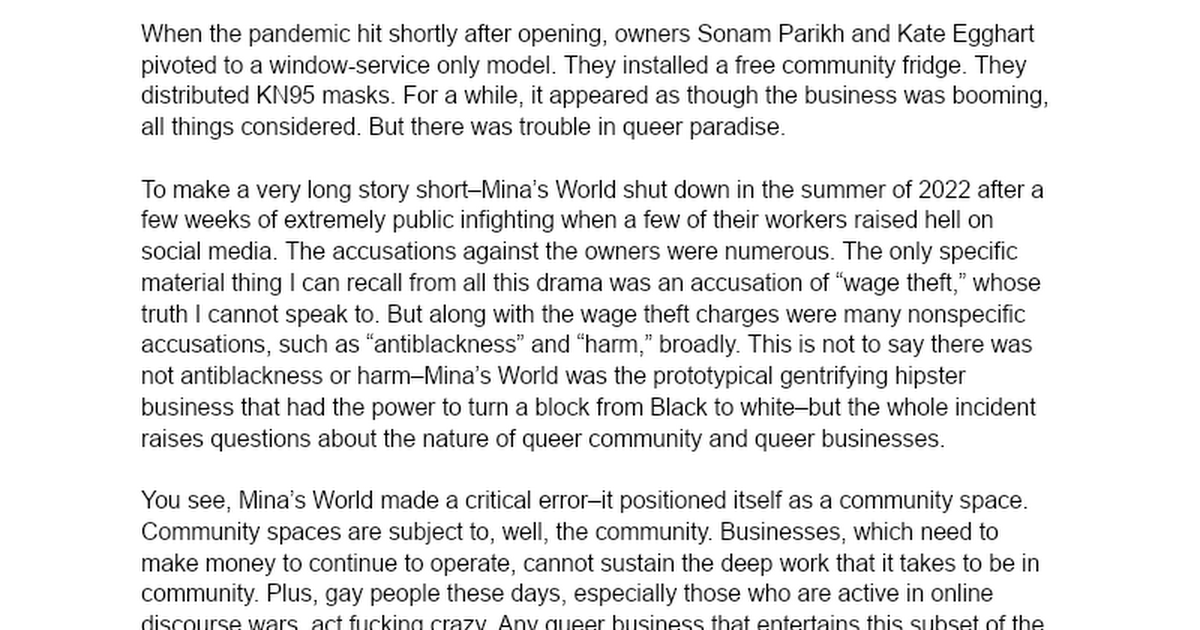
The bars that remain sometimes aimed to be “community” spaces, trying to salve the wounds of all the oppressed. But, as Ru Anderson writes in "Our Infighting Has Broken Containment Too Many Times. Can We Finally Stop Acting Fucking Crazy?," the claim to “community” spaces can clearly not sustain themselves as businesses. Queer spaces, usually more in their online comments than IRL, are rife with those who weaponize their identities. It's also so very true that the structural oppression upon lezbiqueertrans people creates hurt on us that we hurt others with. And when you have so few spaces to be public, it all comes out at the dyke bar*.

Your dyke bar* takeaway for today
In the long history of lesbian life in America – aka since and before the U.S. was founded – lesbian spaces are often targeted by various political regimes as the enemy. Lately, it’s been trans people who are the true targets of annihilation by Republicans and, lately, many Democrats too. But lesbians are a target to mock and kick, to close down and out, to belittle in the meantime for trying to live a politics that doesn't suck and, in the meantime, not being able to sustain even a bar.
Bars remained the only consistent, public space available to LGBTQ+ people until the late 20th century. They are also the spaces most associated with LGBTQ+ people, coming out, cruising, and a vision of queer community.
Give them a fucking break, give them your support, and long live dyke bars.