Reading Guide: Butch-Femme in NYC’s Greenwich Village, 1940s-1960s
Is a butch always a butch, a fem always a fem? Who knows!


We keep embracing our Reading Guide Fridays with quick takes dyke texts about the 1940s-1960s, both from that era and written in retrospect. Our fifth selection asks a profound question:
Is a butch always a butch, a fem always a fem? Who knows!
But it’s sure as heck clear that what we thought was a butch or a femme in the 1950s was not always the same thing. We’re guessing you need more of an example like we did, so meet Sunny and Doris, and Miriam and May. Cutie patooties! And everyone but Sunny identified as butch.

Our collective minds were blown wide by this. And delighted! Look how wide and rangey and possible gender was and still is!
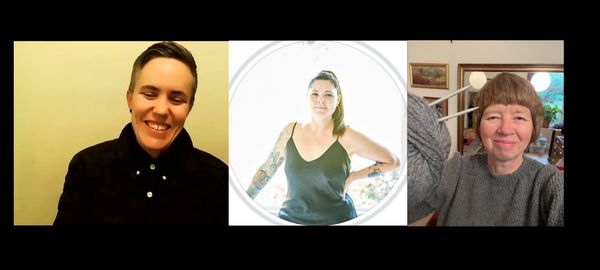
Alix Genter spent years collecting oral histories from New York City dykes in the post-WWII period, including Lesbian Herstory Archives originator and co-founder Joan Nestle (wow and swoon forever–see her photo on the left) and a swarm of other well-known dykes of the period. In her article, she digs into butch self-making to show us that butches were never (so boring as to be) imitating cis-het men’s masculinity, rather butches circumvented or even adapted feminine dress styles to convey their gender nonconformity. Genter shows how butch presentations varied between straight and queer spaces, with lesbian bars and other queer nightlife locales being essential sites of gender construction, expression, and butch mentoring.

Across race, class, and ranges of masculine signification, Genter encapsulates the flexibility of butch identity at a time when gender variance was a dangerous expression of visible queerness. And, wow, were our hearts and loins inspired by her work. We also deeply recommend her entire dissertation, Risking Everything for That Touch, available here for free and with many more delicious images and tales of mid-century lezbiqueertrans lives. Desire and danger to the max.

If you need to read more, we have a dyke for you to turn to! Like most queer history, the brilliant work of historian and Our Dyke Histories guest Alix Genter appears in an article, her 2016 Feminist Studies piece “Appearances Can Be Deceiving- Butch-Femme Fashion and Queer Legibility in New York City, 1945–1969,” and her lush dissertation, Risking Everything for That Touch. In other words, most queer history doesn't make it to a book – and Alix's work is just as beautiful in this form. Check out her map of Greenwich Village ~1950s dyke bars below!

We have some pretty epic Our Dykes Histories episodes on the 1940s-1960s for you to peruse for more sagas of the mid-20th century lesbian. <3 Here Alix talk about her own work in the first of these episodes!
- Queer Pulp, Dark Bars & the Police State, 1940s-1960s with Joan Nestle, Hugh Ryan, and Alix Genter
- The Gender of Desire: Joan Nestle’s Last Interview, 1940s-1960s NYC
To complement the launch of the Our Dyke Histories podcast, co-produced in collaboration with Sinister Wisdom, I put together a reading guide with my interns Michaela Hayes and Mel Whitesell, with expanded edits to this version by me. A shorter version of this post was originally published with the Sinister Wisdom Blog, 22 Jun 2026. This post was expanded by the lead author.