"The Bars Are Ours: Queer Nightlife, AIDS, and Community in the 1980s & 1990s, with Lucas Hilderbrand"
Our Dyke Histories is back with the 1980s-1990s. Including! Lezbiqueertrans super parties. Fighting AIDS. Queer generational collapse. And how cool St. Louis drag was.

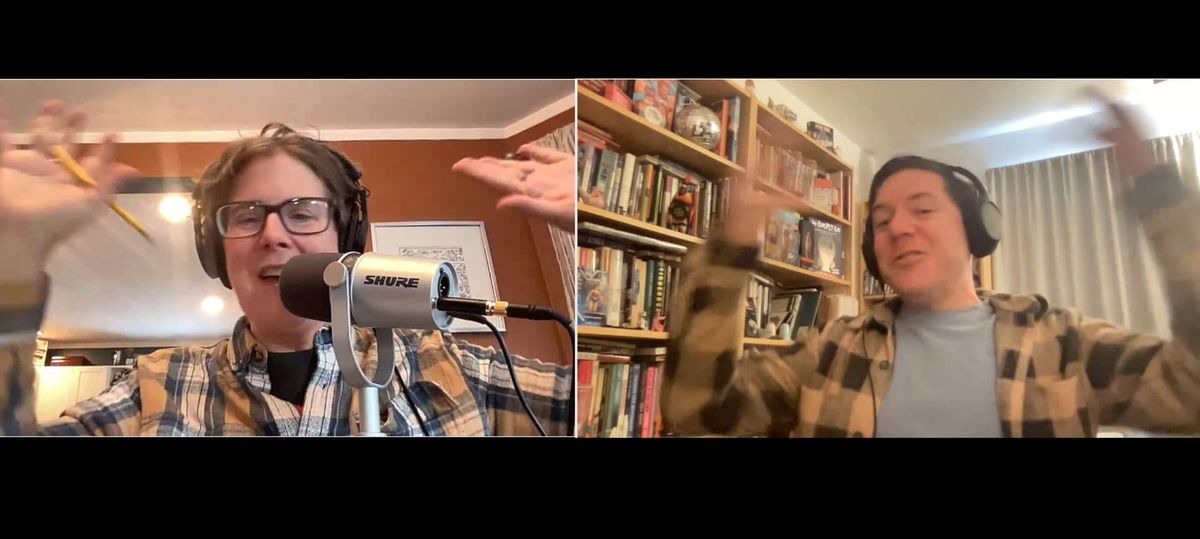
Yesterday I launched the second part of our first season of Our Dyke Histories podcast, my decade-by-decade coverage on dyke bars* around the world. We're going into the 1980s for four sparkling episodes. Please, enjoy the transcript joy of Lucas Hildebrand and I who showed up in matching flannels – and we had never met! We just adored one another and I'm so grateful for his decades of labor and writing, and his stunning wit. So many more photos of all of the bars and parties to come!
In this lucky Episode 13 of Our Dyke Histories, Jack talks with historian Lucas Hilderbrand about the transformation of lesbian, queer, and trans nightlife during the 1980s and 1990s. Drawing from Hilderbrand's The Bars Are Ours – the first history of U.S. gay bars (whaa??) – the conversation traces the shift from neighborhood lesbian bars and lgbtq bars to super queer parties that reimagined queer community during the early years of the AIDS crisis. Together we explore how queer archives preserve not only places but feelings, how generations inherit different understandings of queerness, and why nightlife became central to survival, activism, and pleasure. The episode moves from San Francisco's explosion of queer parties and Boston's early gay-meets-anti-trans gentrification to the economics of bars and on to places like St. Louis and beyond, as well as chatting about the emergence of lesbian chic, interracial and inter-gender and interracial dance super parties, and the rise of queer as in I'm-queer a political identity.
We also answer the age-old question: do lesbians cruise?

Jack Gieseking - Narrator: Welcome to Our Dyke Histories. I'm your host, Gieseking, historian, geographer, and environmental psychologist. We dive into the past and present of lezbiqueertranssapphicenby communities decade by decade, in collaboration with multicultural, lesbian, literary and art journal, Sinister Wisdom. This season we're all about dyke bars with an asterisk (*), lesbian bars, queer parties, and trans hangouts, the structures that made them necessary, the lives they made possible, and the worlds we made from them.
Our Dyke Histories come for the history, stay for the revolution, gossip and desire that built us.
Welcome back! In this part two of season one, we are switching into high gear '80s and thereafter about the history of queer nightlife. . I'm so excited to talk about super parties, what actually is a queer archives, and finally answering that age-old question, why do or don't lesbians cruise?
Today we're especially talking about the U.S. in the '80s and the '90s, in conversation with the incredible Lucas Hilderbrand. We're gonna go from an actually fascinating Boston all the way to St. Louis, L.A.., New York City, and da-da-da-da, the "clitoris of America." You know it, and may love it too, San Francisco.
Let's meet our truly fabulous guest.
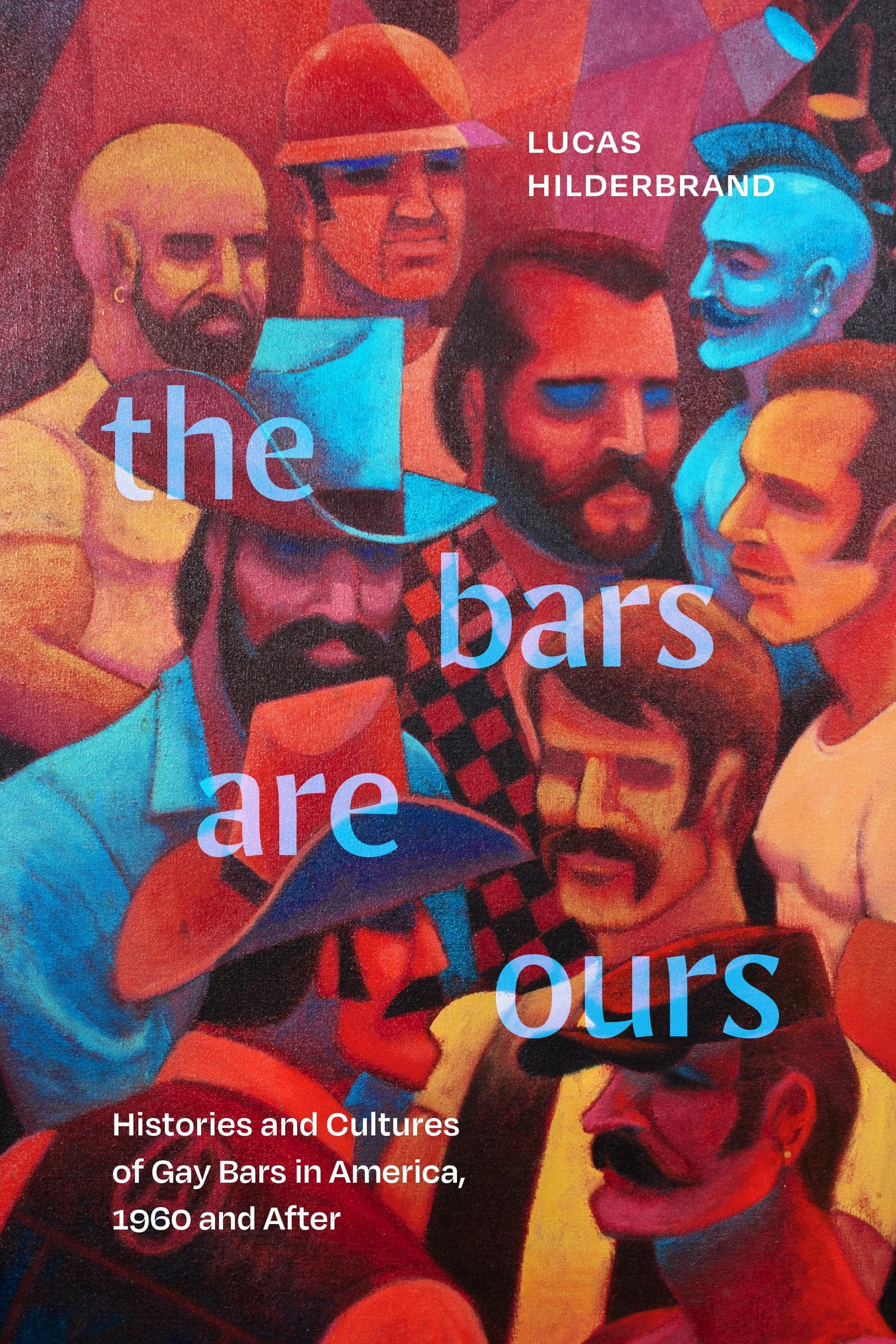
Lucas Hildebrand: Hi, I'm Lucas Hilderbrand. I'm chair and professor of film and media studies at the University of California, Irvine, and the author of The Bars Are Ours: Histories and Cultures of Gay Bars in America, 1960 and After.
Jack Gieseking: This book has such a big scope since the 1960s till today, and we're gonna especially talk about the dyke trans parts of it, particularly in the '80s, the '90s, and the moment of queerness, which is [00:02:00] incredibly cool. I thought we would start with how did you even imagine this book? How did you do this history?
Lucas Hildebrand: So it, it really started from a recognition that no book that was a national in scope on gay bars or queer spaces like this existed, and it just seemed like something that should exist. I'd finished my first book, and all of my adult life up until that moment had been lived in cities where I went to bars all the time and had a, a sense of an urban public life through nightlife.
I spent about 15 years working on it, and it was primarily an archival project, and it took a number of years to figure out what kind of documentation existed and, and where to find those materials. I would just seek out whatever collections I could find.
The archivists would often bring me collections of matchbooks or gay travel guides. There were listings that may have indicated leather bar, drag bar, lesbian bar, sort of types of bars, but there were no stories. There was no sort of sense of the experience of these places.
There's very little, like, actual documentation beyond sort of visual ephemera or listings, but those listings they might indicate if it was a leather bar, a lesbian bar, a drag bar, but they wouldn't say anything more than that. Occasionally there would be photos, but I wouldn't know who was in them, what year they were, or what bar they were in.
So-
Jack Gieseking: Totally. The life of a queer archivist. What, when- Exactly ... where is this?
Lucas Hildebrand: Exactly. Yeah. What is this? What is this?
Jack Gieseking: Looks fun.
Lucas Hildebrand: And looks interesting and fabulous. And you can sort of tell who was hot back in the day or not, but um- Yes ... or who was the life of the party. Or who the photographer had a crush on.
Um- Yeah ... but there weren't the stories.
Jack Gieseking - Narrator: If you're listening, you are also a story lover. Being in a queer archives, what Lucas is talking about is actually finding that intimacy, that understanding of a person or a [00:04:00] place. I have been to dozens of queer archives around the world, and they often have a similar smell, which is old paper.
They are filled with innumerable boxes which aim to prevent the further degradation of various materials. The archives I spent the most time in is the Lesbian Herstory Archives, and it's a very unique place because it's in a brownstone, which is a, a three-story gorgeous house. And the LHA probably houses some of the most diverse types of collections.
There's a massive button collection, a T-shirt collection. You can walk past somebody's dildo next to their Gay Games medal on a sink upstairs. There are boxes of amazing people like Audre Lorde, Barbara Smith, Adrienne Rich, and you can just take down their box and touch them. The Lesbian Herstory Archives has a policy of actually touching the materials.
What's great about going to archives is you are so welcome there. Archivists are super nerdy, and they would love to have you. They would love to show you, you know, their slings, their dildos, their originally signed Alison Bechdel comics. And when you're in an archives, you're really trying to find those stories.
But for Lucas, he found one source that was more important than any other.
Lucas Hildebrand: It was really by spending time with the gay press, um, and the, I would say the golden age of... There was, there was a period from about the '70s through the '90s where every s- major city had an actual gay newspaper, not just the free magazines that were at the bar with pictures and ads in them, but there was, like, actual journalism with actual reporting and political coverage and debate and commentary.
And the gay press was really symbiotic with the bars 'cause they relied upon the bars for advertising and for distribution. 'Cause that's when there's reporting that actually tells these [00:06:00] stories. And it's sort of this golden age of gay journalism which has largely been forgotten. It was a struggle to bring them to print.
Many of the chapters manifest because there'd be a flurry of reporting around a particular issue at a particular moment in a particular city that allowed me to tell a story.
Jack Gieseking: Yeah, I, so it strikes me with the matchbooks and the locations, you would just have a bunch of dots on a map.
Lucas Hildebrand: Right.
Jack Gieseking: But it's so humanizing- yeah, to get the stories out of the press.
And this Boston chapter is the '70s and the- yeah ... 80s. Like, to think about gentrification going back then, and to not, not have another story about New York. I mean, it's shocking that Boston is where it's at- Yeah ... always to me. But yeah. Yeah. Uh, goddess bless them.
Lucas Hildebrand: So for instance, the question of gentrification happens through Boston, which wasn't my expectation.
It's just that's where I found the most robust, the earliest, and actually the most radical and sort of class solidarity, empathetic championing of the lumpenproletariat of our trans sisters, of sex workers, who were really central to this discourse of sort of gay homeowners versus queer people who claimed rights to public space.
When you go to the queer archives, or sometimes there's individual collections at a university or at the public library, and you never know what you're going to find in the queer archive, and that's part of what makes the archive queer. Uh, but also-
Jack Gieseking: Well said ...
Lucas Hildebrand: Sort of whose, whose papers become included is, is at times really fascinating and oftentimes insightful to history in ways you don't expect.
University of Texas San Antonio, there's a collection of women business owners' papers. So one of the collections there, uh, is for a, a bar owner named Lolly Johnson and her, her materials, and she owned a series of, of gay and lesbian venues in the 70s and 80s. And among her materials is a folio of the business cards that she had, and among them are things like [00:08:00] Exterminators, restaurant supply, carpet cleaning.
So things that are really mundane, but it's the infrastructure that sustains a business that we don't even think about when we think about the culture of gay bars. For instance, if you don't have an exterminator, you're gonna violate the health codes and be shut down. So these things that we don't really think about as being part of the story actually are part of the story.
It's not just about vice raids or zoning or the liquor licensing that have a homophobic politics.
Jack Gieseking: Yeah. Can you get fire insurance? We're always thinking about these big forces, but it's also, yeah- Yeah ... as you say, in the everyday life of the bar.
Lucas Hildebrand: Right, and with even printing the matchbooks is you have to figure out which printer isn't homophobic that will actually produce your materials for you.
Jack Gieseking: Like the Castro camera- ... of, of Harvey Milk saying, "We're gonna print our own photos 'cause you won't print photos of queer people." Exactly. So we're gonna print our own photos in the Castro. Ex- Right, so we have to make our own economy, not just because we wanna buy queer, but no one's gonna buy, sell to us.
Lucas Hildebrand: Exactly, right. Yeah. And so there's a whole sort of parallel- Wow ... or se- sort of hidden infrastructure history.
One of my favorite things I found in any archive anywhere, there was a box that I opened it up and it had tissue paper. I o- I open up the tissue paper, and it's a pair of clear vinyl disco shoes that were rhinestoned.
Ooh. And it's like, oh, so she, so she likes to, to dress up and dance sometimes maybe. And one of the things I really wanted to do was humanize this history and give it a s- a, a texture that it felt lived, and not just a history of vice raids and zoning, um, or sort of-
Jack Gieseking: Mm ...
Lucas Hildebrand: or this sort of, uh, understanding that was reductive in terms of who these bars were for and who they served.
Because for me, it was really important to understand that these bars are really microcosms of ambivalence and human messiness. And the people who went to them-
Jack Gieseking: Amen ...
Lucas Hildebrand: absolut- you know, sort of, you could have a great night, you could have a terrible night. You could find [00:10:00] love. You could be-
Jack Gieseking: Be bored out of your mind!
Lucas Hildebrand: Be bored out of your mind. Yeah. You could be heartbroken. You could be groped. You could be roofied. I mean, all these things-
Jack Gieseking: Mm-hmm
Lucas Hildebrand: ... exist in these spaces. There's a full range of human experience that happens in them.
Jack Gieseking - Narrator: I gotta tell you about Castro Camera. So in the 1970s, there were so many gay men and lesbians living in San Francisco.
You're like, "Why? Why, why was that gay? How did these places become gay? What could it be?" The reason that gay San Francisco really grows is there were so many queer and trans folks discharged from World War II from being gay or finishing out their time in World War II at the port city of, you guessed it, San Francisco.
Also see Boston, LA, New York. Why would you go home again? You wouldn't, and hence we have gay coastal cities.
By the 1970s, there's such a huge population of gay men, and a lot of them are middle class, making money. And they want to buy stuff. They wanna go to a liquor store. They wanna buy their antiques. They wanna get their photos developed. But their photos contain gay people. Local camera stores were denying them the ability to do that, so they built their own economy. And Harvey Milk opened Castro Cameras, and it was also a way of claiming and making space. If you're not gonna serve us, we're gonna make our own world. If you're not gonna represent us, we're gonna elect our own politicians. If you can't handle our culture, we're gonna make our culture bigger and brighter with more sequins, more boas, and more flannel than you've ever seen before.
Harvey Milk in 1977 was the first openly gay elected candidate to office in the US. This is a massive queer infrastructure, and Harvey Milk and Castro Camera were so central there-- and in so many other places, including St. Louis, Missouri.
Lucas Hildebrand: So there was another collection- Oh yeah ... at University of Missouri, Kansas City, which is [00:12:00] fabulously named the GLAMA collection, the Gay and Lesbian Archive of Mid-America. Ha. So they had a ser- set of collections around these female impersonator lounges and drag bars. And I don't think it's the expectation of most people who might pick up the book, but it was actually the biggest collection of materials that I found about drag and female impersonation.
And so I found archival collections about these two venues that happened to also be where Esther Newton had done field research for Mother Camp, um, which was-
Jack Gieseking: Oh, we should explain who Esther Newton is to our listeners.
Lucas Hildebrand: Yeah. So Esther Newton is a A landmark anthropologist, uh, who, who really did probably one of the first in-community anthropological studies of queer spaces and, and gender that became foundational to queer studies and queer theory afterwards.
This was research done in the mid-1960s and was really one of the first, if not the first true, like, queer studies texts. It is one of these things where I think I'd probably read the book years before and didn't realize she had done research in Kansas City until after I was in the archive, and I was like, "Wait a minute."
Jack Gieseking: Esther Newton, now a phenomenal dog breeder and, and competitor with her tiny dogs. She provided a picture of what gay life was way before Stonewall. As she put it in the documentary recently released about her, "I was saying gays are a group and a proper subject for anthropology."
Lucas Hildebrand:
So one of the collections in this archive are the personal papers of a cocktail waitress from a drag lounge– who worked at the female impersonator lounge and who clearly had a very loving relationship with the talent who performed there.
Just the fact that that exists in an archive was amazing to me.
Jack Gieseking: Amazing!
Lucas Hildebrand: There were letters from the performers who [00:14:00] sort of had moved away or moved on. It reminds us of the range of people who sort of contribute to and sustain these kinds of spaces. From what I could tell, I inferred that she was a straight woman, but she was part of the community and was, like, a very revered person in the community.
That's so cool. And so she had letters and signed photographs from the talent, and she-
Jack Gieseking: aww ...
Lucas Hildebrand: --had, you know, things in her collection that no one else would have.
Jack Gieseking: Right. I love this. I love that this woman is collecting- Yeah ... our history for us. The inclusion of drag has long been central to the evolution and success of gay bars and even straight bars that performed sexual tourism for their voyeur viewers.
Jack Gieseking - Narrator: It's interesting, too, to think about how this presumably straight woman who works in one of these spaces had the ability to save these materials for an archive. A lot of queer people did not keep their materials for fear of being found out. If and when they died, if no one knew they were gay or even if they did, they often destroyed them.
Before we go back to chatting with Lucas, it's important to also think, does St. Louis offer AIDS care in the 80s? I talk about this further in episodes coming out with Sarah Schulman, Valerie Walker, and Katherine Forrest. But in the 80s, a lot of gayborhoods closed because they didn't have people who wouldn't support people living with AIDS, they just refused them. This is real. And so you wound up going to certain hospitals in certain cities for the possibility of survival.
That said, let's get back to drag, the fun kind.
Jack Gieseking: So you said the word female impersonator for those listeners who haven't tuned into previous episodes. So at this period in time, drag queens, trans women are often referred to as female impersonators on stage and trans masks or drag kings, however they identify, might be referred to as male impersonators.
Lucas Hildebrand: So one of the things that I learned in working on the project is that we, people my age and younger, [00:16:00] assume that drag was always part of the gay bar world. And that only really happens in the '60s. And what's fascinating is that there were two venues, one block apart, same owner, same talent. One was understood as a female impersonator cabaret or lounge for a straight tourist clientele.
And the other was a drag bar for the gay community. And the juxtaposition of these two spaces revealed sort of that these two things meant different things and it had imagined two different audiences. It's in the '60s that we really transition from female impersonators doing these theatrical shows directed for straight audiences to drag really becoming a largely gay male cultural sort of form.
Jack Gieseking - Narrator: Next up, we're gonna talk about party culture. Now, Lucas is gonna argue that the super parties of San Francisco take off in the '90s. The idea of a super party-- that's a large interracial party for the first time in queer history-- is absolutely happening in the 90s in San Francisco. But as we'll talk about with Nikki Lane and Kemi Adeyemi about Black queer women's spaces, Black warehouse parties have been going on forever because where can you actually gather that no one's gonna bother you? An abandoned industrial space. And this goes back decades.
And so you do have these super parties happening, but the interracial super party publicly advertised, that's what Lucas is talking about coming to us live in San Francisco in the 1990s.
Jack Gieseking: I love us skipping through time. One of the things that I'm very excited to talk about too is kind of queerness and how queerness changes.
You have this incredible mind-blowing chapter, to me, about San Francisco.
Lucas Hildebrand: San Francisco was really, really fascinating to me because around 1988, there was suddenly a blossoming [00:18:00] of parties, um, that are distinct from everyday gay bars.
So there's, on the one hand, a transition from the gay bar model to the party model-- which is something that I think we still see. We also see a cultural and generational shift happening concurrently with this. Happening in other cities, probably on a smaller scale, but San Francisco has this kind of explosion of public discourse about it, so both the Bay Area Reporter and The Sentinel, very prominent, uh, gay newspapers in the Bay Area, begin reporting on a generational divide, essentially between the Baby Boomers and Gen X, a generational shift. We see this phenomenon of these generational or even micro-generational desires to redefine nightlife as a way of claiming a generational identity or creating a sense of a scene or an identity for a community or an- or a sense of a zeitgeist.
Jack Gieseking: So, like, each generation, like, makes their own nightlife scene?
And it's like, "I invented it," right? Yeah.
Lucas Hildebrand: Exactly. And, and we've seen this cyclically, but pa- what happens particularly in the late '80s, is there's a clear kinda generational shift that happens between what might be called the, the sort of the AIDS generation who come of age in the age of the AIDS epidemic, which has a fundamentally different sort of political, social, and sexual stakes and dynamic.
There's a real sense of not understanding each other across those generational divides, but there's also a desire to reimagine nightlife.
Jack Gieseking - Narrator: One of the most eternal breakdowns within the queer community is the idea and recognition and frustration around generational differences. Like, why don't we get one another? Why don't we understand one another?
I want to tell you a story about from my own research for A Queer New York. I did these multi-generational group interviews, and in one I had a woman who came out in [00:20:00] the '80s, a woman who came out in the '90s, and a dyke who came out in the aughts.
And they're sitting and having a chat, and the woman who came out in 1984, Gloria, says, "Well, then I was evicted," and keeps talking. And the woman from the '90s jumps in and says, you know, "Wait, wait, why, why were you evicted?" And Gloria looks furious. She says, "Because I was gay." And the other two people apologize that they didn't know that that was a thing.
So when these participants went off to talk in their next group interview with just people who came out around the same time in the '90s and the aughts, they both told the other participants in their interview, "Did you know we used to be evicted 'cause we could be gay?" And everyone said, "I didn't know."
And they said, "I felt so embarrassed. How did I not know it?" And I said, "Wait, I didn't know it. I'm doing the research and writing the book about it. I don't know either. I'm gonna look it up." And when I finally got to talk to Gloria again and she was talking with other '80s participants, I brought this up and I said, "You know, you got really angry and frustrated.
I'm so sorry that happened. What were you thinking?" And she said, "I was thinking these kids today think it's all like The L Word." I assured her friends that the generation who came out in the aughts do not think it's all like The L Word, but I did point out to everyone we interviewed that we just don't have access to our history.
In fact, in 1987, New York City was the first place in the US to pass anti-eviction laws based on sexual orientation. Until then, everywhere in the country you could evict people for being gay. That was a legitimate reason, and that is harrowing But the other coin about these generational shifts and misunderstandings and what I would call flat-out breakdowns is that we come out in very different moments.
There was a famous sociologist, Karl Mannheim, who theorized that people go through really major events in the course of their life, say, World War II, and they become a generation together. You get the boomer generation. Totally makes sense. But when it comes to queer people, [00:22:00] I theorize, and I wrote about in my book, that it actually matters when you come out.
Imagine coming out in the '80s. All of a sudden, there's this mysterious disease. People are dying from it that you know every week. You're going to a funeral a week. What's going on? That is a very different mindset than coming out under, say, President Obama, that you're told this total bullshit, vague message of it gets better, but there are queer youth groups in high schools.
This is so different than, again, coming out in the '50s under McCarthyism. So if you're queer, trans, and listening to this, whenever you came out to yourself, to other people as queer, as LGBTQ, whenever you came into yourself and your body as a trans person, that moment really shapes you too. And sometimes that makes it hard to understand one another when, in part, we don't have access to our history, and then we're trying to talk to one another when we had very different experiences.
Lucas Hildebrand: The key part is there's a real investment in reclaiming and reviving nightlife. So in the mid-'80s, we can see a declension narrative of sort of the decline of nightlife, both because of the very, very real effects of the AIDS epidemic having massive casualties, but also people doing a lot of caretaking or people being afraid of being in public social and sexual spaces.
Jack Gieseking: Absolutely.
Lucas Hildebrand: That has a devastating effect on nightlife. But also, there's other things that, that have, we've often forgotten about, about that moment.
There were other elements that really transformed my understanding of that history that have been forgotten.
So one of them is a national change of drinking age from 18 to 21, and that has a devastating effect on the financial prospects of gay bars.
You know, 18 to 21 are prime drinking years for a lot of people, and so that's a major hit, uh, to revenues. And of course, of course, some people are gonna find, [00:24:00] um, fake IDs or sneak in or find ways in, but, like, that's a major demographic or major market share that suddenly is lost overnight because of the campaign against drunk driving. Concurrently, insurance rates for gay bars skyrocket because they have new liabilities around drunk driving.
If someone is at a bar, gets drunk, and drives home, and kills themselves or someone else, the bars become liable for-
Jack Gieseking: Yeah.
Lucas Hildebrand: ... Serving them. So those things coupled with people not going out or being sick fundamentally- Yeah ... changed the scene.
Jack Gieseking: Yeah, and in Last Call at Maud's, the documentary about the, the long-term lesbian bar, they, they, uh, talk about so many people have joined AA and NA and OA.
Mm-hmm. Yes. And, and it's really in the, you know, the 80s we start to get LGBQ AA meetings, and they spread like wildfire.
Lucas Hildebrand: Yes.
Jack Gieseking: In A Queer New York, I had heard a lot from my lez-bi-queer-trans participants who had come out between the 80s and the aughts to say, like, "How do we go from AIDS to The L Word?" They were talking about coming out in the late 80s and early 90s at a time where now everyone was going to AA meetings.
One of my participants comes out in the early 90s, and she's like, "It wasn't even cool to go to the bar. I met, I met people by going to AA meetings, and I- ... and I wasn't an alcoholic." And I was like- Yeah ... that's a, that's a, that's a way to cruise in the, and when you're a teenager.
Lucas Hildebrand: Yeah. Yeah. Absolutely. The culture of drinking radically changes in the 80s.
Jack Gieseking: Yeah.
Lucas Hildebrand: And it sort of- Yeah ... and we begin to see the early stages of that in the 70s with awareness of alcoholism, and gay bars are culpable for, you know, sort of profiting off of and, and contributing to queer maladjustment and alcoholism and substance abuse. Like, that's part of the story. Uh, but it isn't- Mm-hmm
necessarily things that replace it.
Jack Gieseking: Right. And it doesn't go away. In the 90s when I looked at all these, um, national and local New York City lez-bi-queer-trans publications, all of the ads were from alcohol. Like, uh, [00:26:00] you know, it's like, here's another Absolut ad and Bud Light and Jagermeister and, right, that- that's who's paying for our ability to- Right
connect and, and have magazines and have documentation.
Lucas Hildebrand: Yeah.
Jack Gieseking: And the other side of it is talk about, like, all the caretaking but all the activism, groups like ACT UP and so many, there's just a plethora of organizations, dozens and dozens of them. We hear about ACT UP, but there were so many people organizing, and they're doing that at night, and they're not doing that in a bar, right?
Lucas Hildebrand: Yeah, so there's, so there's a, there's a massive cultural shift that happens. There is some, some symbiosis, so bars become a place where we're doing benefits and fundraisers for AIDS service organizations, or maybe you go dancing after the protest. But there's, there's definitely a displacement or a de-centering of bars that happens culturally.
Jack Gieseking: And that had happened earlier for dykes, right? 'Cause the 70s we had this huge lesbian world building. We're gonna have bookstores, we're gonna have restaurants-
Lucas Hildebrand: Right.
Jack Gieseking: .. We're gonna have cafes. Right, exactly. Coffee shops and, yeah. And that, that happened for- Yeah ... for the gay boys, too. Um, but lesbian- Right bars still key. Softball, dykes can't have- Mm-hmm ... softball-
Lucas Hildebrand: Mm-hmm.
Jack Gieseking: ... Without a bar- Yeah ... to sponsor them. But now the 80s it's a, a major shift. Exactly. You're right. You're so right.
Lucas Hildebrand: So one of the things that we see happening in the late 80s is there's, A, an interest in reviving, but also really importantly reimagining nightlife in new ways that are, that are sort of generational, so it's marking this is for a new generation.
Sometimes it's about a new model of inclusion, sort of we want spaces that are co-gender or multi-gender or multi-racial or multi-ethnic to where we can bring the community together. You know, it no longer makes sense for a dance club to be segregated.
Maybe one of the most interesting phenomena that emerges is a wave of women's and lesbian parties that are saying, like, "Why can't we have what the gay boys have had since the 70s?
We want our own dance clubs and discos-
Jack Gieseking: Amen.
Lucas Hildebrand: ... And we want sexy-
Jack Gieseking: Yes.
Lucas Hildebrand: ... Spaces. [00:28:00]
Jack Gieseking: What's super interesting about this moment in the 80s and the 90s is that it is true, San Francisco and also London are having these super sexy party scenes of actual sex. I cannot enthusiastically recommend enough the documentary Rebel Dykes about London dyke squatters, activists, and holders of this incredibly fun looking BDSM sex party Chain Reaction, which lasted for years.
But what I also learned watching that, and I hadn't heard this before, is that there were dykes from London flying to San Francisco to go to those parties. So these ideas are cross-pollinating across these different locations. And what gets launched in San Francisco in 1984 is the incredible sexy magazine On Our Backs.
Yes, the title's perfect. This is really kind of post porn/sex wars, claiming the body, putting on the page, showing self-made pornography.
Coming up, I wanna talk a little bit about temporality. So sit with this question for a second. Why would you decide to throw a giant party rather than opening a bar in the middle of the early years of the AIDS crisis? And I say early years because AIDS is still with us, and until it's gone, it's always a crisis.
But why a party and not a bar? The answer's really, you would of course decide to throw an all out super party for one night or a few months rather than open a long-term bar, 'cause you don't know if you and your friends are gonna be there to go to the bar. You want the party that is now. You want the super awesome event.
Lucas Hildebrand: This coincides with the emergence of what came to be called lipstick lesbian, uh, culture or lesbian chic, where it was sort of a reclaiming of the glamour, the sexiness, the urbanity that the gay boys had really sort of claimed as, as theirs culturally.
In the absence [00:30:00] of these gay clubs, there's, there's real estate available for these parties to, to, to take over these spaces, and they don't have long-term leases, but they become this kind of event based rather than every day or routine quotidian spaces. And some of these parties continued monthly or weekly for over a decade.
San Francisco is really where I found the biggest explosion both of the sheer number of parties, but also public reporting and attention and debate about them. And so these parties actually became kind of the way to talk about this sort of new imagining of a generational shift, but also a cultural and political shift from gay to queer.
Jack Gieseking - Narrator: For those of you who don't know what lesbian chic is at this moment, in 1993, Newsweek puts out an article saying that lesbian chic has arrived, and these are these very white, middle, middle- upper class, kind of acceptable normie lesbians. And at the same time, Vanity Fair puts out the cover, which if you haven't seen, we will absolutely have on our Instagram, it is smoking hot, with Cindy Crawford crawling all over K.D. Lang and giving her a kind of pseudo shave. It's the heart of sexy. But there was a lot of pushback against lesbian chic and a real kind of different way of making lesbian chic in San Francisco that was queering it as well.
Jack Gieseking: Yeah, and so The Box. I've heard about Club Q, but never The Box.
Yes. So let's talk. Wow. To start, yes. Wow.
Lucas Hildebrand: Yeah, so, so Club Q and The Box were both parties where Page Hodel DJ'd, and so she emerged in San Francisco as one of the leading party DJs, and I just kept seeing references to her parties and ads for her parties, and they just sounded like the greatest parties ever.
Jack Gieseking - Narrator: What Lucas writes about Page Hodel, and yes, there will definitely be pictures on Queer Geographies, is so good that I need to read it to you:
"Mixtress Paige Hodell [00:32:00] provided the beating heart of this co-gender party movement. Hodel was born during the later days of the baby boom, but was a bridge figure with the new queer generation.
She worked at the lesbian bar, Amelia's, at the Dyke March, at the Folsom Street Fair, which is the leather fair, at political events, for the soul radio station, KSOL, on Olivia Cruises, the lesbian cruises, and at a range of recurring events, including her signature parties at The Box and Club Q. Hodel had unparalleled reach in the venues where she built a following.
She spun records at straight clubs, Black clubs, punk clubs, gay male clubs, and women's clubs. Her wide-ranging audiences followed her and converged at The Box, which not only had a diverse crowd, but was also more multi-generational than the other parties. On The Box's first night, 450 dancers showed up. The following week, 1,300 did so The Box was initially scheduled on Thursdays at the Kennel Club, and within a few months expanded to Saturdays as well.
A flyer produced for Hodel's last night DJing the party after 11 years, 572 Thursdays it calculated, recalled,
'On April 7th, 1988, I opened a dance club called The Box. I began with a dream of a dance club where gay men and women of all colors and their friends could come together and share a love for deliciously sweet, soulful dance music. I began with a dream that I could start a club where everyone who entered would be treated with respect and dignity that I feel we so deeply deserve, that I would create a club where we could grow and thrive as a community and learn together what the word community meant. As we removed our clothes and danced into the night, our bodies glistening with sweat, close and connected, the music and our sweat the conduit that joined us, and it worked.'"
Lucas goes on to say that virtually every published account of The Box mentions sweat, which I, I just love the physicality and the intimacy. Hodel also said, [00:34:00] "DJing is like making love. It's very intimate and an exchange of energy back and forth. You find the sweet spot, and I am fanatic about giving pleasure to the audience."
Page Hodel, what a nugget.
Going back to this moment of the super party and why this is different than parties before, this is an intergender and interracial dance party. That is different. Sure, there have been parties happening in different places and times, but having them over and over again for 572 Thursdays as well as some Saturdays is a phenomenon.
The other reason this is happening is not just Page Hodel, though. It's AIDS. This really intergenerational moment of these incredible parties also has something to do with having a greater purpose and feeling a deep sense of community and our activism.
Lucas Hildebrand: The bars and parties I write about in the book are not necessarily things I would have wanted to go to, or that I wasn't writing about my taste in bars.
I was writing about things that sort of helped define certain cultures. The Box is probably the number one thing I would have wanted to experience, uh, that I wrote about.
Jack Gieseking: I would have loved The Box.
Lucas Hildebrand: Yeah.
Jack Gieseking: Like the nonstop dancing, the just- The what? Yeah ... everyone's there. Yeah. The everything gender. Yeah.
Lucas Hildebrand: Everyone's there.
Jack Gieseking: And Page Hodel is still DJing. What an elder queen. Mm-hmm. You can also go to her woodworking-
Lucas Hildebrand: Yes ...
Jack Gieseking: group. How dykey is that?
Lucas Hildebrand: She is someone who had DJed across different kinds of scenes and became this cross section where people were following the DJ and all converged at this party called The Box, which survived for many years.
It moved spaces where there were two dance floors with different music. Changed the culture because people were no longer all together.
Jack Gieseking: Yeah.
Lucas Hildebrand: But in the early days when everyone was together on the dance floor, um, and it's really about sort of this late 80s, early 90s moment of house music and [00:36:00] soul music.
This is happening concurrently with the rise of these new women's dance parties, so Club Q being the most famous version of that in the Bay Area. Mm-hmm. What I would call proto- club kid, uh, parties like Club Uranus and other kind of parties that are embracing kind of freakery, gender fuck, um, sort of druggy alternative, alien perversions in ways that are very, very playful and that are specific to the Bay Area.
So San Francisco becomes a real center of reimagining queer nightlife in this moment. A lot of cities have maybe one or two parties that resemble this to a certain extent, but not the same level of public discourse around it or sort of sheer number of parties that are doing this-
Jack Gieseking: Yeah.
Lucas Hildebrand: ... In this moment.
Part of it is also about real estate in San Francisco at this moment. So it's post-earthquake, the one that sort of collapsed the Bay Bridge, and the city was economically devastated and there was real estate and warehouses that were available to just be taken over, and it's really the, the internet, the dotcom bubble that changes the economics of the city that no longer makes that possible from the late 90s onwards.
But there's this kind of the golden ages in terms of nightlife, that's, that's one of them that's very exciting to me.
Jack Gieseking: Yeah, the 1989 earthquake, I remember watching. We all watched it a little bit live if you were watching the World Series. It actually happens- Mm-hmm ... in the middle of the World Series-
Lucas Hildebrand: Yeah.
Jack Gieseking: And it was So overwhelming. So to think of San Francisco as affordable I'm sure is flooring most of you. To be economically devastated. Y- This is prob-
Lucas Hildebrand: Yes. This is the
Jack Gieseking: last moment where San Francisco is
Lucas Hildebrand: affordable. Yes. Yeah.
Jack Gieseking - Narrator: Briefly, the dot-com bubble was the first attempt to make an internet. Produced a lot of stocks for companies that totally failed. There was this horrible company, Amazon, that sadly survived, but they got financially wiped out.
As for club kids, these are youthful people who go [00:38:00] clubbing. We also have tons of raves happening in the '90s. We have tons of drugs happening in the '90s, and we have tons of people who are going straight edge in the '90s. I deeply recommend listening to the '90s and aughts episode that includes Katherine Griffiths, the DJ who is an expert on the history of the London lesbian music party and dance scene.
Now we're gonna talk about the shift from our idealized narratives of HIV/AIDS to more complex ones.
Jack Gieseking: The story we usually hear about lesbians and gay men during the AIDS epidemic is that there were many lesbians who took care of gay men. There were many lesbians involved in activism, but(!), but that certainly wasn't all of them.
And you referenced that as bringing dykes and fags back together again and connecting and seeing each other's humanity and wanting to even share a space again.
Lucas Hildebrand: Yeah, and I really think that, that it is one of the things that really does bring the community back- Yeah ... together. I give a lot of credit to women who were doing a lot of both the activism of putting their bodies on the line to be arrested at a protest, but also doing a lot of the caretaking work in ways that I will be totally honest, like, the gay guys really didn't reciprocate.
Jack Gieseking: Still haven't. Yeah.
Lucas Hildebrand: Yeah, correct. There was a way in which it really did bring communities together that had been politically and culturally pretty separated in the 70s and 80s b- up until then. Um, interestingly, Sarah Schulman in her tome about ACT UP, one of the things that she sort of challenges is this notion of women were caretakers, and she's like, "Well, men did the caretaking, too."
Jack Gieseking: Like the Record Show is such an incredible book. Conveniently, Sarah Schulman is in our next two episodes. Enjoy.
Lucas Hildebrand: In my mind, I understand the box and these dance parties as a kind of cathartic release of or just a, a, an opportunity to experience joy- Mm-hmm.
Jack Gieseking: Yeah ...
Lucas Hildebrand: and to be together in a time of [00:40:00] profound loss and grief.
It's that duality that is what makes this period so special. So not to, not to be nostalgic- No ... for what was a truly horrible time, but that activism, that caretaking, that moment of crisis is what brought people together.
Jack Gieseking: So many people of that era have always told me, "I was going to a funeral a week," and just the heartbreakingness and the loss-
Lucas Hildebrand: Mm-hmm
Jack Gieseking: --and the stories they tell.
Lucas Hildebrand: Yeah. We begin to see discourses of queerness and the sins of a new generation that doesn't want to be defined by the 70s model of lesbian separatism, nor of the gay male clone, that wants to reimagine a more inclusive queerness.
Jack Gieseking:
Everything we're talking about reminds me of Marika Cifor's concept of vital nostalgia, which she calls a generative practice for interrogating, addressing, and repairing structural power inequities grounded in that bittersweet longing for a pastime or space.
So many people put down nostalgia as idealizing, over-romanticizing, not dealing with the critical past. But my friend Marika is coming back and saying, "Listen, actually, it's alive." And what she's basing this on as a person who teaches and studies queer archives is her decade plus of work looking at AIDS archives and how people build exhibits about them.
And you might be saying, "Jack Gieseking, what's a clone?" Well, there was a lesbian feminist style, right? You remember it was a bit like sometimes cottagecore. Everybody's growing out their body hair.
But at the same time, the gay boys, specifically mostly white gay boys, created the Castro clone. So you would wear a tight, tight white T-shirt, a tight jean so everyone could see your bits, and a very thick mustache, kind of in the order of Magnum P.I.
By the way, it was Sarah Schulman who wrote that it was not lesbians who kept people out of the spaces, it was gay men who were the separatists. Not until the HIV/AIDS crisis grows and grows and there's a recognition of how [00:42:00] much labor and care is coming from dykes, did these spaces either start to integrate or lesbians and gay men who want to work together create their own spaces.
Also, Lucas had just said before is so important. I'm gonna play it again, 'cause we need to talk about reclaiming the word queer. It had been largely derogatory until the 80s when activist groups started taking it back and claiming it as a go fuck yourselves. You can't talk about us that way.
Lucas Hildebrand: We begin to see discourses of queerness and the sense of a new generation that doesn't want to be defined by the 70s model of lesbian separatism, nor of the gay male clone, that wants to reimagine a more inclusive queerness.
Jack Gieseking: That was a huge part of reclaiming queer. For those of you who don't know, queer was such a derogatory term at this time. It was a word that no one-
Lucas Hildebrand: Mm-hmm
Jack Gieseking: ... was using, and it's, it's groups like ACT UP and other activist groups throughout the '80s into the group Queer Nation in 1990, and the Lesbian Avengers in the early '90s, who are part of taking these terms back.
The document Queers Read This, given out at the New York City, I think 1990 or 1989 Pride Parade, which then inspires the creation of Queer Nation, was, was about anger, was about all this loss-
Lucas Hildebrand: Yeah.
Jack Gieseking: ... And taking it back. So this kind of queerness and this determination to live, this vitality is, it's so beautiful.
There's a sentence you write that I would like to say about Club Q. But other publicity for Club Q cultivated a lesbian chic aesthetic, featured images of female bodybuilders, and promoted playful events such as bra parties and Twister games, which we really need to come back.
Lucas Hildebrand: One of the goals of the book is that it turns people on, and for me, the sexiest image in the book is a promotion for the party called Skirts.
Jack Gieseking: I'm looking at it right now.
Lucas Hildebrand: Which like that I find like more arousing than anything else in the book.
It's a reclamation for le- that lesbians can be sexy, and that they don't have to conform to a notion of sort of granola. But [00:44:00] like you can be fluid and sexy and chic.
Jack Gieseking: And actually make granola sexy, which was San Francisco-
Lucas Hildebrand: Yeah, yeah--
Jack Gieseking: ...worked really hard on that eventually.
Lucas Hildebrand: Yeah,
yeah.
Jack Gieseking: Yeah, but not yet Next up, we get to talk about how dyke havens mix boys and girls and transes and enbies of the time in places like Club Q. As for what the Skirts ad looks like though, of course I will put it online.
We're also gonna talk about Annie Sprinkle, and I will definitely mention Amber Hollibaugh.
Both of them had worked as sex workers, while Annie being much more of a performer and Amber being much more of a writer. Susie Bright is gonna show up, Susie Sexpert as she was also known, and not to be missed, Cherrie Moraga, was also writing about sex. There's an awesome article I will make sure you have access to called What We're Rolling Around in Bed With by Amber Hollibaugh and Cherie Moraga, Sexual Silences and Feminism.
Lucas Hildebrand: San Francisco was, was really the place that I found the deepest archive of re-imagining queer.
It, it was, it was fascinating to find them in the archive because it was like, oh, this is where my entire worldview of what queer is comes from. And I was like, this is the world I inherited. Yeah. Um, and my whole worldview makes sense now. Yeah.
Jack Gieseking: Yeah. Yeah, and it's, it, it's so important to go in these archives and then be like, oh, where did we come from?
Oh, do we- Yeah ... do we really wanna do that? We can do it differently. Right. Real- realizing why people make choices.
Lucas Hildebrand: Right.
Jack Gieseking: I love that there were T-shirts that said, "Dancing is safe sex." I don't wanna miss this incredible, um, quote describing San Francisco. A Sentinel cover proclaimed, "Gay men get intimate while lesbians learn to lust. San Francisco, which Annie Sprinkle called the clitoris of America, became an important center for these new dyke cultures."
It's so exciting and invigorating. I've, I've always heard about this kind of queer San Francisco, especially through the writings of somebody like Michelle Tea. Um- Mm-hmm ... but this is an entirely different [00:46:00] way to, like, take them in and to see, like, how the zines are playing out, and the T-shirt culture, and the, and the punk, and how it's all happening together all at once.
Lucas Hildebrand: Right, and I think in retrospect we realize these were all happening simultaneously, but we don't think of lesbian chic and club kids as h- as being from the same moment and being proximate. But, and you know, Valencia by Michelle Tea opens on the dance floor getting jostled around by the guys at the party, and it's like, oh, this is, this is this world.
Jack Gieseking: Michelle Tea is brilliant and hilarious who's written incredible memoirs and books. One of my favorite quotes from her is, "I will meet you in the dirtiest city you can dream of. We will drink cocktails so sweet they pucker our cheeks. As we perch on cracked leather bar stools, I will buy you plates of calcium and protein. And we will run through the streets in excellent danger."
That is such a thoughtful thing to do given that we are inclined to osteoporosis and we do need our protein. There's something so earnestly dykey and sexy and queer about that. Now it's time to turn to those amazing dyke bars that Lucas has personally known
Lucas Hildebrand: I will say, speak of- Oh, yes.
But speaking of Dallas, I will say the greatest lesbian bar I've ever been to was in Dallas.
Jack Gieseking: Ooh, which one? Tell us, tell us.
Lucas Hildebrand: Um, Sue Ellen's. Aw. Uh, which I just love. It's named after the character on the TV show Dallas. Um, there's JR's and then around the corner, Sue Ellen's.
Jack Gieseking: And you can still go. It's still open, one of the magical bars that's still there.
Lucas Hildebrand: And it's, it's the only lesbian bar I've been to that is, like, a true nightclub. It's two stories. The night I was there, there was, like, hard hip hop on the dance floor when you enter, and then we went upstairs and there was-
Jack Gieseking: Ha
Lucas Hildebrand: ... live bluegrass music happening, and then on the other side was karaoke. So there was, like, all these different worlds and soundscapes and genres, and the sounds would kind of blend into each other.
If you looked outside on the deck, some women were playing, like, lawn [00:48:00] Jenga. So it was just, like, the most perfect cross-section of, like, lesbian possibility, kind of amazing way.
Jack Gieseking: That sounds beautiful. I have, I have never been there and I'm, I, it is on my top list of places to go is Dallas, which is, um, usually-
Lucas Hildebrand: Yeah
Jack Gieseking: --striking. That's awesome.
When we think about gay bars, lesbian bars, trans hangouts, trans bars, all the parties, this key moment we're talking about from the '80s or '90s, what do you think of as a national landscape? We talked about how San Francisco is different. What's happening in the rest of the U.S.?
Lucas Hildebrand: In the late '90s, there was this emergent discourse of gay bar's the same everywhere that kind of bemoaned The kind of standardization of gay scenes across the country.
This is the kind of, like, post-Ellen, early Will & Grace days. This sense of like, "Oh, well, so now we're too normal." Right. There's a kind of legible gay market where suddenly, you know, condo developers are marketing to gay readers in the- Mm-hmm ... in the magazines at gay bars. But in the early '90s, part of that is economic with, like, the sort of Clinton new liberal economic moment, economic boom that happens that we forget about.
Jack Gieseking: And a gay voting bloc, right? Like- And
Lucas Hildebrand: A gay voting bloc ...
Jack Gieseking: --Clinton goes after us as an actual voting bloc.
Lucas Hildebrand: We're recognized as a valuable market and as a voting bloc, but we don't actually have real rights or- No. Or other enfranchisement. This is sort of pandering and marketization, um, that happens concurrent with the rise of the internet as a kind of major cultural and social form that shifts things.
People were traveling and, and so certain cities or certain bars or certain parties begin to mirror each other, but I think that there was still a sense of place and a sense of a local culture, even to the extent that there's certain national trends. Most cities by the '70s have at least one leather bar.
Right. By the '90s, we [00:50:00] have at least one drag venue. Drag had kind of fallen out of favor during the '70s and early '80s, but it really becomes re-centered largely, I believe, around these AIDS benefits 'cause it was the drag queens who were emceeing and doing these, these gigs-
Jack Gieseking: Mm-hmm.
Lucas Hildebrand: ... for fundraising. They became kind of reclaimed as these kind of community heroes, um, doing a lot of the work of supporting the community.
Jack Gieseking: Now let's turn to Lucas's brilliant take on how the LGBTQ economy and geography shifted as he did his research: as lesbian bars closed even more, and then many opened, and as finally gay bars started to close in significant numbers for the first time in history.
Lucas Hildebrand: So I think that there's still some, some local differences and, and even in my travels in the aughts and the, and the 20-teens, you know, sort of the, the local economics really do influence what's happening. And so when I was traveling, people kept saying these kind of homogenizing things about, like, the gay bar is dying or the culture's moved on, but it's like that wasn't true-
Jack Gieseking: No.
Lucas Hildebrand: --everywhere. Every city I've lived in, the bars still get crowded.
Um, but if you travel to other cities where it's a, you know, sort of Detroit or Cleveland, the scene is very different. In Detroit, spatially, the bars are just really far away from each other. Like, there's a kind of dispersion of... So there's not a, a sense in the city proper of sort of a physical sort of gayborhood.
You have to go to the suburbs there, and I think it's the only city I can think of where you go to the suburbs for the gay community. In Cleveland, you know, just the struggle of, of any business surviving changes the dynamics of the gay bar.
So that's a fundamentally different thing than Los Angeles or New York or Minneapolis or Atlanta or other places that have, like, a, a different [00:52:00] thing happening.
Jack Gieseking: Yeah, and these things go in hand-in-hand with, you know, like, when you're talking about gay bars, we're also talking about the lesbian bars that start closing in the early-
Lucas Hildebrand: Yeah.
Jack Gieseking: ... '90s, but really in larger numbers in the late 90s. The gay press is writing about them. People are starting to notice, and there's a discourse of-
Lucas Hildebrand: Yeah.
Jack Gieseking: You know, it's closed now. Um, and the other thing that's happening in the early 90s that's, that's worth mentioning that's really beautiful is, um, you know, it is pre-internet, but we do have our earnest bulletin board systems. Mm-hmm. For you guys who don't know what that is, it's like calling, um, on your local, uh, dial-up, um, call in to this s- a, a local phone number, and hopefully your parents wouldn't pick up the phone and knock you off.
But you would be able to find maybe other queer people, pornography, games, uh, history, uh, download a copy of Lady Chatterley's Lovers. I did and found it very boring and never finished it. Um, but as you're doing that there were also these groups called Usenet, and, uh, Avery Dame Griff has written beautifully in The Two Revolutions: A History of the Transgender Internet about how these Usenet groups actually helped to form, so importantly, the early trans movement that comes out of this because how are trans people-
Lucas Hildebrand: Yeah.
Jack Gieseking: --Goonna find one another? They're in these segregated, segmented bars and spaces. They're being treated in certain ways in these bars, but being in the private space of the home, being able to talk to one another and admit things, you know, maybe you don't go out in public, but you can, you can talk, and you can read about other people out there like you, and that's giving a lot of people energy to go out and find one another, too, and that's also helping and, and surging this gender fuckery of this period as well.
Lucas Hildebrand: And that's... It's a great book.
Jack Gieseking: It is such a great book.
And now we're gonna get back to lesbian bars and their history.
Lucas Hildebrand: When I first started sort of working on the book- There were two most common responses from people I was meeting as I was traveling for research.
So one was people would say, "Well, the gay bar's dying or dead." And I'd be like, "But we are at a gay bar-" Yeah. "... having this conversation." So [00:54:00] there, you know, that's not totally true.
Jack Gieseking: Absolutely heard that.
Lucas Hildebrand: But the other one was this question of, are you gonna write about lesbian bars?
Jack Gieseking: Mm.
Lucas Hildebrand: And, and my approach was always kind of twofold with that.
So there is a cultural specificity to the gay male bar that doesn't sort of conflate gay bars and lesbian bars as having a cultural specificity. But also, the term gay bar often is used as a umbrella term for all of these different kinds of queer spaces, some of which aren't even bars. It was important that women, including straight women, lesbians, trans women, trans men, are all present in the book because they're present in these spaces.
Jack Gieseking: Right.
Lucas Hildebrand: But, but they may not be sort of the c- dominant cultural force or, or definition of these spaces, 'cause that's not how they were lived.
My approach to the, to the bars has really tried to reflect kind of the human messiness of these spaces. They're very porous. They're n- they're, they're ambivalent.
They can be life-changing and open up possibilities. They can be terrible places of, of rejection, sexual harm, substance abuse. Yeah. Like, sort of all kinds of things happen in these spaces, and it was important to me that I wasn't only celebratory nor a critique, but that, like, we understand that this was the primary venue of queer public life, and so it has all of that messiness, and all of these people are in these spaces, even if sometimes they're not imagined to be for a particular segment of that population.
Jack Gieseking: Yeah. I remember that I had two participants show up who came out actually in this period we're gonna talk about, late 80s, early 90s. Mm-hmm. And they were both like, "Listen, I hated acoustic rock. I couldn't stand-" Yeah ... "folk music. I was not going to a dyke bar," even though that's not exactly what they always played there, but they were really into techno.
They were really into dancing-
Lucas Hildebrand: Mm-hmm .
Jack Gieseking: .. All night long, sweaty, having a party, and there were so many dykes who went to [00:56:00] those sorts of spaces. And, and there start-
Lucas Hildebrand: Mm-hmm
Jack Gieseking: ... to be a shift in these parties, and we're gonna talk about that. But yeah, that those people get, like, left out of history because they don't fit a certain kind of music, uh, a certain kind of-
Lucas Hildebrand: Yeah
Jack Gieseking: ...present, uh, gender presentation. Yeah, and we lose all that, and it's so important to grab it.
Lucas Hildebrand: Yeah, absolutely. Both people and the past are never as homogenous as we wanna imagine they are. Not every lesbian liked folk music or women's music. Not every gay man likes techno, um, or opera. Yes. These are sort of convenient cultural tropes, but lived experience is, is, is different from that.
And I think one of the things we've seen historically is, is most cities had one, maybe two lesbian bars, and they were never proportionate to the population though, relative to--never what gay bars were. So you might have a dozen gay bar, gay male bars for, for each lesbian venue. And I've seen a lot of explanations, both economic and social, for why they never had sort of equivalent numbers.
So the most common explanation is just, sort of if they make 70 cents on the dollar, they don't have the same disposable income.
But also, I mean, one of the other elements to me that's really compelling is, uh, is real estate again. Women tended to not live near the bars in the ways that men did. So, so when you have these gay neighborhoods, the rents are higher.
Jack Gieseking: Yeah.
Lucas Hildebrand: And, and, and men are more likely to either be able to afford it or to be willing to pay for rent close to the, these entertainment districts in ways that women either didn't have those options or made the different choices.
So when we, we could talk about cruising bars, the cruising wasn't necessarily with the goal of settling down and, and women sort of the cliche is like the women may hook up at the bar, but then they couple.
Jack Gieseking: Now this cliche is gonna bring us to my favorite lesbian joke, because wait for it, it is actually a joke about queer geographies What does a lesbian take on a second date? [00:58:00]
Lucas Hildebrand: A U-Haul, yes.
Jack Gieseking: Right, exactly. And what does a gay man take on a second date? Do you, have you ever heard this one?
Lucas Hildebrand: I don't know that one, no.
Jack Gieseking: Oh, what second date?
Lucas Hildebrand: Exactly.
Jack Gieseking: Right, and they're reductive, but they're true. They're true. Right? You know? And, and s- There's a pattern of doing this, yeah ...
Lucas Hildebrand: and so there's not the same repeat business, 'cause the, um, you know, sort of, you know, you hook up, you couple, and then you don't come back to the bar until you break up.
So.
Jack Gieseking: Yeah. And you know, if you're got, like, elder care, childcare-
Lucas Hildebrand: Right ...
Jack Gieseking: --you're volunteering, you're making less money.
Lucas Hildebrand: Definitely, yeah.
Jack Gieseking: Right? You're, yeah. This, yeah. And, and the sense of public space, like- Right ... women in public space, uh, really until something like the aughts, like the- Right ... amount of lighting that came into cities, there's so many studies that say women, very generally speaking-
Lucas Hildebrand: Mm-hmm
Jack Gieseking: feel safe when there's a lot of lighting. Yeah. There was not a lot of lighting in cities. They were very dark. Right. The expectation that you were gonna be attacked, raped- Mm-hmm ... mugged... murdered. Yeah. Yeah, and this is the kind of thing we still see about what happens to women in cities. Yeah.
But we have different ideas now.
Lucas Hildebrand: And, and especially, I mean, at least until the '90s and even into the '90s, I mean, gay bars and lesbian bars were typically in low-rent districts that were either-
Jack Gieseking: Yes
Lucas Hildebrand: ... deindustrialized or they're deliberately sort of out of public view. They're often unmarked. And so the spaces around these bars were largely untrafficked and, you know, sort of city streets are less safe.
There's fewer people observing and pro- and sort of protecting people through this observation. So, so both lighting and sort of depopulation of these, of these areas, um, and sort of the discreetness which allowed people to sort of be unseen, going to and from these venues, which is important if people are in the closet or were at risk of losing their jobs or being arrested.
But also it did make these spaces less safe as a, as a sort of urban environment.
Jack Gieseking: Yeah.
Lucas Hildebrand: Um, and so all of those things so- definitely contribute to sort of the disparities in terms of the options women had for these spaces. [01:00:00]
Jack Gieseking - Narrator: There's dyke wisdom in where we put our places, where we could afford to, where we wanted to go, where we didn't want to go, and how much they cost, what kind of music we play.
How many Black queer women spaces have been in industrial spaces? Where have Latinx, Indigenous, and Native, and Asian spaces been placed? Why are they not publicized? Because they don't want to be targeted. They might not be able to come out to their families.
And this gets back to the U-Haul joke and the wisdom within. I will tell you that I used to just find this funny. Isn't that a lesbian trope? Ha ha ha. And then in the midst of my research, one of my participants turned to me and said, "You know, it's really hard to find someone to be with. This city's so expensive. I love New York, but I can't afford to live here. And when you find someone so amazing and you really want to connect with them, --and of course lesbian sex takes hours and hours– and you just want to keep being with them, and you keep wanting to get to know them, you move in together. You want to create that special world in a shitty, cis, hetero, white, ableist patriarchy."
And I realized I had been making fun of us all along. I mean, it is a funny joke. We're a trope. But at the same time, too, it's telling us about why we operate in these ways.
Now, on the other half for gay men, there's a cultural norm among gay men that they shouldn't have a second date. There's the possibility of always the next person, always something different. And Grindr, by the way, has wildly intensified that for gay men.
Speaking of cruising, you want to hear about it, right? Of course you do. I do, too. That's why I asked Lucas about it Oh please, Lucas Hilderbrand- Mm-hmm ... will you tell us a little bit about cruising in the bars?
Lucas Hildebrand: Sure. Uh, so I think one of the myths, and more me just knowing people and hearing people's stories than sort of anything in the archive, but, like, gay men primarily used bars for cruising and for hooking up and for public sex, and that women didn't.
It's my strongly held conviction that women were just as likely to hook up in bars, and perhaps [01:02:00] more likely to hook up in bar bathrooms, uh, than men were.
Jack Gieseking: The number of times that Meow Mix had to replace its sink. Multiple, multiple times, Meow Mix of the 1980s. In fact, when they built Cattyshack, when the owner of Meow Mix moved there, they made sure that the bathroom in Cattyshack supported 800 pounds- Ha
so that, like, in case there was a massive hookup- Yeah ... because everyone's fucking on the ka- Yeah ... on the bathroom sink and taking it out. Yeah. Yeah. Oh, so expensive, guys.
Lucas Hildebrand: Yeah. And so whether it was not sort of on the radar or there just wasn't a discourse, or whether it was just sort of more of a community secret, um, but, like, yeah, I mean, women were hooking up and cruising just as much as men were, as far as I'm concerned.
Jack Gieseking: Yeah. When I interview people for a Queer New York, I would say, "What was cruising?" Mm-hmm. And they would say, "Making eye contact." You know, it, but, and it's a different mentality, and when we talked to the people I was interviewing, like, what, why, why didn't we fuck in the Ramble of Central Park? Why weren't we on the waterfronts?
And one of my participants finally wisely said, uh, she'd come out in the '80s- Yeah ... "I didn't wanna lay down there." And I said, "Oh my God," like, literally the geography of a hookup and an orgasm-
Lucas Hildebrand: Mm-hmm
Jack Gieseking: ... lying down versus standing up, the psychology of an orgasm versus the physicality, all these dimensions- Yeah
of how cruising gets shaped are w- are things we haven't talked about yet, and, and I think when we do, we'll be like, "Oh, we have been cruising. We have been doing it a lot."
Speaker 2: Yeah. I mean, my assumption would be that you feel much safer doing this in a bar bathroom than you would out in a public space where, like, you're more likely to be found or, or arrested for these kind of things.
But also, like, as a, as a prissy gay myself, it's like, I don't wanna get dirty. Like, I'd rather do it indoors.
Jack Gieseking: Well done. Yeah.
Lucas Hildebrand: Or like, I'm like, oh, the gravel would hurt. Like, wouldn't it? Yes. So.
Jack Gieseking: You'd get rug burn. You'd get little gravel burn on your back or your bum.
Lucas Hildebrand: Or like thistles or, or pine needles- Ooh, yeah or whatever.
I mean, there's a lot of reasons- So many reasons ... uh, people make the choices they make.
Jack Gieseking: Yes. But. Yeah.
Lucas Hildebrand: Yeah.
Jack Gieseking: Very cool.
Thank you so much. What a gift. Thank you for [01:04:00] this chat and for The Bars Are Ours, 'cause the bars are ours, everyone.
Lucas Hildebrand: Yes.
Jack Gieseking: Yes. And the parties too.
Lucas Hildebrand: The parties too.
Jack Gieseking: Um, have more of them. Keep making them, everyone, and thank you so much, Lucas.
Lucas Hildebrand: Yeah, thank you so much.
Jack Gieseking - Narrator: What a happy ending. Heh. So of course we're talking about cruising as being about where you want to lay down or not in a park, but also waterfronts at the time until very recently were very dirty places.
But as one of my wonderful interns pointed out to me, picnic tables, on the other hand, are just wonderful places to find one another in the middle of a park.
Of course, I not only talk to my participants, but I have talked to probably well over a thousand dykes of all different persuasions about their takes on cruising. And the thing that keeps coming up is I at least would want to know someone's name. Consent that has incredibly come out of the feminist movement, of work among lesbians and trans people, queer people: knowing someone's name for a lot of people is a way of a kind of a consent and recognition.
That said, cruising, the outdoor kind, is quite hot.
We had a wonderful time with Lucas. The Bars Are Ours, just like Lucas's book title says. It's a chunk of good queer history.
Thank you all. I hope you are well and safe and with those you love and those who love you. You absolutely deserve it. Look forward to more Dyke Histories.
Here they come.