"Dollar Parties, Bookstores, and Constellations of Lezbiqueertrans Life, 1970s"
If you missed Finn Enke on Our Dyke Histories, this transcript brings pt1 to life on the page.

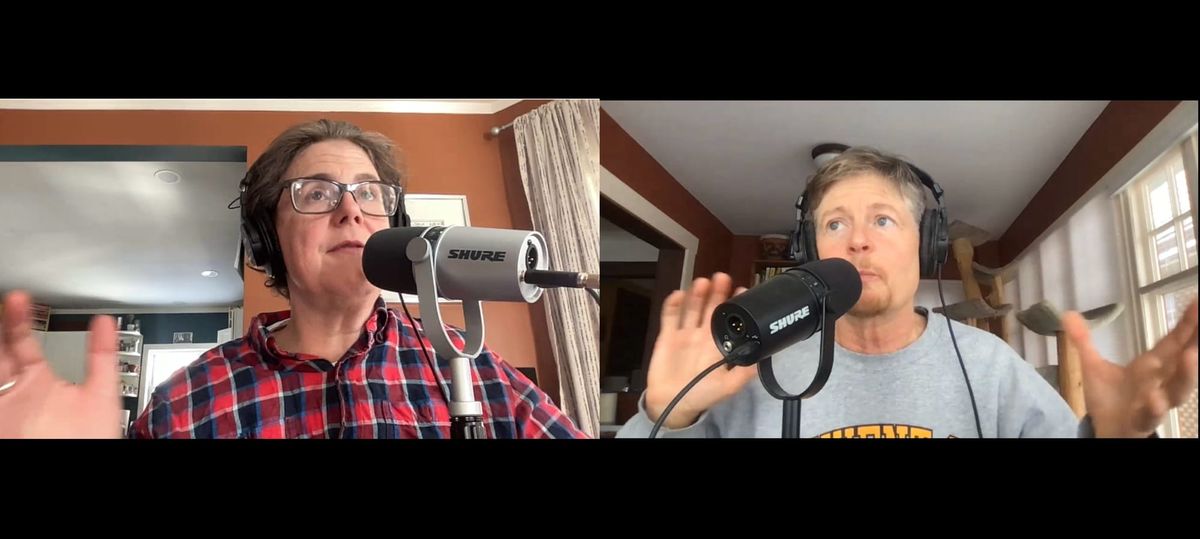
For those of you who prefer transcripts to audio listening, I'm finally getting to share the magic of all the 1970s episodes. Enjoy!
Recorded just before the ICE invasions of the Upper Midwest in 2026, this episode takes up queer people’s enduring creativity in making life possible in the Upper Midwest during the 1970s—and why these histories matter urgently now. In this first of a two-part conversation, host Jack Gieseing interviews historian Finn Enke about lesbian, queer, and trans spaces with a focus on Detroit, Minneapolis–St. Paul, and Chicago. Moving beyond bars as isolated sites, the episode explores how networks of movement—what Enke calls “travel stories”—connected house parties, dollar parties, rent parties, bookstores, coffeehouses, softball fields, warehouses, and bars into living constellations of queer life. We jam about feminist institutions like Amazon Bookstore in Minneapolis, the impact of blue laws in Detroit, and the role of print culture such as Lesbian Connection and Dykes to Watch Out For, as well as the economic precarity, feminist organizing, and dancing that structured all of these spaces everywhere. Drawing on Enke’s book Finding the Movement, the conversation foregrounds how race, class, gender, music, and the built environment shaped who could gather where, who could dance, and who felt welcome.
Jack Gieseking - Narrator: [00:00:00] Welcome to Our Dyke Histories. I'm your host, Jack Gieseking, historian, geographer, and environmental psychologist. We dive into the past and present of lez, queer, trans, sapphic, enby communities decade by decade in collaboration with multicultural lesbian literary and art journal Sinister Wisdom. This season, we're all about dyke bars, with an asterisk, lesbian bars, queer parties, and trans hangouts, the structures that made them necessary, the lives they made possible, and the worlds we made from them. Our Dyke Histories: come for the history, stay for the revolution, gossip, and desire that built us
Sometimes things just time themselves for a reason. And so today we get to talk to the incredible historian Finn Enke about the 1970s in, would you believe it, Detroit, Chicago, and Minneapolis My guess is that most queer trans folks and the people who love us are also suffering a very heavy and angry heart right now.
What's happening by the invasion of ICE, I don't have a better word for it, is agonizing, enraging, unjust, and deserves our response. I am grateful to see so many people protesting, and so I hope this episode gives you some insight into the history of protest and organizing in the making of 1970s lezbi queer trans spaces of the Upper Midwest.
I hold those of the past and the present in the light, and I beam them so much love. I dedicate this episode to them. Now, like the previous two episodes on the '70s, you cannot talk about bars alone anymore. While we talk about so many kinds of lesbian feminist and lesbian feminist spaces, we also need to talk about what Enke calls travel stories.
How do we get between all these wonderful places that form each other? Well, Enke argues you can figure out what dykeness or feminism is by looking at the spaces we make and how. I fell in love with Finn's book in grad school. [00:02:00] I don't know if any of you bothered to read Tina Fey's Bossy Pants, but I did one summer in a pool, and there's a wonderful line about Fey meeting Amy Poehler.
Amy Poehler says to Jimmy Fallon or one of those cis-hettish white guys who's just made a totally misogynist joke, "No, I'm not gonna laugh at your joke." And friends, she does not laugh. When Amy Poehler refuses to partake in this patriarchal pool, Tina Fey says in her head, "My friend is here. My friend is here."
And when I read Finn's book, I knew my friend was here. They have been a nerdy queer history soulmate of my soul, and this is the first time we've met or spoken to each other live after 20 years of correspondence. And that is why this is part one of part two, because wow, did we have a chat. I hope you enjoy this conversation as much as I do.
And again, Upper Midwest, this is for you.
So let's dive into lezbi queer trans earnestness in the Upper Midwest with our guest.
Finn Enke: I'm Finn Enke. I am Professor of Gender and Women's Studies and History and LGBTQ+ Studies at University of Wisconsin in Madison.
Jack Gieseking: We're gonna talk mostly about a book you wrote called Finding the Movement: Sexuality, Contested Space, and Feminist Activism.
And it's also not about New York, LA, or San Francisco.
Finn Enke: Uh-huh.
Jack Gieseking: Why don't you tell us what you decided to research and where, because it's not the usual cities.
Finn Enke: Yeah, it wasn't the usual cities. So I was in graduate school in the early '90s in Minneapolis. I was actually studying First Nations history, but I was really, really struck by how visible queer feminist life was in the Twin Cities.
It was something that, to an extent, I took for granted. I moved to the Twin Cities, and then here's Amazon Books, not Amazon
Jack Gieseking: Right.
Finn Enke: Not com. The original, the original Amazon Books
Jack Gieseking: One of the most important feminist bookstores in the history of feminist bookstores, yeah .
Finn Enke: Yes, and you know, a, a, a physical [00:04:00] space that made its way into Alison Bechdel's comics, and so it's like this iconic kind of feminist queer spaces, and there were, there were queer cafes, and there was just a lot of dyke visibility, um, and there were cabarets, all of these sorts of things
Jack Gieseking - Narrator: There's a terrific quote about Amazon Bookstore from Cheri Register, who recalled, "The Brown House was the commune on 26th Ave and 2400.
I still remember the phone number 30 years later. Two women started the Amazon Bookstore in the Brown House, but the Brown House was this commune of people mainly involved with draft resistance, and that was the headquarters for everything. So if you wanted to find out what was going on, you called 729-6564."
Whoever has that number in Minnesota now, good for you !
Finn Enke: I grew up in East Lansing, Michigan, right? So also a feminist hub. That's where Lesbian Connection came from in the 1970s was East Lansing. Lesbian Connection was a clearing house newsletter where this collective of people gathered all of the lesbian things going on in the country that they were aware of and that they could find.
And they helped this newsletter partly to disseminate this list of resources that were everywhere, and they also took in letters. And so you could just get very much a sense in the early '70s of these vast networks of people spanning the entire country. They might be in very small towns. They might be in cities.
They were just all over. You could really get a sense of people organizing, doing very, very grassroots things. Somebody might get a piece of land and start doing some lesbians on the land thing, and it might be a tiny, tiny little thing in the middle of nowhere, but there it was in Lesbian Connection. Or somebody was starting a battered women's shelter, or somebody was starting some sort of a resource center wherever they were, or just even very homegrown things, we're starting a [00:06:00] dyke book club.
Jack Gieseking: Yeah. Oh my God, it's a life experience if you've never experienced it. I remember letters like, um, um, I don't know if she's that into me, and then people responding like, "She's not that into you. Move on."
Finn Enke: Yes.
Jack Gieseking: Just like peop- and people giving each other advice for like, uh, I went to this B&B and they say it's for lesbians, but it's not, so don't go there.
So it's just this word of mouth.
Finn Enke: That is really amazing. We see some very similar impulses in social media, right? So you get a Facebook group that's for this particular thing, and people share resources, and they share advice, and they tell stories and, and they just connect people all over. But at that time, it was print media.
Um, and the print media circulated all over, sometimes very much by hand.
Jack Gieseking: Yeah.
Finn Enke: You know? People just put a whole bunch in the back of their car and they drove to another town and distributed it.
Jack Gieseking - Narrator: All generations, races, classes, genders are a part of this. I've always found random copies of Lesbian Connection in places I've wandered, and I've always learned something new.
My partner, who somehow always meets old Jewish femme queers who adore her, who wouldn't adore Rachel, love to give her old books and magazines, and so Rachel has a stack of Lesbian Connections. As a shout-out to Lesbian Connection and to all dykes everywhere, those who love us who haven't experienced this, I'm gonna read to you just a couple of short selections from Lesbian Connection 2012.
Your life will be made better for it. There's an amazing Joan Hilty cartoon called Bitter Girl, and it's these two women on a date, and one says to the other, truly, "I had a great time occupying Wall Street with you "Me too. Thanks for the button and soda." "Sorry about the pepper spray." They look deep in each other's eyes.
"I didn't notice." So anyway, that one's great. One of the ways that Lesbian Connection works best is people will write in and share their thoughts or ask for advice. This one Rachel and I loved so much. In a previous issue, [00:08:00] Cindy in Columbus, Ohio in 2012 wrote, "Please take me off the mailing list because I have been saved," underlined, bold, caps, italics And then there's a number of people replying.
There's Karen from Michigan wrote a wonderful two-sentence reply, "Lesbian Connection, please keep me on your mailing list. I have been saved," caps, bold, underlined, italics, "and God loves me the way God made me." And then brilliantly, EJ and PN from Lake Arrowhead, California, reply to Cindy's note to say, "Lesbian Connection, please renew our subscription because we have been saved," bold, italics, caps, underlined, two exclamation points.
They go on, "Yes, saved from everything from the myopic vision and endless distractions of corporate media. Our beloved NPR is out of range while Rush Limbaugh can be heard on three different stations. Yes, we've been saved because we save our Lesbian Connection issues and share them with our lesbian friends and neighbors in the hopes they'll begin their own subscriptions.
Yes, dear ambitious Amazons, for so many things we have been saved." I would stop reading, but Rachel says this one's too funny to not read.
Anne from Minnesota, hey Minnesota, wrote in 2010 to say she was really struggling because she's 44 years old and quote, "My boss is gorgeous. I've thought so since she first hired me almost a year ago, but I know she's straight. Even so, out of nowhere I'm hit with this mind-blowing crush on this woman."
Anyway, I'm gonna stop here. I just wanna tell you, Lesbian Connection is out there. You can subscribe and support them any way you want, and you can share information and knowledge with them just like you can by subscribing and learning so much from our amazing collaborator Sister Wisdom who's been around I think just as long.
These are incredible ways that we share lezbiqueertrans culture.
Jack Gieseking: Yeah, speaking of Bechdel, my friend Margaret Galvin mapped everywhere that Bechdel syndicated her comic at the time. Oh, cool. It w- and, and Bechdel had found every lesbian newsletter, like e- [00:10:00] everywhere, like every women's newsletter.
Finn Enke: Incredible.
Jack Gieseking: And what's amazing is you wind up getting this visual language vernacular a- of like everybody knows who Mo is, right? And so like all these- Yes ... 80s, 90s dykes are reading the same thing. We would have never all been reading the same thing. Thank you, Allison. Yeah.
Finn Enke: Yeah. Yeah.
Jack Gieseking - Narrator: What two incredible sources of lezbiqueertrans information, Lesbian Connection and Allison Bechdel's Dykes to Watch Out For.
Holy cow. This is the L word before there was an L word, and it's awesome, a weekly comic that ran for 25 years. If you've never seen Dykes to Watch Out For, I'm totally putting together a queergeographies.com post all about it The main character we will mention is Mo, who is the central character, very politically committed, anal, anxious, lesbian feminist who likes to complain about everything.
In the comic, she works at Madwimmin, M-A-D-W-I-M-M-I-N bookstore, which is a play on the original Amazon bookstore. Dykes to Watch Out For reached so many dykes, not only across the U.S., a truly shared visual text. When I did all my research with New Yorkers, one of the women I interviewed wore a pin of Mo, the main character, for years as a way to indicate she was queer or even pick up women, because only dykes would know who to watch out for.
I can't recommend it enough.
Finn Enke: So anyway, that experience of going back to my hometown and this was in the early 90s and I could not find queer dyke life there. I know it existed, so sort of it was there, but it didn't have the same presence on the landscape. And similarly, just feminist proliferation didn't have the same escape that it did in the Twin Cities.
So many different kinds of things had been built. You could literally walk through [00:12:00] Minneapolis and walk into spaces and feel that there because you would see people gathering to meet, to organize their whatever it was, whether it was labor, sports, like it could be a very eclectic mix of things, but you would see these women sitting around organizing.
And it was very, very visible to me. And when I went to East Lansing, I thought, ah, no wonder there was something about growing up here because it's still like that, you know, amazingly. It's a great place and I'm very happy for what I gained there growing up.
Jack Gieseking - Narrator: I mention that I'm an environmental psychologist in each of these episodes, but for those of you who don't get it yet, we're going to talk about environmental psychology, and I promise you it is so dope and so amazing to think about queer life through that lens.
I'm so excited that Finn hails from East Lansing. While East Lansing isn't a very queer place, which one of my best friends can attest, I do want to give a shout-out to their business, Smaller Scale Design. Get yourself a handy queer in East Lansing or nearby.
Finn Enke: Heck yeah. But East Lansing did make me very, very conscious of this connection between what happens when we inhabit the place where we live and we walk around, or we get around, however it is we do that.
You know, what we're encountering shapes how we imagine life to be. And so if you're in very segregated spaces, you have a very skewed perception. It's how we occupy space, how we imagine human life.
Jack Gieseking: Yeah, and then space starts to occupy us. Like, we're just like, "Oh, that's just how it is." Yeah. You know? Yeah.
Finn Enke: Yes.
Jack Gieseking: Yeah, and we don't know that another life is possible, what we can build.
Finn Enke: Yeah, so I became very interested in questions about how the built environment is this socially created thing that in turn really structures what people think is possible. Also, how people manage to get around some of the [00:14:00] really, really entrenched barriers.
I,
Jack Gieseking - Narrator: um- And this is amazing that we never met, because Finn Enke is really an environmental psychologist at heart. I'm a historian, although I am not a classically trained historian, as my ex-girlfriend Elizabeth, who is an actually trained historian, if she's listening to this, is dying right now. But we're all growing, right?
The funny thing about time and space is it brings us to environmental psychology, the study of how people relate to and define their sense of space and place, and how space and place relate to and define us. You can think about patterns of segregation through neighborhoods, urban migration, putting a ketchup bottle full of flowers directly between you at a small table when you're trying to have a date and how awkward that is.
It's everything from design, lighting, color in a place to large scale maps and histories. And it's also about the kinds of places we make. Why are we so into bars? What's it with coffee houses and bookstores, softball fields? Why? A lot of the way we recognize each other is through these spaces and places we make.
They become hilarious tropes. For example, if you wanna think of a kind of spatiotemporal mobility, we can think of our love of a U-Haul joke. When we think about space, we should think about time, especially when it comes to lez-bi-queer-trans spaces. How permanent are they? I mean, how many times have you said, "It's closed now"?
This fixation lately on pop-ups, they become the cool thing, and at different moments they become the cool thing. There's also rent parties. I mean, rent parties were frequent, but what was the rhythm? Everything has a temporality that gives us a measured amount of queerness, queer transness in our lives, because many of us don't get to have it every day.
That's what environmental psychology can do for you
Finn Enke: Things were already very much changing in [00:16:00] the '80s, and so I really kinda felt like stopping around the mid-'80s, 'cause just the larger political landscape, the economic landscape, it felt very much like a different moment. Yeah. So what was possible in terms of occupying physical locations was drastically changing.
The ways that people were able to make do with almost no financial resources in the '70s was kinda gone by the early '80s, mid-'80s, and certainly by the '90s. Uh, and the political concerns also had shifted again, too. So I felt like there was this moment that was kinda mid-'60s to late '70s- Mm-hmm ... that just felt like it had a feel.
Jack Gieseking: And oh, did it. It
Finn Enke: really does. It had a feel. Yeah. And you know how-
Jack Gieseking: I didn't know how much until we read this. So what is the landscape of, like, bars and parties at this time? What do they look like? What do they feel like?
Finn Enke: In the '70s, yeah. Well, they were coming up partly intentionally, but sometimes through very informal networks, so it really depended on the social milieu that one might be part of, right?
Whether they were not necessarily specifically bars, but house parties, um, which is what I really focused on in Detroit. But in the Twin Cities as well, people would create these warehouse parties that were just... They were like pop-ups People think pop-ups are new, but pop-ups are as old as humans, right?
Jack Gieseking: Pop-ups are so old. They've been around for eons. I have data-
Finn Enke: Eons ... on that.
Jack Gieseking: Yeah.
Finn Enke: Absolutely. And there was a brilliance to it because you could occupy a warehouse. I mean, at that time, in those years, there were a lot of empty spaces sitting around, empty warehouses, and also a product of some drastically changing economic situations.
But there were a lot of warehouses, and you could go and you could occupy a warehouse for a night. You couldn't probably do it two nights in a row because it was an illegal occupation [00:18:00] of the space, right? You could do it for one night and not get caught, and then skedaddle. You take your sound system in or your band or whatever it is, and you have your party, and it's a very low-cost space 'cause it's basically free.
And people would access those spaces 'cause they would know somebody who knew somebody who maybe they were in some sort of job that taught them how to access that space. So bars there were in all of these cities, old, old bars that sometimes were queer bars after hours or lesbian bars after hours.
Before hours, like during the day and into the early part of the evening, they might be like a neighborhood bar, and everybody from the neighborhood would just think of it as their place. But then after 11:00, 10:00, it would turn into a lesbian bar.
Jack Gieseking: What's amazing, too, is you are still finding rent parties and dollar parties.
We had Cookie Woolner talking with Lillian Faderman about the whole history of rent parties. We didn't talk about dollar parties, though. We had rent parties, buffet flats, pay parties. There's a whole taxonomy, especially that Mabel Hampton talks about in Harlem, but dollar parties in Detroit, what did you see there?
Yeah. What did they do? M-
Finn Enke: mostly people were doing that partly to help pay their rent, right? It was a way of, of circulating financial resources among a community of people, and it simultaneously was building community. They were- spaces that were available to the community. They might be somebody's apartment or somebody's house.
If they were rent parties, pay rent, but, but basically just to circulate financial and other resources within a community.
Jack Gieseking - Narrator: I want to go back and give you a little taste of what Finn has to say about Detroit dollar parties.
Indeed, one of the most important functions of bars was that they were public places in which women circulated information about alternative venues such as dollar parties.
Dollar parties were part of a longstanding, unlicensed [00:20:00] marketplace, and queer dollar parties, above all, developed under the entrepreneurship of women. Compared to bars, they offered such distinct advantages to women that, as Antoinette explained, you could go to a bar and you actually look for the after party.
The social world of dollar parties exceeded that of bars, drawing women from as far away as Grand Rapids and Lansing, Toledo and Cleveland, Windsor and Indianapolis. This is hours and hours people are driving, folks. And also drawing Detroit women who dared not go to a queer bar. At dollar parties, women would freely dance together as they could in no other public place, and people literally lined the sidewalks waiting to get in.
In Peggy's description, we just heard you had a party going and we came. They usually had them in basements. The basements would be full of people. The floors would be sweating we partied so hard. Dollar parties surpassed bars in their community and family building function, creating networks that extended beyond the segregated confines of Detroit's Black neighborhoods.
Damn, that sounds fun.
Finn Enke: I do think of rent parties as being a fairly specifically African American queer phenomenon. But I think that many people were hosting parties to try to circulate money for various things. You know, now we have GoFundMe.
Jack Gieseking: Or insurance.
Finn Enke: Right, right.
Jack Gieseking - Narrator: Queer insurance. In fact, there have been actual studies that show how precarious the idea is that GoFundMe will fulfill any sort of lack of queer insurance.
We are truly set up to live deeply precarious lives, and the changes in trans healthcare are already so shattering and only gonna get worse. How are we going to work and think and heal one another differently? We have a lot of work ahead of us. And we had a lot of work behind us, so we can take some energy from the things we've already come, overcome as a people and fight like hell for the living.
Okay, back to Finn.
Finn Enke: Yeah, but it [00:22:00] was a way of getting around some of the larger economic and cultural structures that surprisingly far into the '70s, actually, there were blue laws and social codes. For example, in downtown bars in Minneapolis, women weren't supposed to go to those bars. They were these blue law codes that was creating a white middle class appearance in which there aren't prostitutes and there aren't lesbians.
So it looks very straight. Some of those places were super queer. In fact, some of the gay bars themselves actually functioned that way. So they could have this very weirdly straight appearance, but literally everybody there was queer, gay men, lesbians, and that just creates this sort of, like, a kind of social code that is explicitly exclusive.
Jack Gieseking - Narrator: In St. Paul and Minneapolis, the Twin Cities, they write, "Lingering blue laws prohibited women from entering any bar if they were not with men and from sitting at the bar proper even when escorted. Restrictions against women actually assisted the development of queer male cruising spaces. Straight appearing establishments that upheld blue laws such as the Viking Room of the Radisson Hotel and the Persian Palms were, quote, 'known as kind of gay bars because their men could watch, meet, and pick one another up in a legitimized homosocial space.'"
Finn goes on, "If sexist blue laws helped gay men create publicly acceptable queer male space, they simultaneously hindered queer women's presence in these same places. These policies were directly tied to stereotypes of women as people who don't buy enough drinks, tip enough, or pay their way." In economic as well as sexual terms, women were bad business for gay bars.
But if their presence could be regulated and limited, they would enhance the class status of queer male spaces.
What the hell? So there are a lot of queer bars that are, that are gay men, they're lesbians, [00:24:00] there's trans folks kind of all hanging out together in the 60s, and do those continue in the 70s or, or do they, or do they shift?
Because the blue laws are still there.
Finn Enke: Yeah, they do shift. They shift partly because people challenge those laws. Partly it became more possible for women to have their own bank accounts and own their own businesses. Get a--
Jack Gieseking: --credit card. Women can get a credit card in 1976.
Finn Enke: Get a credit card, right. Right.
Jack Gieseking: Yeah, for the first time.
Finn Enke: Right, and so you are starting to see more broadly businesses and things that are owned by women.
Jack Gieseking - Narrator: Our financial precarity, our insurance precarity is part of a long history of economic injustice that women and trans people have faced. I actually didn't know about the Equal Credit Opportunity Act of 1974, but get this, it banned discrimination in lending, allowed women to get credit cards for the first time, and things like loans, AKA they could get a house by themselves and get a mortgage, and to get the credit cards and loans in their own name without male cosigners, even if they were married.
Whoa, this is mind-blowing for the time. This means women can set up businesses on their own. It's just, it's wild. And a shout-out to lesbian land. We don't get to talk about it a lot in my 70s episodes. I plan to get to it in another future season, but as people are trying to leave what they see as very masculinist, patriarchal cities and to create new spaces out on the land, and people of course are still doing this, we know that many of them fail, and a lot of dykes make fun of that as a trope.
But when you think back to the 1970s, no one was allowed to have their own money before, or to buy land, or to know how to do things on their own, or even allowed to physically exercise or play sports in public. Of course they really didn't know what they were doing. And yes, a lot of them slept together and that didn't help either.
Okay, back to Finn.
Finn Enke: Alongside a proliferation of lesbian bars and [00:26:00] queer bars, there's also a proliferation simultaneously of alternative spaces like coffee houses. People are building many, many different sorts of gathering places. Even bookstores are a part of that. I see many of these things are kind of working hand in hand.
So as feminist and dyke softball teams proliferate, they need more social spaces to go after the games. There is some connection between the proliferation of all of these different types of gathering spaces, right? They support one another.
Jack Gieseking: The bars are paying for the jerseys and they're paying for the equipment, a lot of them.
And that's true too. Yes. And so then you go to the bar that supports you afterwards.
Finn Enke: Yeah.
Jack Gieseking: So the bar's getting an economy back and forth. Exactly. But yes, they need other places to go. People don't just want to always go to bars and they don't have to anymore. Mm-hmm. Right.
Finn Enke: Right.
Jack Gieseking: Yeah. And restaurants as well.
There's just--
Finn Enke: Right.
Jack Gieseking: Just this whole world to go out into. It's not, you know- Yeah. And that's, that really starts in the '70s. That's also happening in New York, in San Francisco, Minneapolis. Is it happening in Detroit in the same way it happens in Minneapolis?
Finn Enke: Yes. There's a variety of different kinds of gathering spaces, institutions, feminist institutions, lesbian institutions that are built on some different kinds of models that are intended to be Gathering spaces, cultural spaces, advancing different types of community, advancing- Right
say business interests, different types of resources, different types of interests.
Jack Gieseking - Narrator: One of the things in the other '70s episodes and that really stood out to me about Finn's book is the discussion of dancing. Because people are talking about, of course we went dancing. And in the '80s there's still dancing.
In the '90s there's more standing around. There's some dancing, sure, there's big parties, but I think that actually started in the '70s where dancing starts to be put in certain spaces and it gets pulled farther and farther from the bar. But one group of people [00:28:00] who always expect to dance at the bar is Black women.
Finn wrote some incredible stuff, and I'm gonna read from that because I don't want you to miss any of this. As Black lesbians constituted a community-minded culture in part through dollar parties, they also asserted an increasing presence in Black queer bars such as Georgia's Inca Room and The Birdcage.
In the late '60s they claimed The Casbah, formerly a white women's bar abandoned by white flight. In the early '70s women took over weekend management of The Barbary Coast, formerly one of the most popular bars for Black gay men. They turned it into a women's bar Fridays through Sundays and even began to hold special events such as weddings there.
The Barbary Coast was the first bar where many women remembering partying all night. However, women did not party there all night. Rather they stayed until closing and then they piled into cars to go to Antoinette's or elsewhere for the after party. Some African American women ventured to white bars like The Palais, Fred's, Todd's.
But as Peggy, who's a Black lesbian explains, "We didn't have crossover bars. You had Black bars for women, white bars for women, Black bars for men, white bars for men. Music was a lot different then. You had white music, you had Black music. So if you were a Black girl and you went to white bars, a lot of times they wouldn't even speak to you 'cause they were nasty to us.
And when you went there the music was white music, so you really couldn't dance. You went to the Black bar to be amidst your own." I just love these names. And of course I just can't get over about like lesbian acoustic folk rock Isn't what we often dance to. People are walking out the door, and this is keeping us apart.
So people make their own bar, they make their own spaces, but it reproduces this gap. How do we mend this gap? It's a big question, and it's one the lez-bi-queer-trans movement has not really gotten to yet. In the meantime, as we're sitting with it, let's get back to chatting with Finn.
Jack Gieseking: It never occurred to me--
Finn Enke: Right, right.
Jack Gieseking: How much music is defining these spaces as much as race and racism and- Yeah ... and the [00:30:00] inability to trust one another and, and recognize one another. Yeah, 'cause it's g- like, dancing kind of stops. There are still dances, there's parties, but my queer New Yorker, one of my participants, was like, "We called it the lesbian stand around by the '80s, the NYU dance parties," 'cause everyone's just awkwardly leaning against the wall.
But you hear about this whole history of queer dancing that's important to, to White people, to Black people, to Brown people, to young, to old. Like, w- no matter what- Yeah ... I need to dance.
Finn Enke: Yeah, and it's true, and it like, like, to such an extent that it wasn't just bars, right? I mean, sometimes coffee houses were specifically about that, or that they would have their event, whatever the event might be, and afterwards there was always, they always danced afterwards.
Jack Gieseking: That's awesome.
Finn Enke: Always. But I think what you're saying is so very culturally specific, right? So you've got these very racially segregated, larger geographical forces that are very hard to undo, and a lot of organizing Ends up reinforcing some of those segregations. But it is also true that any time you create a space, the kind of music you put in, the kind of decoration you put-
Jack Gieseking: What, yeah, what alcohol you sell or don't sell, the prices, the names, everything, everything, the design, everything tells you if you're welcome there or not.
Is this bar for you? Is this party for you?
Finn Enke: Yes. Do you recognize yourself here? And there was only so much diversity of, uh, whatever that might mean that any one space could provide, right? So some people aren't gonna be comfortable with the shirtless dancing. Some people might not be comfortable- Right
but it's still okay for them, you know? So, so they're all, they're all kind of doing their own thing and creating their own cultural milieu, and there might be a great deal of overlap in people who occupy a variety of different spaces, but the spaces themselves may end up having a particular feel. Yeah.
And that goes on into the '90s.
Jack Gieseking: You know, it had, uh, many of my Black participants in A Queer in New York were like- Mm-hmm ... "Uh, this Ani DiFranco [00:32:00] thing doesn't work for me. Like, I walk into these white bars and it's, it's another-" Uh-huh. "... um, both hands playing, and I gotta turn around and, and walk out. Um, it's, it tells me I'm not welcome there."
So it, and it continues- Yeah ... till today. It's, um- Yes ... it's so obvious. Yes. One thing that you write about that, that no one had said yet that is really the basis of me thinking about, like, lez-bi-queer-trans spaces not as territory, but also as, like, a constellation, like places that come and go. They're still important to us.
The light comes still to us today like a star in the sky, and it's the paths our bodies take between them that are so important. What I just described about constellations is my theory about how lez-bi-queer-trans people make space. It's not like we've ever really had that much of a territory, or even if we claimed it, we got to keep it for more than, I don't know, a couple years, months, days.
Part of why I came up with the idea of constellations is there's a sociologist named Manuel Castells who wrote so much about gay men's neighborhoods in San Francisco in the early 80s, and then said, "Lesbians, I couldn't find the lesbians. They seem to like social networks and potlucks." Now, that's true.
We do love a social network, and we do love a potluck, but women's spaces, trans spaces intensely all the more, have always been marginalized, overridden, bought out, destroyed, attacked We have to occupy space. Bodies must be in space to exist. Trying to put us in a home, trying to obscure us, it doesn't work.
I mention constellations as a way to think about lezbiqueer trans spaces across generations. In this episode, because these travel stories are so important, it's not just the places we make, but the lines we make between them that sustain us. Sometimes we just wanna talk about the bar or the bookstore or this ex-girlfriend's apartment where you had the best sex of your life or, or the softball field or the soccer field.
Could be basketball or the sex toy store, goddess knows. Whatever gives you your most joy. There's entire world building we make that we stitch together our worlds that is not [00:34:00] territorial in this white masculinist colonial framework, but it was a way of making space and connecting our worlds otherwise.
And of course, what lezbiqueer trans doesn't love, hate, or at least know something about the Zodiac? Greetings from this Leo Cancer Moon,
Finn Enke: Aries rising. And stars are fantastic.
Jack Gieseking: For example, there was a path that people would take from the LGBT Center to go to Cubbyhole and Henrietta's for years, and for something like 20 years there was a cat caller, and so my participants walked on the same side of the street for 20 years.
So it was even distinct to know-
Finn Enke: Wow.
... where that schmuck lived. And but you called them travel stories, and that the stories that aren't in the archive-
Finn Enke: Mm ...
Jack Gieseking: are the stories about how we get to and from the bar, from the softball, from the coffee house. So tell us more about that- Mm ... and how they- Mm-hmm ... showed up and, and what those are.
Finn Enke: Yeah, that came up out of both, again, recognizing that things are differently visible depending on who you are, and they're differently accessible depending on, you know, the s- configuration of your embodiment as you go through this thing that we call public space. We call this public space, but it's actually this incredibly fractured
It's maybe for many people acts more like a maze. There's walls around where you go and where you don't go, and how you do the going, right? And this was another thing that was very exciting about this project was that all over what I'm seeing is queer people being just endlessly imaginative- Yeah ... um, about making things happen in a very uninvited ways.
It wasn't like things were just handed to people, but people were very, very creative in making things happen within a built environment that was just shot through with every single kind of hierarchy and discrimination that you can imagine.
Jack Gieseking - Narrator: I hate to tell you, but we're gonna pause right [00:36:00] here. Thank you for listening, you wonderful people.
As we finish part one of two, I hope you're near those you love and who love you in these incredibly hard times. And again, I beam all the light and love we have to offer from our whole team to those in the upper Midwest and beyond. Let's keep melting that ICE and other injustice.
Thanks for tuning in to Our Dyke Histories in collaboration with Sinister Wisdom.
Connect with us on Instagram and Facebook at @ourdykehistories. Follow and support me, Jack Gieseking, via my newsletter, Queer Geographies, at queergeographies.com. It's packed with everything we couldn't fit into this podcast. Our Dyke Histories is run by a queer, dykey, and mighty team. ODH is hosted, edited, and produced by Jack Gieseking, co-produced and co-edited by Cade Waldo, and co-edited by Mel Whitesell.
Our social media manager is Audrey Wilkinson, and our fabulous interns include Michaela Hayes, Syd Guntharp, Paige LeMay, Sophie McLean, and Sarah Parsons. Our theme song, Like Honey, was graciously gifted to us from Kit Orion at kitorion.com. We're forever grateful to our co-producer, Julie Enzer, and the entire team at Sinister Wisdom.
Publishing since 1976, Sinister Wisdom recognizes the power of language to reflect diverse, multicultural lesbian experiences, and to enhance our ability to develop critical judgment as lesbians evaluating our community and our world. We share Our Dyke Histories so we know more about who we are, how we were, and what we fight to never forget.
Lez keep doing it, y'all.