Reading Guide: Mona’s Candle Light in San Francisco, 1950
You wanna go to a dyke bar where everybody knows your name? We all do. But as we wait for that miracle, go back in time to Mona's.

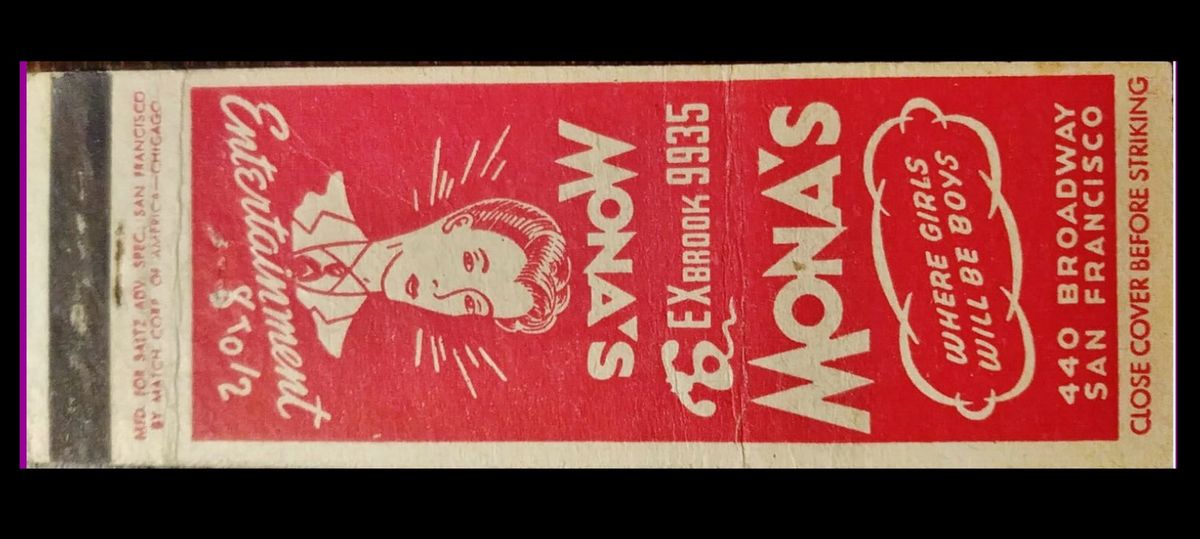
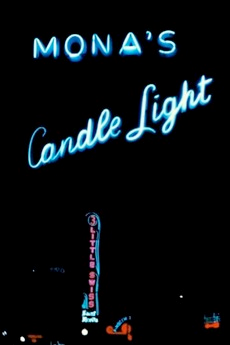
We're chugging along on our Reading Guide Fridays with quick chats on some profound materials re dykes in the 1940s-1960s, both from that era or written/recorded in retrospect. Our third selection was, gasp, recorded that period.
Yes, I mean that for exactly 6min30sec you get to see what a lezbiqueertrans bar looked like in the 1950s! Where would dykes be without blurry amateur films and gender fuckery?
Discovered amid rolls of unmarked film at a flea market, Mona’s Candle Light is a testament to the power of the archive, transporting viewers to a hazy evening at the legendary lesbian nightclub for just six ephemeral minutes.We have no idea who made it but goddexx bless the UCLAFilm & Television Archive and OutFest for preserving it.
The Mona’s Candle Light film is also proof that Mona Sargent deserves to be a bigger name in the dyke world. Since the 1940s, she accidentally cornered the market on San Francisco’s lesbian nightclubs and drag events. By giving jobs to wayward dykes ho had been kicked out of their homes, her bars brought queer culture to the “bohemians” while still cultivating some of the earliest lesbian community spaces. (Read more about the history here or listen to an entire episode of the Cruising Pod podcast with actual archival audio with Mona herself).
As the video begins, neon signs blink against the night sky until the camera lands on one that reads “Mona’s Candle Light” – femme lounge singer Jan Janssen comes into focus, spotlighted onstage in a corner of the shadowy room. Introduced by drag king Jimmy Reynard, she performs two songs while apathetic straight couples watch from the audience (this is my one complaint: where are the dykes? These people don’t even know how lucky they are!).
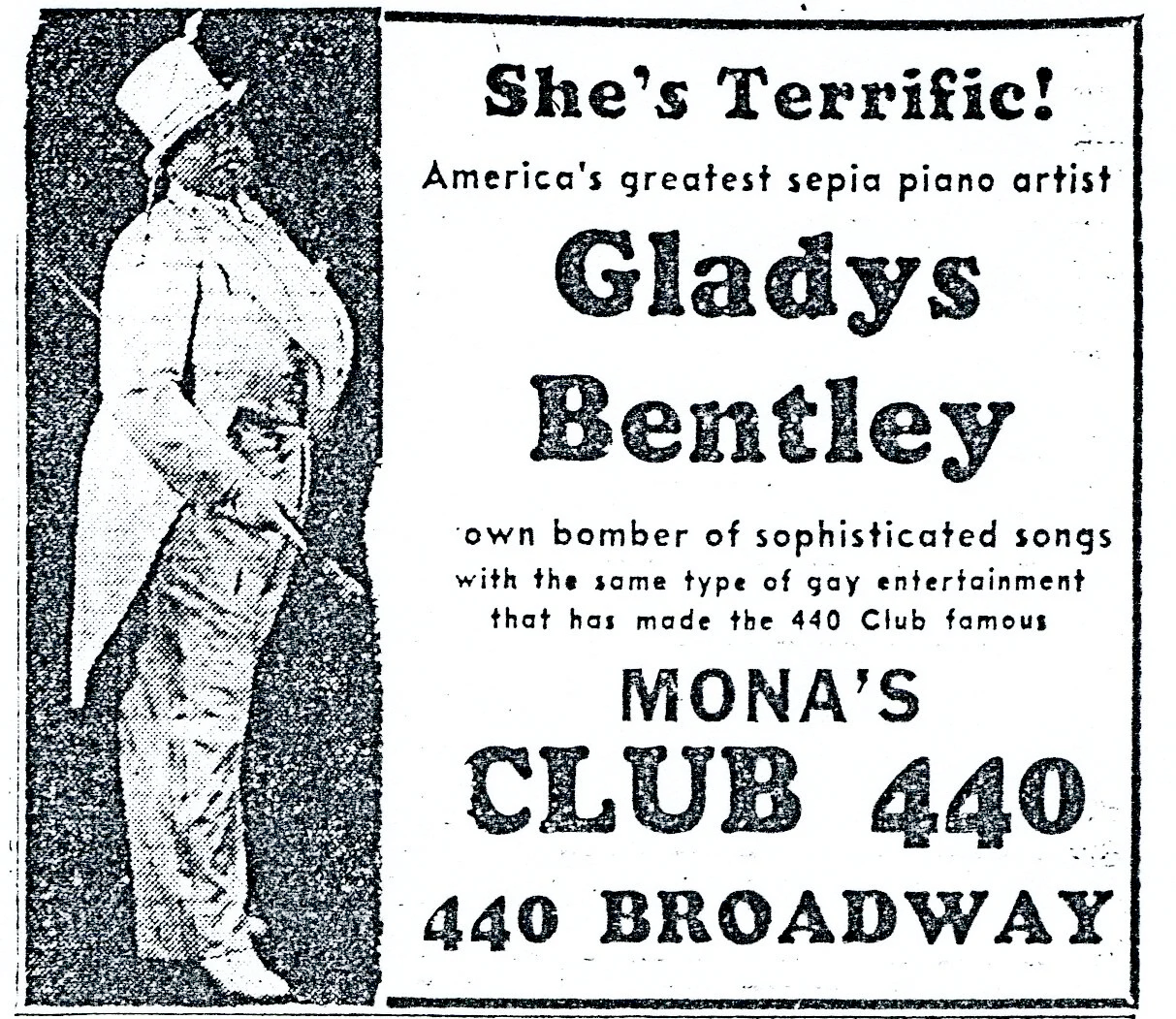
Mona’s stayed open for decades in various forms since 1935, making it one of the oldest and longest-running lesbian bars in the country. It hosted the famous and fabulous Gladys Bentley and other so-called “gender impersonators” as a form of racial and sexual tourism, per historian Nan Boyd’s Wide-Open Town: A History of Queer San Francisco to 1965, the definitive history of LGBTQ+ San Francisco. Along with her in-depth oral histories of people like Mona herself and regulars like Reba Hudson, Boyd collected a series of photos of Mona’s which the GLBT Historical Society of San Francisco has made public. Swoonnnnn.
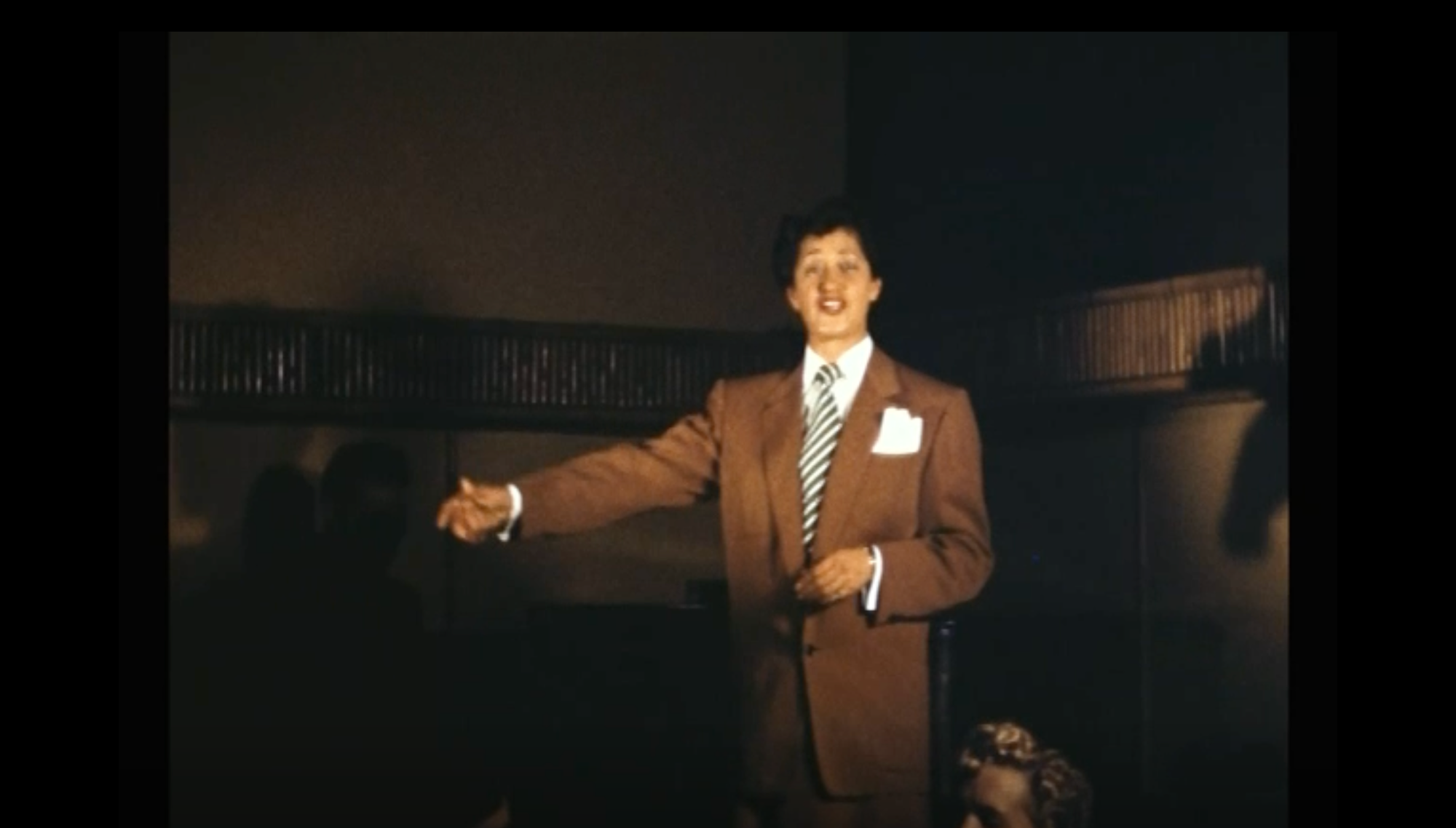
Back to the documentary: this invaluable footage makes your queer/trans bodymind feel invaluable and loveable too, even to witness it. It’s a cinematic candle illuminating the darkness of the lesbian underground scene. It also helps you wrestle with how utterly buttoned-up the 1950s was with the very white, very professorial-looking audience Jimmie and co. are playing for. As dyke bars across the country disappear, it’s powerful to witness this fragment of queer history – every city deserves a place like Mona’s, “where girls will be boys!”
We have some pretty epic Our Dykes Histories episodes on the 1940s-1960s for you to peruse for more sagas of the mid-20th century lesbian. <3
- Queer Pulp, Dark Bars & the Police State, 1940s-1960s with Joan Nestle, Hugh Ryan, and Alix Genter
- The Gender of Desire: Joan Nestle’s Last Interview, 1940s-1960s NYC
To complement the launch of the Our Dyke Histories podcast, co-produced in collaboration with Sinister Wisdom, I put together a reading guide with my interns Michaela Hayes and Mel Whitesell, with expanded edits to this version by me. A shorter version of this post was originally published with the Sinister Wisdom Blog, 22 Jun 2026. This post was expanded by the lead author.