That’s Not Violette Morris
Not all butches look alike. My trans clocking on how the famous Le Monocle photos are misread -- and the queer possibilities therein.

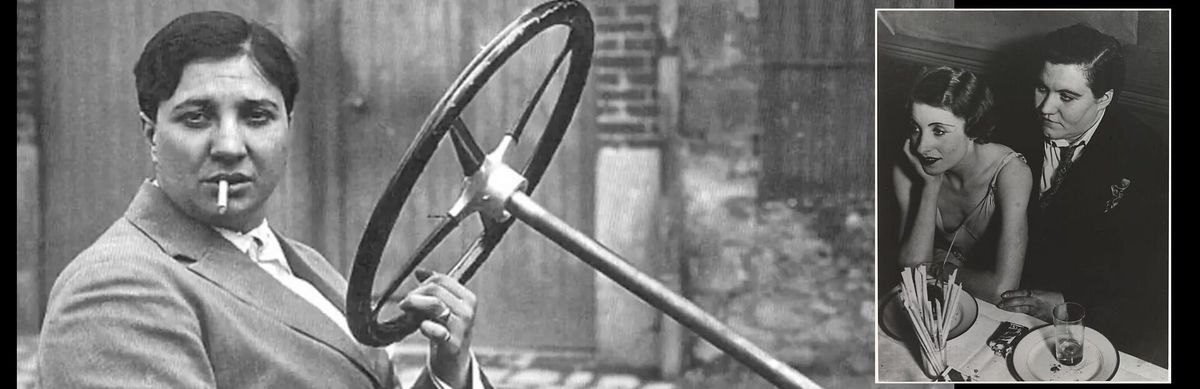
What if the one of most famous butch photos in the world really isn't the photo of the Nazi collaborator Violette Morris? What butches of the past may yet be? Come join me in reckoning with the limits and possibilities of our tr/ancestors.
I Am Not Hannah Gadsby
I suppose this post began for me decades ago when visiting my historic women's college for a large event. After two days of group work and meals together, one of the long-time fundraising directors called me "Annemarie." The actual Annemarie, a much louder sports psychologist, bellowed in reply while laughing: "Oh my goodness, can you not tell all the fat butches apart anymore? Gieseking's at least a foot taller than me! Jesus, is it because we wear glasses?! It can be confusing for the straights, I know!"
But it's not like this only happens to Annemarie and I. Since the launch of Nanette in 2018, I've been mistaken on the streets as Hannah Gadsby of places from New York to Paris, San Francisco to Northampton! We are both just sizeable folks who wear glasses. So lez be clear about two things:
1) Not all butches / trans mascs look alike.
2) Every butch/masc deserves their/her/his own voice.
Which brings us back to Violette Morris, the Nazi who, I argue, is not in this famou Le Monocle photo below.
From Race Car Driver and Shot Putter to Nazi
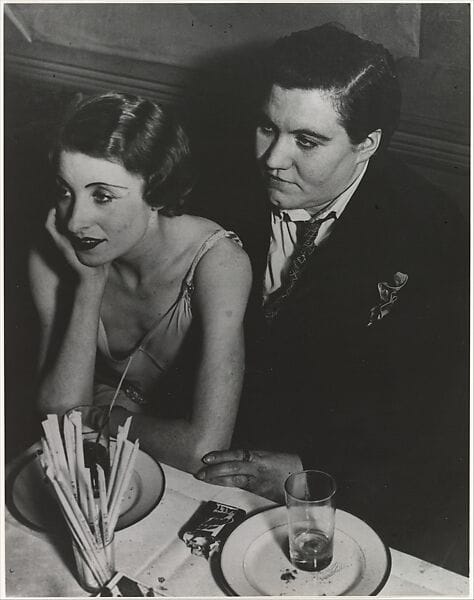
Morris is supposedly the butch in the famous 1932 Brassaï photograph, "A Couple at Le Monocle, Paris." Morris herself was highly photographed because she was a fascination to French readers. I mean, women weren't legally able to wear pants in France until 2013! Thankfully, they did anyway since the 1950s. Surely, a butch / masc of the 1920s-1930s winning sporting competitions against men, smoking, and other public adventures about struck at the very heart of French cisheteopatriarchy and misogyny, even as tabloid fodder. Hundreds of photos exist of her in the public record. She was even photographed with the her friend, renowned bisexual dancer Josephine Baker.
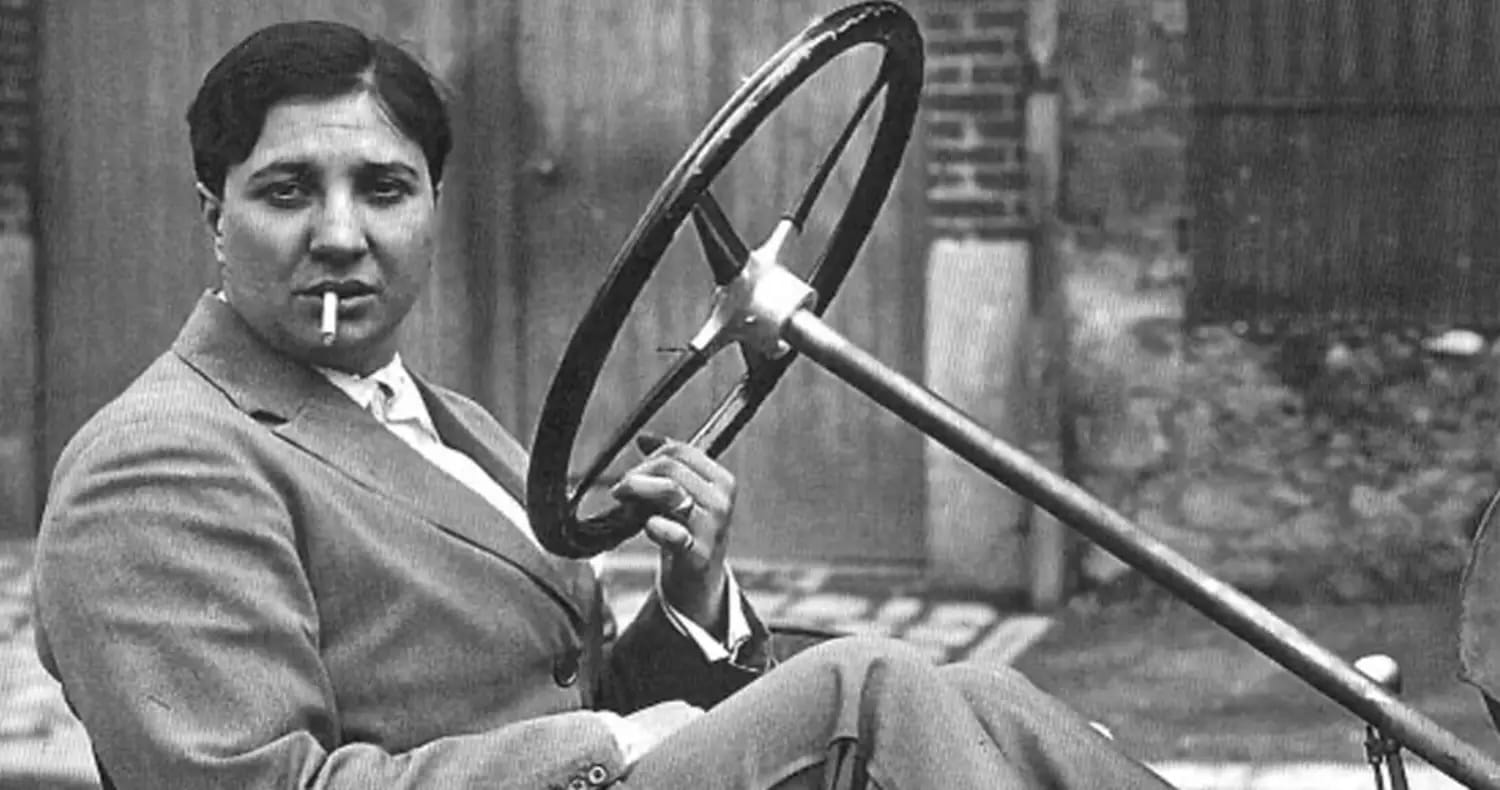
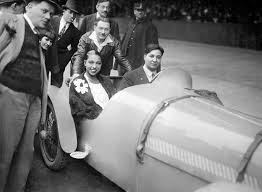
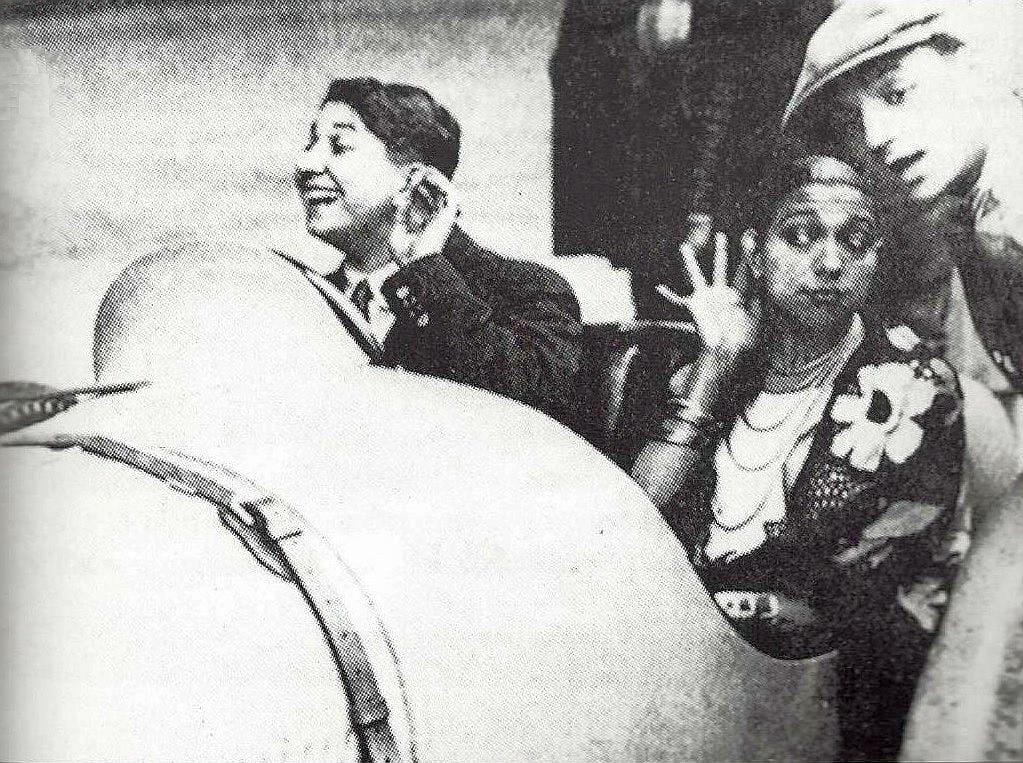
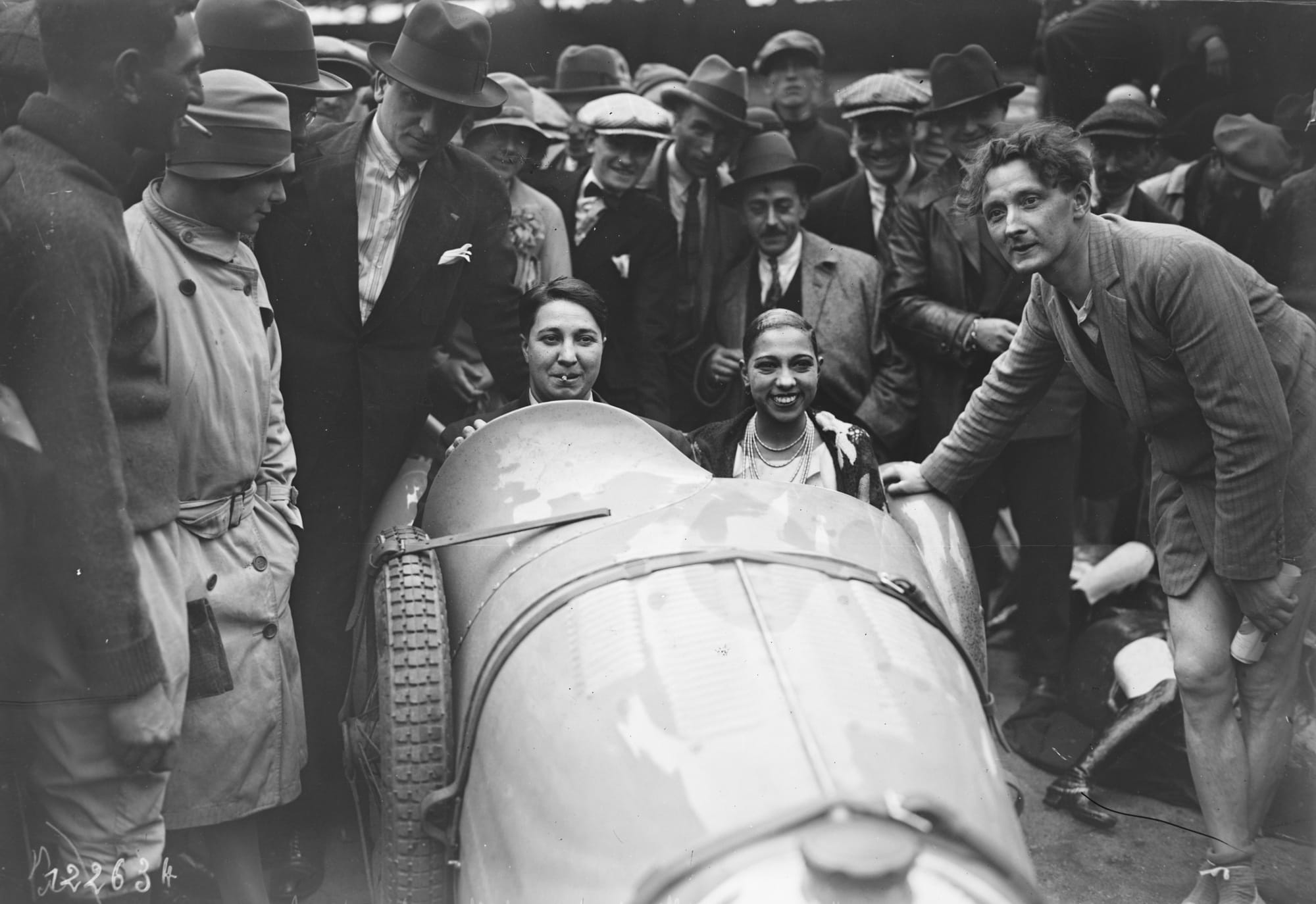
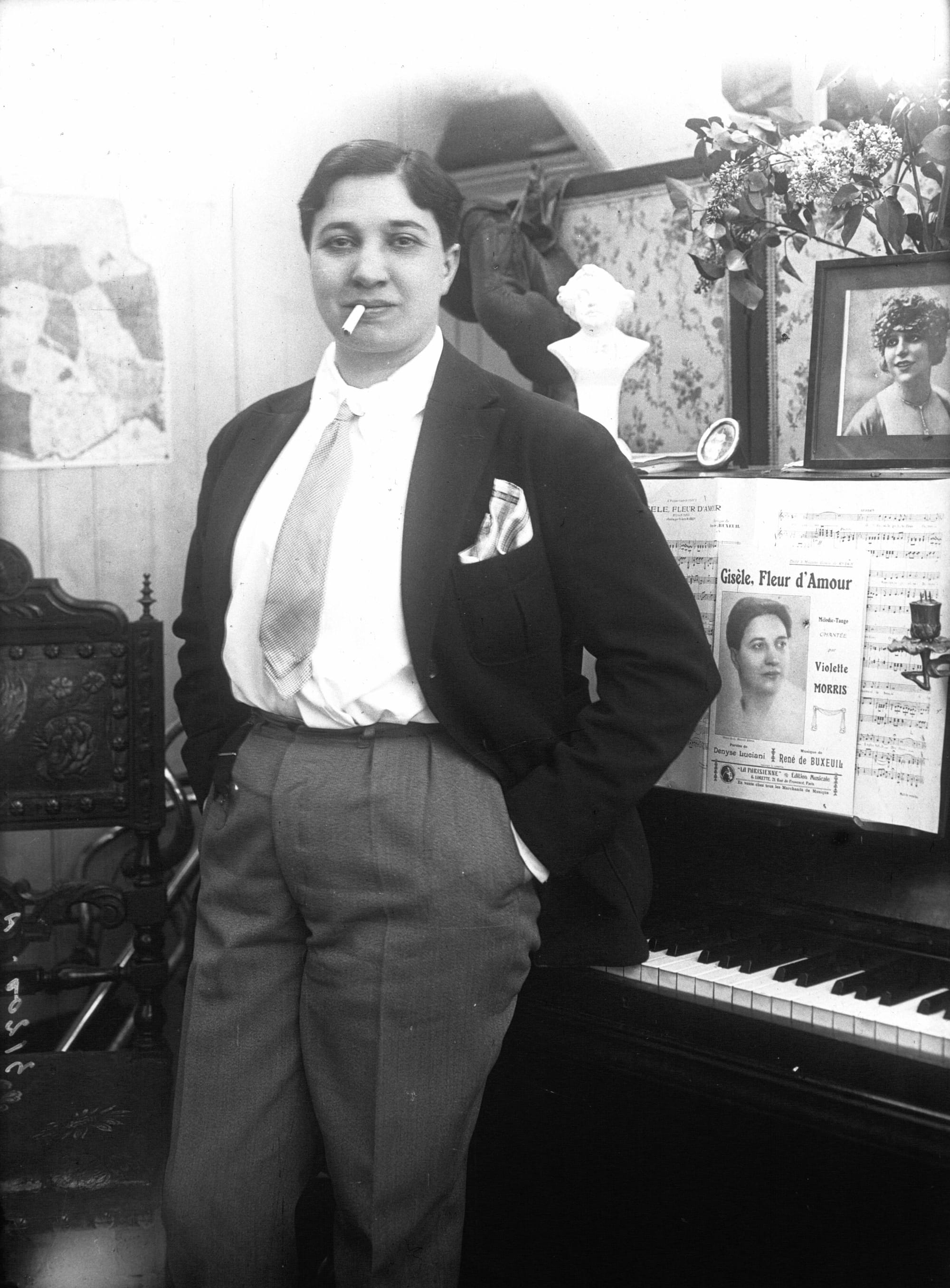
A smattering oh Violette Morris photos, including some with Josephine Baker (two in the top row, and left in the middle row).
But, besides being a very hunky and sportsballplayer, race car driver, and general athlete extraordinaire of the early 20th century, Violette Morris was a Nazi. Such a truly bad gay. That's not the focus of our chat though –
What's important for us today? That’s not Violette Morris in Brassaï's photo.
Relying on visual analysis and the written histories of Morris, I only wish I could visit all of these original materials and dedicate my time to digging into them. In fact I'm relying on ye olde queer-trans clocking. Because trans people don't use LGBTQ recognition on queer-trans people of the past, we have to do it the old fashion way: drawing on the embodied knowledge of lezbiqueertrans people to read another body and recognize it as one of their own.
Tits, Morris, and a Lack of Both
Morris attained a double masectomy for herself in 1929–an incredible feat! I got mine in 2016. It was utter joy, and it also helps me spot the arc of trans masc torso with ease.
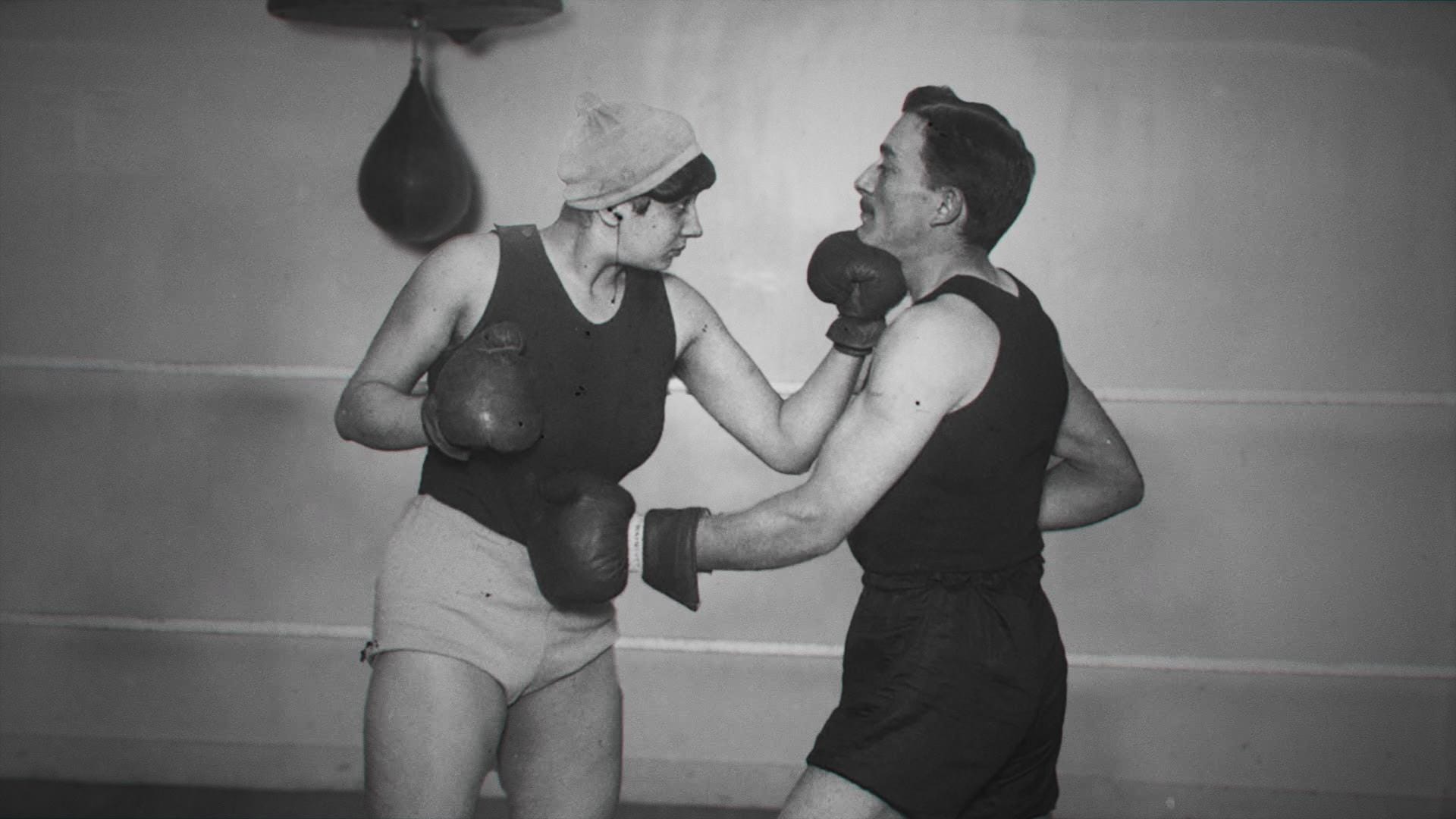
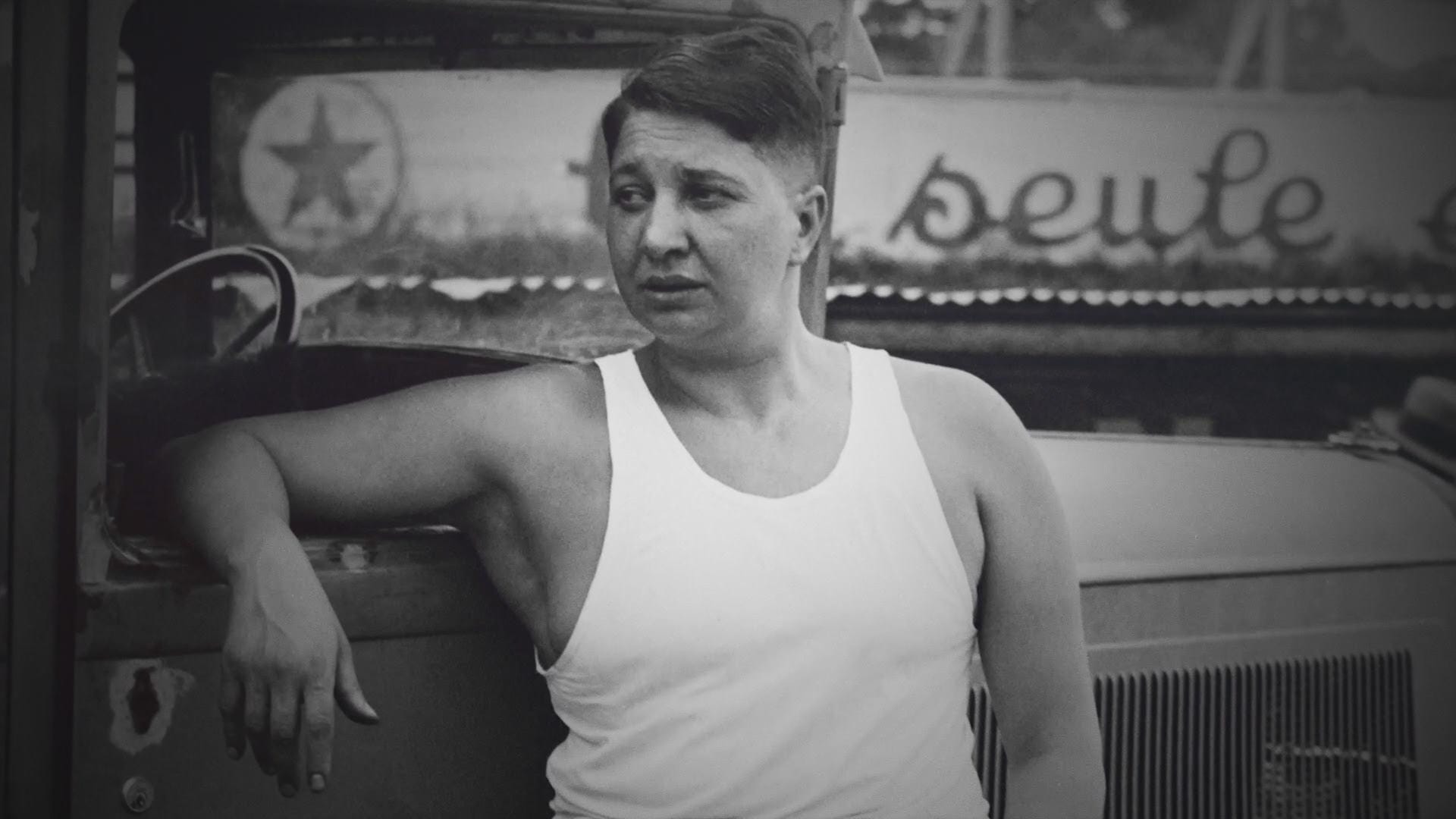
Morris' before- and after-boob look.
Return to the butch/masc in "Lesbian Couple at Le Monocle." She/he/they looks to be of a boobed persuasion still. In the decades of sports bra I wore to flatten my chest, the arc of her shirt and tie is so easily recognizable. When I passed around the photo to a dozen others who had top surgery, and another dozen who dated/married people who did, all concurred. Too, the angle of the femme's arm indicates a breast to be leaned into – and what a sexy placement for them both.
We could also dig deep into the shape of lips, hair part, posture, and more. And why not facial recognition software? Because the QT folks who do that work don't label people in the past one gender or sexuality or otherwise, don't recognize them into an identity they may not want. Maybe someone will someday anyway and settle the discussion, or there are more French newspapers to be dug through for proof. Either way, my pecs and my gut tell me it isn't Morris.
Morris had top surgery in 1929 + this Le Monocle photo is from 1932 = sfter my hours of research and a strong pool of queer-trans reviewers too, that's just not Morris.
Which means we are left with an even better set of questions...
Accepting the Unnamed Butch – and Femme – for Who They Are
If it's not Violette Morris, who is it?
Just as important!, who is this anonymous femme?
And who are the other queers of Brassaï's famed Le Monocle series beyond bar owner Lulu?
There's something exciting and important about this anonymous couple and anonymous queers, who they were and who they – and, by extension, we – may yet be revealed to be. The possibilities of this photo seem brighter now without Morris attached, but also unhinged from that rare slice of certitude that trans historians get to so very rarely rely on.
Then there is the anonymous femme – left anonymous all of these years without as much concern or discussion. If this isn't misogyny, what is? And what of all the genderqueers in the Le Monocle photos? However do we recognize and herald her, their, and his possibilities?
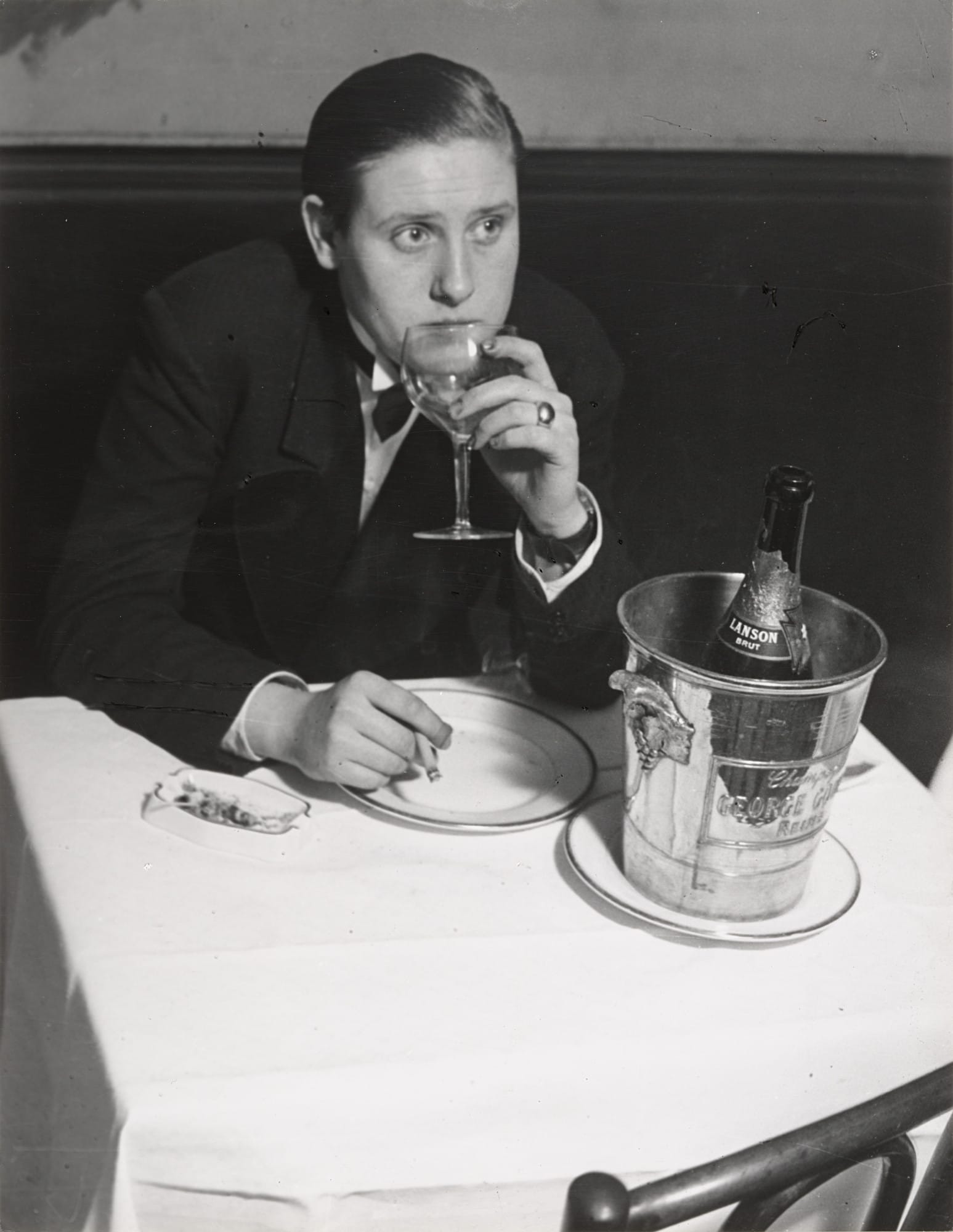
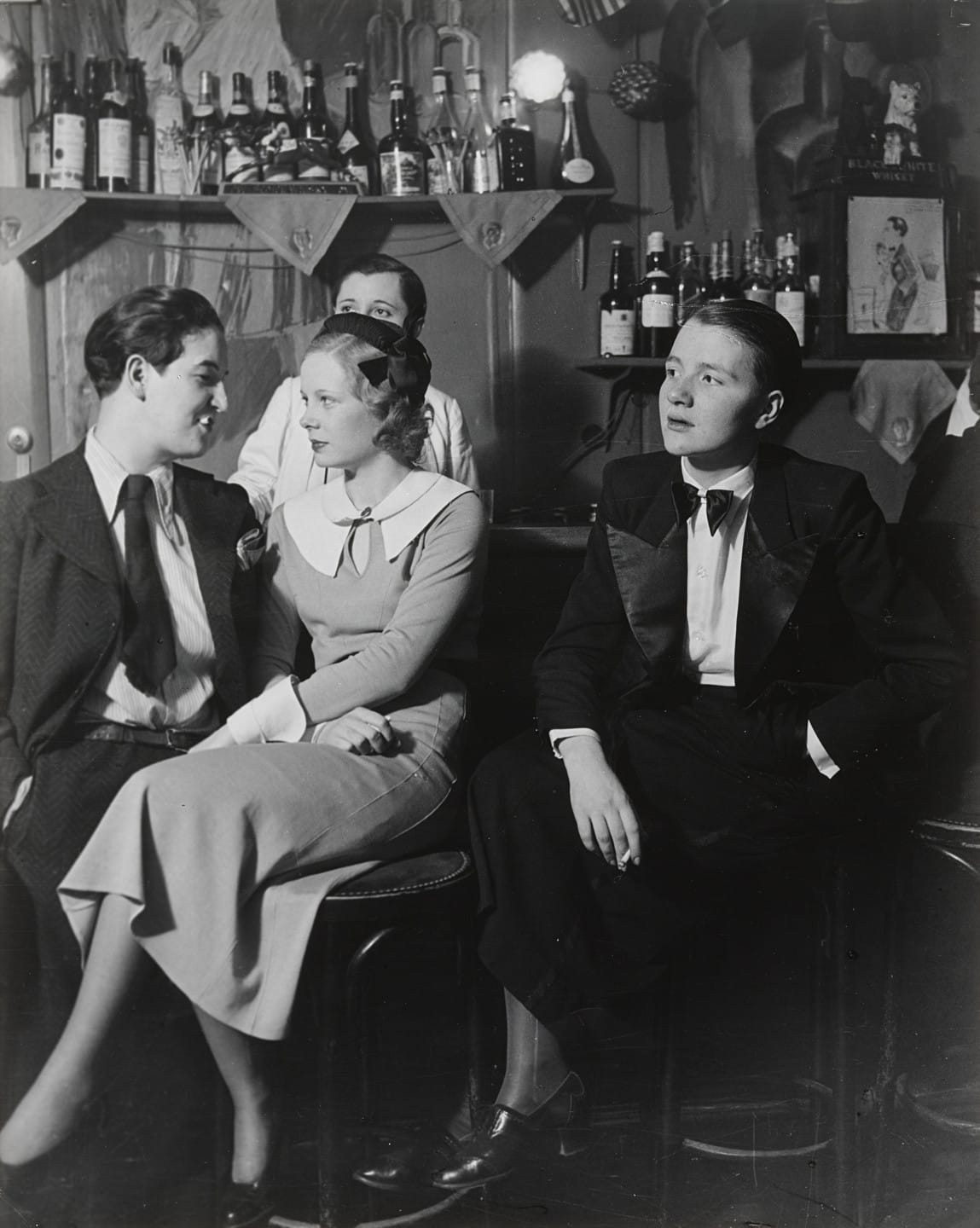
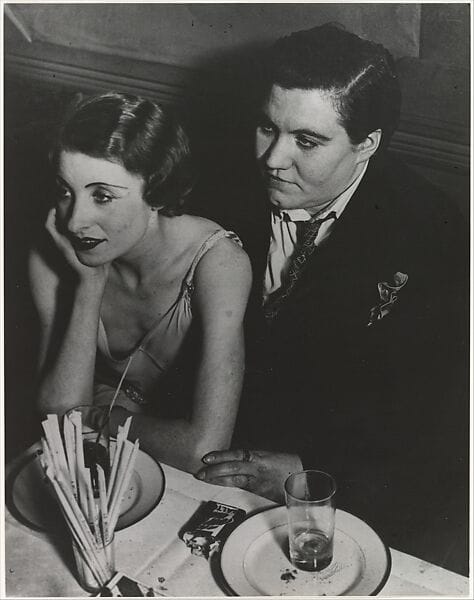
Brassaî's Le Monocle photos, 1932.
We don't know what became of the anonymous queers and transes in these photos, beyond bar owner Lulu (the brunette with the cigarette, flirting on the barstool). We can hope they survived the war, the Nazis, and the Holocaust at that, and we can also hope they didn't join the Nazis like Morris. And we can hope all the humans in the Le Monocle photos got to and work toward making sure the queers that come after them still gets to be them/her/himself.
Fuck Fascism
And so, we go on fighting fascism, again and hopefully not always.
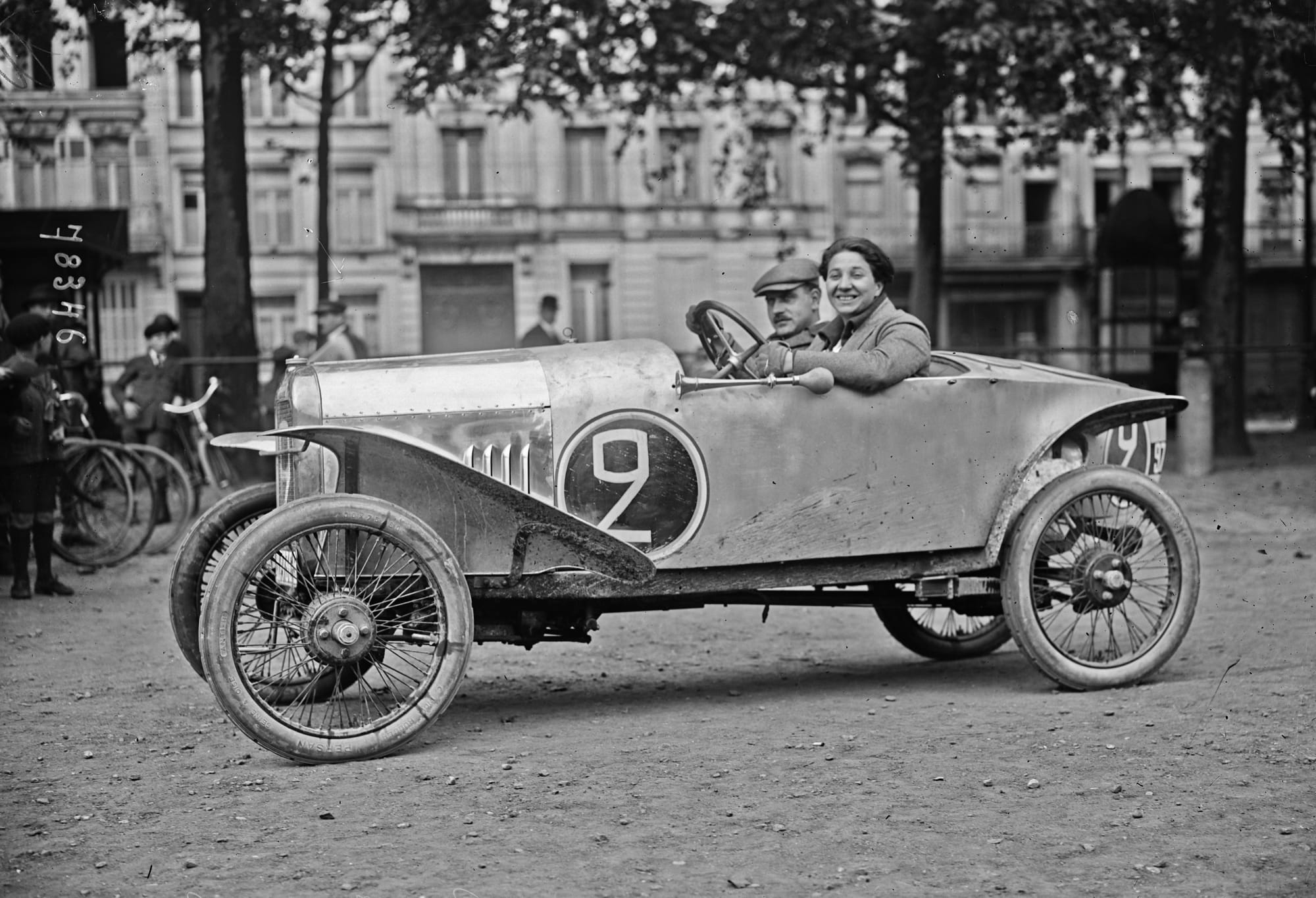
I leave you in complexity: with a glimpse of Morris, as a young, happy race car driver, back when she still smiles, and a decade before her Nazism. If you're not done with these photos, I have more content for you:
- More on Morris: Is "Fat Claude" the Dyke Olympian-cum-Nazi Violette Morris?
- About Brassaï, Le Monocle photographer: He Who Photographed Dykedom
- A reading guide on the Le Monocle photos, and
- And thank Athena that the lezbiqueertrans historian of Paris, Tamara Chaplin, will be joining the podcast as a guest this fall!
Many thanks to @Cheers who comment on a previous post helped to prompt this writing!