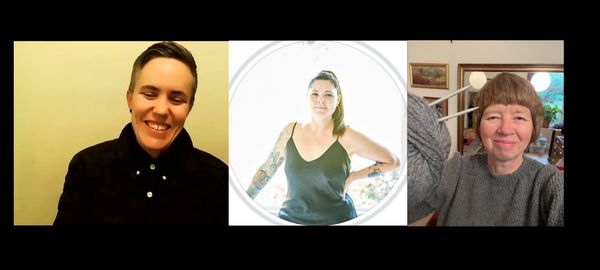
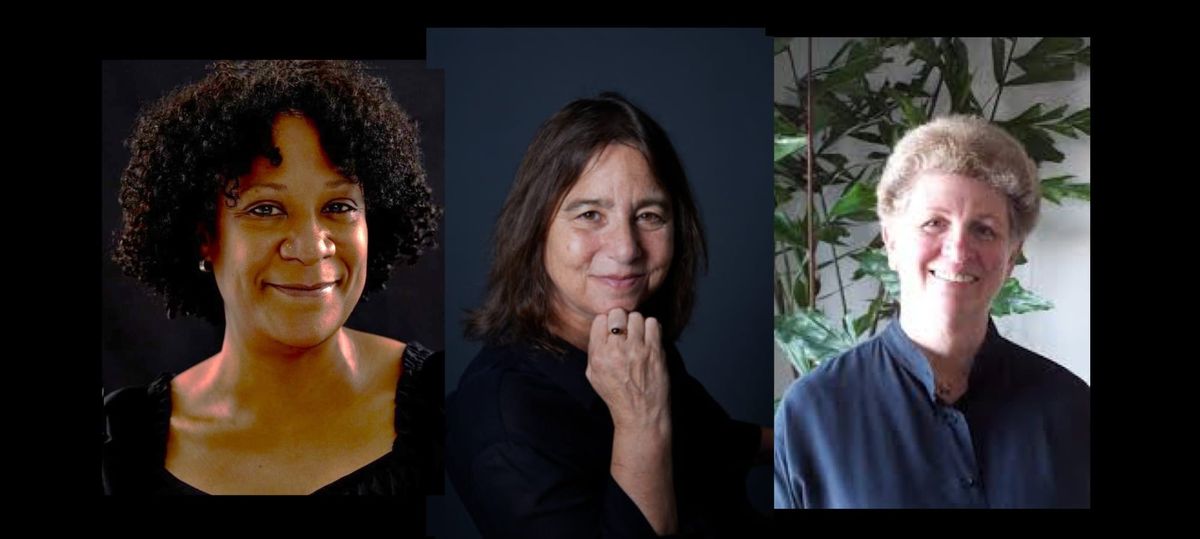
The 1980s: Sex, Space, and Survival, with Sarah Schulman, Valarie Walker, & Katherine V. Forrest
In the first of two episodes on the 1980s, Jack chats with Sarah Schulman, Katherine V. Forrest, and Valerie Walker re lesbian bars, bookstores, queer parties, sex and sex parties, race and racism, AIDS, activism, and the worlds we made from them.

My sincere apologies for the empty post! This is the focus that comes of moving your dear aged mother across the country. I promise not to bore or tease you as such again. Thank the goddesses that we're firmly in the 1980s!
In the first of two episodes on the decade, Jack Gieseking is joined by novelist and essayist Sarah Schulman, mystery writer Katherine V. Forrest, and activist and artst Valerie Walker to talk dyke bars, queer parties, sex, race and racism, AIDS, activism, and the worlds we made from them. From The Duchess in Greenwich Village and a secret lesbian bar in 1960 Detroit to the 1990s Clit Club in the Meatpacking District, Black and tan bars, sex parties, and the enormous landscape of 1980s organizing, the conversation asks what bars made possible—and who they kept out. We hear about rigid butch-femme roles and the 1980s rethinking, rejecting, and accepting them in different ways, Black and brown exclusion, carding, women-only spaces, trans people finding and making community, and the political transformation brought by HIV/AIDS. The episode moves from New York to Los Angeles, San Francisco, Detroit, London, and Hartford, following the networks of people, publications, organizations, bookstores, bars, and parties that held queer communities together.

Introductions
Jack Gieseking - Narrator: Welcome to Our Dyke Histories. I'm your host, Jack Gieseking, historian, geographer, and environmental psychologist. We dive into the past and present of lez, queer, trans, sapphic, enby communities decade by decade in collaboration with multicultural lesbian literary and art journal Sinister Wisdom. This season, we're all about dyke bars, with an asterisk, lesbian bars, queer parties, and trans hangouts, the structures that made them necessary, the lives they made possible, and the worlds we made from them. Our Dyke Histories: come for the history, stay for the revolution, gossip, and desire that built us
Welcome to the 1980s! In this episode, we're going to have three incredible guests, truly incredible, authors Sarah Schulman and Katherine Foster, and activist Valerie Walker. We're gonna do a lot of New York. We're gonna go to LA. We're gonna touch on Detroit. We're gonna talk about AIDS. And we're also going to think a lot about gender, talk a lot about sex, definitely focus on activism, and of course, we're gonna talk about dyke bars.
I'm gonna stop apologizing for recording two episodes because the conversations get so good. Just expect that that often happens with me. Thank you for accepting me for who I am, and I'm going to accept myself, too.
Here they go! I kicked off this episode by asking our guests to talk about their first bar experiences, and first is Sarah Schulman, novelist, playwright, nonfiction writer, screenwriter, activist, and HIV/AIDS historian. She's written so many books, fiction, nonfiction. She's won innumerable awards. She's now an endowed chair at Northwestern.
Sarah Schulman: I'm Sarah Schulman. My first lesbian bar was The Duchess in the 1970s. It was the night of the blackout, actually, in New York. The windows were painted black. [00:02:00] There was this Israeli mafia guy named Danny who was the bouncer.
When you walked in, there were all these w- it was very tiny. There were all these women sitting at the bar, and they would all turn and look at the door when you walked in, and then they would look away. And there was always some girl breaking up on the payphone and crying.
Katherine V. Forrest: Oh, poor sister.
Sarah Schulman: Yeah.
Jack Gieseking - Narrator: Next up is Valerie Walker.
I actually met Valerie while I was doing the research for my dissertation 20 years ago, and we've remained in touch. She's an incredibly brilliant and insightful lesbian whose activism has continued for decades, and has shaped the lives of not only New York City dykes, but everyone else's too. Also, she's hilarious.
Valarie Walker: My name is Valerie Walker, and I would have to say... I was trying to remember. It was either Dietrich's. There was-
Katherine V. Forrest: Garbo's. Garbo's.
Valarie Walker: Garbo's. Okay. Yeah, went there. A friend of mine... I had already came out behaviorally. I wasn't sure if I was actually gay because I didn't know what that looked like in real life, and I didn't know a lot of gay people in New York in my real life.
But up at college, things happen happily. So going to the gay bar was a way to sort of situate being gay within myself, to, to see it in real time, in real... Like, I could go out to a dyke bar. You know what I mean? I could meet lesbians. So it, they were super important. And, and so the first time I went, I went with a friend who had come back early.
We were gonna go back to school, and, uh, we stopped, and it was terrifying and all of the things. And then This rather butch woman came over to my friend, who was not at all [00:04:00] butch, and asked my friend for permission to dance with me. And my friend was like, "Yes." And I was like, "What are you doing?" It was the heights, the heights, you know, crazy, zany.
Oh my God, this is awesome. Yeah. And then the Duchess also as well. But the, it had a backroom, uh, dance floor
Jack Gieseking - Narrator: Last but the opposite of least is Katherine Forrest. Katherine created the first lesbian police detective in US mystery history, Kate Delafield. There are many, many books, and Kate Delafield is described as mixing Miss Marple with K.D.
Lang. Um, just a funny little scoop that her book was optioned, and it almost starred Mary-Louise Parker, so we all would've seen and known about this. These books, they contain pro-trans characters, and as much as they are before the police abolitionist organizing we know today, they still have a lot to tell us.
Katherine V. Forrest: I'm Katherine Forrest, and, uh, my first lesbian bar was in Detroit, and it was 1960. I don't know the name of it, and I don't know that it even had a name, because a lot of them were very s- very secret, uh, very hidden, very ... It was totally inside knowledge as to, y- you know, your knowing w- where they were. Uh, anyway, I was working at the General Motors building in Detroit, and I turned 21.
I started there. I'd been working there a year or, or, I guess, a couple of years. And, uh, anyway, a bunch of friends at GM, uh, told me that they were gonna take me out for my 21st birthday and that we were gonna go slumming. That's what it was called in the city at that time, 1960. They took me to a lesbian bar, and I walked in the door.
And I [00:06:00] took one look around and I thought, "This is where I belong. This is home." I came back the very, very next night , and, uh, it was, uh, it was an absolutely central experience in my life. My first lesbian bar in Detroit, 1960. It's just kind of imbued everything, including my work. Uh, the last Kate Delafield novel, called Delafield, Kate looks back the first time that she was in a lesbian bar, and I used my own experience.
So if anybody wants a far more articulate version what that was like that night. But the thing that always stayed with me, I mean, there was a dance floor. It was dark. It was smoky. It smelled of booze. It was smelled of perfume. It was absolutely glorious, and, and there was the music of Patti Page and Patsy Cline and Etta James and, uh, you know, all of the, all of those great singers of the 1950s and all the slow dancing.
Very different from the bars of the 80s, which were much louder . It was a different kind of music, different kind of scene And, uh, the, the other thing that I remember too were that there were absolutely rigid, rigid, uh, gender roles. You were either butch or you were a femme, which was very puzzling to me because I didn't feel like I kind of fit in either group, and, you know, there were a number of us like that.
But there, there were the roles, there were the, the sort of the customs and things like that. It was a, in many ways, an absolutely wonderful beginning.
Jack Gieseking - Narrator: I'll jump in to say that Forrest also edited the 2005 collection Lesbian Pulp Fiction, The Sexually Intrepid World of Lesbian Paperback Novels 1950 to '65, with actual contributions from some of the most well-known lez-queer-trans pulp writers like Anne Bannon of [00:08:00] Beebo Brinker, Vin Packer, AKA Marjeane Meeker, who wrote the first best-selling lez pulp, Spring Fire, and Terese Ca Torres, who wrote the first pulp with lesbian relationships ever, among many others.
Katherine V. Forrest:
Prior to my first lesbian bar, uh, I had discovered lesbian bars through the books of Ann Bannon. Odd Girl Out was the first lesbian book that I found in a drugstore in Detroit, and her, her depiction of Greenwich Village, it was this gay mecca that I had no idea that we even had as a community. I think those books, they were life-saving books for a great many of us because they told us who some of us were, how some of us lived.
Valarie Walker:
Like I said, I wasn't sure if I was gay or if this was just a behavior that I enjoyed because there were some rigid gender roles.
There were such physically how you dressed in order to suggest which gender role you were. There were rules about it. The belt buckle had to be bi- big. There had to be a pinky ring. You know what I'm saying? It couldn't be a blouse. It had to be of a certain cut. I'm, I'm talking about the butch side. So but...
And I came out where, you know, you were lucky in college, where you were lucky if, if the underwear was clean. It wasn't about boxers or panties. It was like you, you picked up off the floor that was what was remotely clean, and that was your fashion sense. So it was not such butch or femme.
And so coming into the city to see how it looked in real life, I was like, "How do I, how do I fit in?
How do I get in? Is this attractive to me? What do I want?" So the bars were essential for me to be able to transition into the gay world.
Jack Gieseking: It's important here that Valerie brings up being gay in [00:10:00] college 'cause this is starting to happen on a larger and larger public scale. There are tons of stories about dykedom in all sorts of higher education environments, but this shift of the 1970s in these public feminist lesbian movements means that there's a lot more out dykes at certain colleges, and this is still a major place to come out.
Something I worry about as a previous tenured professor is what happens to these environments as higher education is more and more attacked. This has always been a groundswell of where we found one another. In the 80s too, you could hear from Valerie's story, there's not the idea that you knew how to be a lesbiqueertrans person in college.
You actually still had to go to the bar to be a real dyke. I heard that story for I don't know how many generations. We always, of course, still need bars or what we imagine bars to be, these social spaces that hold us together with or without alcohol. In the 80s especially, there were the largest number of recorded bars in the US ever.
There were over 200 bars. In fact, Milwaukee, part of the Rust Belt labor union's incredible economy for women and trans people to find work, their gay paper reported in a 1986 headline that forever holds my heart, "Lesbian bars : are five too many for Cream City?" Cream City, what a gift. Anyway, there's an endless, endless amount of community and also drinking.
Race, Racism, & Dyke Bars
Jack Gieseking: We'll get to that. And there's also a shift towards lesbian bars and more lesbian parties, and there's also more spaces growing for Black, Indigenous, Latinx, South Asian, East Asian, Southeast Asian lesbiqueertrans people What do you think? What are the key factors that define the 1980s to you ?
Sarah Schulman: Well, I think-- So in the '70s when I first came out, bars were owned by men.
So there was, like, La Femme. There were, uh, bouncers, male bouncers. There was this place called Bacall's that double-carded Black women, and we had to boycott it. Um, there was a place called Chaps and Rusty's on Essex that was, like, girls in dresses and girls in suits. So that was that. Then the second thing that happened in the cusp there was women-owned, and it was before there was, like, actual women-owned bars.
There were, like, s- nights or spaces. So there was a place called Philippine Gardens that was owned by two Filipina women. Was a m- was a restaurant, and they had, like, a lesbian night. There was a place called La Papaya on 7th Avenue in Brooklyn, uh, in Park Slope that was women-owned. And then there was Bonnie and Clyde's.
Downstairs was Black. There was a pool table, and upstairs was white. It was like a feminist restaurant. But that-- the upstairs was woman-owned. So that was the transition, and then you started to get the party girls. So you had, like, um-- Deb what was her name who had the show at The World. Do you know who I'm talking about, Valerie?
Deb Parker. Deb Parker had these- Oh, yeah, yeah ... like, Girl Bar Yeah, yeah ... and, and Girl Bar at The World, and these were more, like, downtown-y, cool East Village things. These were not feminist, nor were they male-owned. So this was a new thing, um, and those were the most fun.
And then there was, you know-- And then The Clit Club starts.
It started at The Pyramid with Jocelyn and-
Jack Gieseking: Yeah ...
Sarah Schulman: someone, maybe Julie, and then they moved to the Meatpacking.
Jack Gieseking: And that, I mean-- And we're talking about New York City, but that landscape changed dramatically, like, across the U.S. as well. And at some point, Bonnie and Clyde's closes, I believe, and becomes Shescape the party, which is one of the most well-known party, which is also racist and protested.
And then the Committee of Outraged Lesbians, uh, which is COOL, one of the best named groups-
Sarah Schulman: Oh, Jackie Woodson was part [00:14:00] of that.
Jack Gieseking: Yeah. Yes. And so there's, there's these protests of these spaces, and what I find really interesting is that the protests about racism are happening in about lesbian bars. Like, they're supposed to operate another way.
They're supposed to be a better space. They're supposed to be inclusive. They're supposed to be a community space, and that assumption is leading people to, to radically organize in that way. What we're talking about here gets back to this geographical imagination of the dyke bar as being this sort of better space.
Jack Gieseking - Narrator: But as these stories attest in the '80s and in every generation we've discussed and will continue to discuss, there has been racism in most of these spaces. Nikki Lane, who writes about Black queer women spaces in DC in the 2010s, we'll be talking to her later this season said that Black queer women's happy hours were on off-peak nights on Tuesdays, and I've talked to a lot of Black queer women in a lot of cities who say, "Well, yeah, of course."
This is something that white people never think about because I tell white people about it, and unless they have a lot of Black queer women friends who would actually mention this to them, they have no idea. And also people of different races and ages. It's not just a binary with race, of course. But on Tuesday nights, when a bar or social space has less folks coming in, that's the moment where they don't turn away Black queer women, which forces them to go out on these awkward times and nights.
But back in the day in the '80s, we had like a library card, you had a license What else? It's an intentional way to keep people of color out of these spaces, right? There are just not as many forms of ID. It's a manipulating way, especially to keep Black people out of these spaces. One of my research participants in A Queer New York who came out in 1983, Gloria, even said, quote, "There were a number of times there when I ran into situations where I'd be out with Black friends and you couldn't get them in. They would have to show three kinds of ID to get into a bar." End quote.
Since [00:16:00] then, I've heard stories of six or eight forms of ID. It's absurd. What is important to talk about the 1980s when it comes to these discriminatory, vile practices of carding and segregation and racism is that the 1980s is when dykes start to organize against bars for this racism.
This happens multiple times. First, there's the Committee of Outraged Lesbians, who we mentioned, including award-winning novelist Jacqueline Woodson, who sued the Shescape party, the largest lesbian party of the 1980s and 1990s in New York City, in 1985 for denying admission to Black and brown people. Then there was DARE, Dykes Against Racism Everywhere, I know, these names are awesome.
We always need great names like that, who protested racial discrimination in Greenwich Village lesbian bar Bacall's in '91 around, quote, dress code, end quote. Now let's get back to our guests.
The Geography of Dyke Sex Parties
Sarah Schulman: But San Francisco was having this other thing because there was actual sex. They had sex party nights and also the whole stripper go-go dancer thing was at this place called Clementine's.
That was the first time Susie Bright took me. I had never seen lesbian go-go dancers and all of that. And they tried to bring it to New York, but the women wouldn't tip, so it never actually caught on. But the-- I remember going to Amelia's in the Mission and they were having a services auction, and they were auctioning off Dorothy Allison, actually.
Jack Gieseking: Oh my God, if we could all go back in time. I would love this. Um, and, and the Catacombs. Gayle Rubin is at the Catacombs- Yeah ... you know, with, with Michel Foucault. You know, everyone's- You know, everybody's, everybody's fisting in the San Francisco basement. So yeah, it's, it's a wildly kind of different landscape than, than anything
Sarah Schulman: that anyone has ever experienced since then.
Jack Gieseking - Narrator: Sex. I did not see this coming. I mean, I did see it coming, but when we talk about a sex party landscape and, and a sex [00:18:00] bars landscape that's happening in San Francisco, San Francisco actually is a very different bar scene, and what's cool about it is that scene is affecting New York, is affecting London, is affecting Berlin.
They're growing off of one another and, and inspiring one another.
In London, for example, I can't recommend the movie Rebel Dykes enough. It follows the radical activism and how it was intertwined with this incredible long ongoing sex party called Chain Reaction: BDSM, leather, wrestling. It's also very dear and very hot all at the same time.
London dykes were protesting Article 28, which was essentially an anti-gay propaganda act. Yeah, I'm not kidding. It was actually across the United Kingdom. Article 28 was awful. It stopped people from teaching about any sorts of what they then called gay and lesbian history. It was horrifying to live under, and, of course, we know that as more anti-LGBTQ laws, policies get passed, as more leading politicians Margaret Thatcher would say awful things about anti-LGBTQ people, this increases the harassment, the attacks, the disdain for, and even just the ability to live and get by.
We'll come back to these London dykes when we start talking about property too, because they were an inventive, incredible group.
In San Francisco, there was a huge gay male sex scene, and so you had places like The Catacombs, which had a very famous fisting scene among gay men that included none other than theorist Michel Foucault, and a bunch of dykes showed up, and they were like, "Hey, we wanna hang out and do this," including none other than fabulous Gayle Rubin, another incredible queer theorist .
But people started to make their own spaces, like Susie Bright, the sexpert, Dorothy Allison, incredible novelist. In New York City, what gets [00:20:00] created is the Lesbian Sex Mafia. This is founded in part by Dorothy Allison and others, including Amber Hollibaugh, and the result of the Lesbian Sex Mafia today is still the SUBMIT Party.
So there are long-lasting implications of these spaces too. We're gonna move off of sex for a little bit, but I promise we're gonna keep coming back to it, because how can you not?
Black and Tan Bars of 1960s Detroit
Jack Gieseking - Narrator: Coming up , we talk about how spaces were segregated and desegregated, as well as the more affectionate experience of what were known as Black and tan bars, these intentionally racially mixed spaces of the 1960s that Katherine got to experience. It's really fantastic having an even elder dyke on the show to talk to us about this generational shift as well .
Sarah Schulman: Now what about you, Katherine? Where were you in the 80s?
Katherine V. Forrest: I was in, I was in L.A., but you know, I was gonna say, uh, something that you and Valerie sort of triggered too. Going back to my days in Detroit, you know, one thing that changed regrettably, I didn't go to just the one bar in Detroit once I connected up with the women there.
We sort of cruised the Detroit underground.
Jack Gieseking: Mmhm.
Katherine V. Forrest: And we went to gay bars because they, and lesbians were very welcome there, and that's when I first discovered my gay brothers, and some of them I really got to love. And we also went to what were called in Detroit black and tan bars, and they were mixed race bars.
Everybody was welcome. I mean, they were, they were incredibly ahead of their time, especially in that city that was so segregated. One of the best memories I have is in one of those black and tan bars, uh, they had a performance, and the performer was Dinah Washington.
Jack Gieseking: Oh my God.
Katherine V. Forrest: Wow. And she came out and sang I think eight or 10 songs, bowed, walked off the stage.
The place erupted. She would not come back for an encore. That was it. But anyway, yeah, Dinah [00:22:00] Washington. Wow. That's incredible.
Jack Gieseking - Narrator: Not a dyke, but Dinah Washington was one of the most popular Black female recording artists of the 1950s, also known as Queen of the Jukebox. She has a fantastic song that I think is worth mentioning the lyrics here, What A Difference A Day Makes.
This is a song that might have come your way.
Lord, what a difference a day makes.
There's a rainbow before me.
Above can't be stormy.
Since that moment of bliss,
that thrilling kiss.
It's heaven when you find romance on your menu.
What a difference a day made,
and the difference is you.
Some people say because we don't know why we are so obsessed with rainbows as a queer trans people, but we are.
We've long had the rainbow as a symbol. There's many ideas about where this could have come from. Was it The Wizard of Oz and Dorothy and our love of Judy Garland? Or could it have been in part Dinah Washington, or could it have been all of these forces together?
Katherine V. Forrest: But anyway, um, I digress.
Jack Gieseking: No, no, you brought up something really interesting, Katherine.
So by the '80s, are there gay men in, in, in lesbian bars in the-
Katherine V. Forrest: That's ... Yeah. Thank you for bringing me back to my point, is that, you know, I think something got kind of lost in the transition there somewhere that there wasn't this blending of, you know ... And I'm not quite sure really what happened. Certainly AIDS absolutely brought us back together again, as Sarah has so eloquently chronicled.
Uh, but, uh, pretty much the lesbian bars were pretty exclusive except, you know, for the straight people who wanted to come in and gawk. In L.A. I wasn't that much of a bar scene person. Then I was in a pr- pretty tight relationship. I do remember going to Peanuts. I remember The Palm. You know, they were probably the most well-known.
And there was a legendary place that I never got to go to that everybody talked about where all of the rich women went, who were closeted dykes. It was called The Canyon. Probably Lillian Faderman mentioned it in her book Gay L.A.
Surviving and Thriving in the Landscape of NYC 1980s Dyke Bars*
Sarah Schulman: Well, the men wouldn't-- women weren't allowed in the men's bars. When the Saint opened, the big, huge gay dance club that replaced the Fillmore East, women were not allowed, and their argument was that gay women bring straight women and straight women bring straight men.
Only when people stopped going because of AIDS, at the very last minute would they let women go in. But the Duchess got closed because some men sued and said that they were discriminating against men. That's why the Duchess went out of business.
Jack Gieseking - Narrator: The Duchess. The Duchess is one of those dyke bars that shows up in every dyke's memoir. Eileen Myles, Alison Bechdel, on and on. If you came to New York City in the '80s and you were a lezbiqueertrans, you walked into The Duchess.
Why? Well, it's about, I would guess, 100 feet from Stonewall, and of course, if anyone knows any LGBQ history, they know about Stonewall. It's also really kind of the hub of Greenwich Village.
Now you can stop by The Duchess, which is now Two Boots Pizza, like my enby nibling Zoe did. They went there by accident with their mom for their 15th birthday, and adorably, proudly told me that they were there enjoying it. Happy 18th to you, Zoe, when you finally get to listen to this.
Now back to the '80s
Sarah Schulman:
There was a place called Ariel's that had what was called a free lunch if you went on Sunday afternoons, and we were all starving. You know, nobody had any money. So you could go and, and like buy the cheapest, cheapest thing that they had, and then just eat all that food.
Um, but also there were dances. That was the other thing. And they would be organized by like, um, Eleanor Cooper and lesbian ... It was called LFL, Lesbian Feminist Liberation. They had dances, and then the younger kids, like W.O.W. Cafe, we all had dances.
But you couldn't go in if you were under 21 at that time. And I was under, so the people who were young, we had these boom boxes. We put them [00:26:00] on the sidewalk- Oh ... in front of the place where the dance was, and hang out in front on the sidewalk 'cause we couldn't go in. Because at that time, you know, people-
Valarie Walker: Mm-hmm
Sarah Schulman: ... were afraid of being accused of child abuse and all of that.
Mm. So they were very strict about the age thing.
Katherine V. Forrest: And that's still, still going on. Yeah. Yeah. Yeah. With all the, with all the grief and, and, uh, repression of the times, we sure still managed to have a lot of fun, didn't we?
Sarah Schulman: Definitely.
The Clit Club: Antiracism, Pro-Trasness, & Sex Sex Sex
Jack Gieseking: Right. And for the people listening who have never, ever heard of the Clit Club, it was probably the most openly sexual kind of fabulous, most r- mixed race space I've ever heard about, most mixed economic, and there's porn playing. And I remember the first time I went in, I was like, "Am I allowed to wa- Is it-- Am I gay?
Are drag queens this? What version of feminism is happening here?"
Valarie Walker: The Clit Club.
Jack Gieseking - Narrator: There were so many lezbiqueertrans spaces in history, but oh, the Clit Club has captured so many people's imagination, if only for its name alone. The ads are also incredible. There's talk of sex on the pool table. I will absolutely do some Queer Geographies posts with all the images around these incredible spaces.
The Clit Club was located in the smelliest part of New York City. When I say it was the Meatpacking District, it legitimately was full of meat, even in 1999 when I get there. Now it's one of the most hip, expensive, designer-fed, high-end, obnoxious restaurant places you could ever go to.
A great history about this space is the incredible historical documentary, The Stroll, about the West Side trans femme and trans women sex workers, almost all of whom were women of color, and their work and memories about this space. And it brings us to the age-old question about any, quote, "lesbian bar," end quote. Were these [00:28:00] TERF spaces or were these trans spaces in these bars? Were they both? Were they all? Well, certain bars were very anti-TERF-y spaces. Yes, especially the Clit Club. It was founded by brown members of ACT UP, including Southeast Asian, Latinx members, and they shared it between a more gay boy trans space on Friday nights called MEAT, M-E-A-T, all caps, exactly what you think it is.
And on Saturday, Clit Club, also exactly what you think it is.
Jack Gieseking: And I, I remember, um, you saying, uh, to, to quote you, Valerie, "Cinnamon was bank." So like there were these amazing like strippers and dancers and people were just hooking up and it was, it was just really known. And eventually, and the meatpacking district smelled so badly. It was just rancid meat that had fallen on the street.
To imagine like this is where every designer now, uh, in New York City, but that kind of, um, and it was so far on the, the West Side, and there's all these trans fem and trans women doing sex work, like a half a block away or right in front, right? So this, this very intimate kind of very queer space. Um-
Valarie Walker: And you all had breakfast together in the morning.
Jack Gieseking: Absolutely. Yeah. Yeah, you did.
Sarah Schulman: People who were very, very butch would probably, many of them today would be trans.
You know, there-- I remember this person, Luke Carson, who, um, does anyone remember her? Her, her, her girlfriend was Marguerite Paris. They're both dead now.
But Luke like was a car mechanic and wore men's clothes and took care of younger people like me who didn't have any money and helped us get jobs, you know.
And I remember Luke had to go to the hospital, and she called me and said, "you know. You gotta get me out of here." So I went over, and they were trying to make her wear women's underwear. And she's like, "I don't wanna wear that bullshit." And I had to go to 14th Street and get her men's underwear. So I mean, that is trans, but at the time she didn't think of herself that way.
Katherine V. Forrest: Yeah. It's, it's just, it's been evolving, I agree.
Valarie Walker: Yeah. I would say trans has always been. Trans has always been whether they were out, right? You know.
Jack Gieseking: Right. And is it non-binary, intersex, or how people identify or come in to find out about themselves.
Sarah Schulman: I mean, but there were trans people also, but they were much, much more marginalized. You know, it's interesting, I just read this novel that's coming out.
It's written by a 30-year-old lesbian, and it's set in 1984 with a lesbian in the East Village- What? ... and it's about AIDS. What? It was interesting to read, 'cause I could tell she read every novel there is about AIDS.
Trans Inclusion (in Some Places) but (Definitely Not) Integration
Sarah Schulman: But anyway, the one thing she really got wrong is that she imagines- Mm-hmm ... trans people much more integrated than they actually were. Like now, you know, trans people are integrated and you're in a social thing, and it's cis- Mm ... and trans people and non-binary people. But she's imagining that it was like that in the 80s, and it wasn't. People who were trans were very dramatically and all the way trans, and it was a whole different reality.
There was some crossover. I mean, I do remember s- like Marsha P. Johnson, I remember her coming to a meeting of this coalition and asking about fiscal responsibility. I mean, there's a few things like that, but it really wasn't integrated in the same way.
Katherine V. Forrest: Some of it was just personal education, too. I'm think- I have a trans character, the major one in the Delafield series, but he didn't come into it until quite late in the piece.
You know, the I, I did, I did so much reading. I did so much self-education, uh, because, you know, Kate and her reaction to this niece of hers who transitions into her nephew. And she's a stand-in, Kate's a stand-in for a lot of us, you know, educating ourselves. And, you know, I don't think that I could have written that any earlier than I did for exactly these reasons. Yeah.
Jack Gieseking: Yeah.
Sarah Schulman: Yeah. [00:32:00] But by the '90s, it was different because the Lesbian Avengers is '92, and Lesbian Avengers was trans inclusive from the beginning, and the vote was 99 to 1-
Jack Gieseking: Yeah .
Sarah Schulman: ... To be trans inclusive from 1992.
Valarie Walker: Yeah.
Jack Gieseking - Narrator: Sarah mentioned a book about 1984 New York City that is Waiting on a Friend by Natalie Adler, and she talks about The Lesbian Avengers, they were founded by really major ACT UP activists who saw that lesbian issues, very broadly defined, were being ignored by ACT UP and were being ignored in society, and it was really an incredible organization for five years.
They showed up in a very bougie neighborhood in Queens at a school that was very determined to have an anti-LGBTQ curriculum, and all these dykes show up with a giant dyke marching band, as one does. Very popular in New York City and many other cities. And then they give out these purple balloons that say, "Ask me what a lesbian is."
They couldn't be more excited. So you have all these little kids going, "Mommy, what's a lesbian?" And they have to explain. It's just fantastic. They're, like, bringing the education to the kids. Just incredibly beautiful thing.
We're gonna talk a lot more about the lesbian Avengers in our third episode with just Valerie.
Also founded in the 1990s is Camp Trans. In 1991, when a trans woman is kept out , it causes an uproar. And across from this giant epic amount of space that is the Michigan Womyn's Folk Festival, you can think of it as the dyke not assholey version of Burning Man. Everybody shows up, everybody volunteers, everybody's got a role. You can do your folk music, you can do your assault healing, you can be at an orgy, you can just focus on tarot the entire time. And there's acts who perform there. And Camp Trans winds up lasting for well over a decade. Michigan Womyn's Folk Festival doesn't even close till 2015. It'd been around since the '70s.
Sarah Schulman: Well, [00:34:00] interestingly, um, Camp Trans had Lesbian Avengers were involved in the organizing of Camp Trans.
So that, that is a significant change right there. Yeah I think that, you know, after AIDS when everything got mixed up, I think it was a big leap at that point.
Jack Gieseking: And I, I remember stories of trans women being excluded from, from bars, from lesbian bars or queer parties or, you know, "go back and hang out with gay men" and not feeling welcome there either, saying, you know, "I'm a lesbian."
This Is What Resistance Looks Like: ACT UP & the Lexington Six
Sarah Schulman: But also Lola, Lola Flash and, um, Julie Tolentino and Jocelyn, who's now named Jaguar Mary, they were all in ACT UP. And then Aldo Hernandez from ACT UP took the same space for an alternate night that was called MEAT. So it was a male and female ACT UP space.
Jack Gieseking - Narrator: ACT UP stands for the AIDS Coalition To Unleash Power. I will tell you if you didn't know that, most people don't know what it stands for.
It was a direct action AIDS activist group founded in 1987. There are many iterations of it always going on, but the most well-known faction of ACT UP started at the New York City LGBT Center when people were in the basement, and Larry Kramer said, you know, "Half of you stand up. In a year you'll be dead. What are you gonna do about it?" And from that, ACT UP was born.
Sarah Schulman was a core organizer in that. She's written an incredible book, Let the Record Show, gathering all of the ACT UP oral history archives, which you can listen to online. I'll point you to those as well in Queer Geographies.
It's probably the most well-known LGBQ activism group in history, and it's often cited for its incredible guerrilla tactics. So what did it do? Wait for it.
The people in ACT UP took the ashes of their old lovers and went to the White House and dumped them onto the lawn. Then they threw coffins over the fence because Ronald Reagan, the president, still wouldn't say the word AIDS until 1985.
They chained themselves to the CDC, the US Center for Disease Control, chained themselves around the entire building and dropped banners off of it demanding research be done.
They walked into St. Patrick's Cathedral, which is the heart of New York City Catholicism, this huge, huge building, while the archbishop was saying mass, and then had a die-in in which they just all laid down as if they were dead. And from the floor some of them started screaming, "You're killing us. You're killing us. You're killing us," until it got louder and louder.
They marched in places people never thought about but where power laid.
Their first action actually was to shut down Wall Street. No one could get to the trading floor 'cause they were protesting how the pharmaceutical companies were not doing the testing that they needed to survive.
Sarah Schulman: Well, you know, originally the mafia bars didn't want people to hand out anything political inside. They wouldn't let you. 'Cause I remember the very first thing I was aware of was the Susan Saxe, Kathy Ann Powers. Do you remember this? They were Brandeis students who had robbed a bank having to do with the Vietnam War and when they were underground they came out and they, they had communiques and the FBI was looking for them in the lesbian community.
It was the first time the FBI had ever recognized the lesbian community. And they were going around to bars and stuff and these signs were going up saying, "If the man knocks on your door, do this, do that," whatever. So people were trying to hand out these l- flyers in the lesbian bar and you weren't allowed.
Katherine V. Forrest: Mm-mm.
Sarah Schulman: We couldn't sell WomaNews in the lesbian bars. They wouldn't take out any ads or anything. They were very hostile to the political movement.
Jack Gieseking - Narrator: I'm so glad that Sarah mentioned Susan Saxe and Kathy Ann Powers. This is more of a '70s story but it has ramifications. The FBI started following all these LGBQ people in Lexington, Kentucky where these two dykes were hanging out who had robbed a [00:38:00] bank and started forcing them to rat on other .-- and also outing them and the people who were arrested fought this and actually won and beat the FBI. You can read all about this in the book, The Lexington Six.
Finally, I'd be remiss to say that the 80s, much like the 70s, proliferated in comms.
There were just an epic amount of newsletters, broadsheets, like kind of like mini newspapers, and Woman News, Bad News, AKA Big Apple Dyke News, were two of the ones in New York City. They were just in so many small cities. You can see a lot of these in online archives or go to your local LGBTQ archive and you can touch and read so much of this incredible history.
But Sarah's point about how you couldn't be political in a dyke bar in the '80s is profound! Because you still have the mafia owning some of them. And there's also these people who have been going to bars since the '50s and '60s, these like very intense butch fem structures, who do not do politics because that will get the shit kicked out of them. That will get you murdered. That will get you raped.
And so there's a generational shift happening in these spaces in the '80s where feminist work is trying to get into the bars and really often can't in most places-- until HIV AIDS, and then we're dying, and then people have to do something about it, and people have to listen.
Not all people do, but more than ever before in history. It is the largest LGBTQ community organizing event in our entire history.
Jack Gieseking: The first announcement of AIDS comes in 1981. ACT UP was formed in 1987. There's other organizing, there's other activism, and these bars being apolitical but also political 'cause they're not letting men in, and there's certain lesbian feminist ideals and also butch-femme ideas which are not lesbian feminist.
So how, how did that feel? How did that politics work?
Sarah Schulman: By the time ACT UP came, that was gone. I mean, it was all...
[00:40:00] So, the Clit Club was run by women of color, so it was a woman-controlled space. And for that reason, men could go there and it wasn't an issue.
But ACT UP also went to the bar in the East Village on East 4th Street, and that was more of a men's place.
But also, this was the time of the big, like the Tunnel Bar, like these, and the Limelight, and these big clubs and stuff. And ACT UP had, um, fundraisers famously with Keith Haring and people like that at those big, big clubs.
But at, at this point, everything was mixed. I didn't have anything in my life that was women only at that point.
Jack Gieseking: Right. So, so this women-only tide of the early '80s just kind of disappears in the rising tide of, of HIV AIDS.
Sarah Schulman: Yeah, but it's not because the women changed, because the men changed. The men were the separatists.
Jack Gieseking: Mm.
Sarah Schulman: But, but then they ch- you know. Yeah, it was different.
Valarie Walker: But then they needed us.
Sarah Schulman: Yeah, they needed us.
Valarie Walker: Then they needed us.
Jack Gieseking: Yeah. We keep talking about cities. As a geographer, I've been thinking about this a lot, and I had worked for a couple years in Hartford, Connecticut, and I was doing a tour For my students, and the person leading the tour said, "Well, this is where the gay men were in the s- in the late 70s."
And I said, "There were gay men in Hartford? Like, why? Why w- " You know, like, and, uh, she said they, "They really wanted to have a gayborhood, and there were some lesbians here, but the hospital wouldn't treat them." And I, I started realizing about how much of our geographies is not only shaped by this decision to be in a city, anonymity, and larger numbers, and possibility to access, like, to health centers and bars and bookstores, feminist bookstores, and gay bookstores, but also because small cities didn't want us.
We couldn't get health resources.
Sarah Schulman: Yeah, but when I went on book tour, no matter where you went, there was something. Like, you could be in Nowheresville wherever.
You Know, I did a book tour of every, every gay bookstore in the US South, for example. But there always was, like, one place where everybody went, and it usually had drag queens, and it was like that was the hangout place.
Also, in [00:42:00] the late '70s, I had a job working for Gaia's Guide, and we used to call up these bars around the country and, you know, get their details. It was a guide you could buy, and you would travel around the country and find out where all the gay bars were and stuff.
Katherine V. Forrest: Right, right. Yeah.
Sarah Schulman: And, and I'd call, like, some place in North Carolina, and they'd say, "How'd you get our number?"
You know? Like, they were scared.
Katherine V. Forrest: Yeah, yeah, that was my experience too. You know, the other thing that, uh, we've lost in addition to the bookstores, if you remember, we had just a ton of gay publications. I mean, they could come out anywhere. The books that we, that we read or that we wrote in the '80s, they were reviewed in absolutely dozens of periodicals.
I've got stuff in my archives of where Naiad Press would send me the reviews, occasions all over the country, as our community evolved too.
Jack Gieseking: I just wanna jump in to say it's amazing as we're listening how much the '80s sounds like today and is not.
Many a Root of Queer Addictions
Jack Gieseking: A good thing to drop here is we're finally gonna start talking about LGBTQ alcoholism and addiction. It's in the 1980s that the first AA LGBTQ group forms. Whoa. You've gotta think about what it was like to go to AA and talk about your addiction, but to have people reject your sexuality, which in fact might be the reason you're drinking. So having LGBTQ AA groups, NA groups, OA groups, all the anonymous groups radically changed the possibility for self-acceptance, for healing.
And it's also gonna change the bars. The reason we have 200 bars in the '80s is we just keep drinking. Can you imagine the hurt, the self-loathing? And then with HIV AIDS, "Oh, we're gonna die."
And the Religious Right is telling you that you're gonna die. In 1983, Jerry Falwell publicly said God was punishing homosexuals for the [00:44:00] promiscuity with AIDS. This constant rhetoric from the Religious Right still continues to today, and HIV AIDS was one of those things that was blamed upon our people. Can you imagine hearing that when you don't know what causes HIV AIDS, when there's no research being done, when all your friends are dying, when you might die?
Katherine V. Forrest: The, the bars really had such an impact, uh, positive and negative ways too because my generation, there was an awful lot of alcoholism in my generation.
That's where we met each other typically, and a lot of us drank to have the courage to be with each other because people today don't realize what you, what you had on the line, which was your whole life. Yeah. To, because of the police raids and somebody could come into that bar that was "slumming," quote-unquote, and see you there and blow your cover with your family and on your job.
There was a real jeopardy in the air, and not as much... bookstores were far more, quote, "respectable" places to hang out-
Sarah Schulman: Mm-hmm--
Katherine V. Forrest: .. even though y- th- because there was always the lesbian feminist part of it, so, um-
Jack Gieseking: Yeah.
Sarah Schulman: Right. That's true.
Yeah. I remember going to a gay bar in, like, Bensonhurst or something, and it was just Italian working class queers.
It had nothing to do with Greenwich Village, which was kind of interesting.
Finding Your Own Joy Where You Know Your Belong
Jack Gieseking - Narrator: I know you've been wondering how much race and class shaped these spaces. Obviously so much!
We started talking about that at the beginning of the episode, and we're gonna keep coming back to it because it is a constant part about how all lesbi-queer-trans spaces, all spaces are always shaped.
Valarie Walker: But in all these spaces, race dictates so much.
Katherine V. Forrest: Yes!
Valarie Walker: And because the spaces are gone, I don't know if, I don't know if they ever [00:46:00] evolved.
Katherine V. Forrest: Mm.
Valarie Walker: It's--
Sarah Schulman: Well, depend who, it depended who owned it. I mean, Whatchamacallit had, um, a Black, uh, bouncer. What was the name of that place? Elaine Romagnoli's...
Henrietta's.
Jack Gieseking: It, it, it had Stormé DeLarverie who-
Sarah Schulman: Right, right.
Valarie Walker: Even how you get in, if you get in-
Sarah Schulman: Hmm ...
Valarie Walker: --sometimes what you pay when you get in, the service which you are in, the space you're allo- Like, there are just so many factors. But also in ACT IP, all of these spaces have, in addition to--
like, I, you were talking about all the things that you contend with, like, you know, from the outside, but there's also shit we have on the inside, right?
Because we're all raised in the same society that tells us being gay is abnormal. If you like chicks, you're fucked. You know what I mean? So we also swallow that every day, the fear of being identified.
But also from inside the fear of being identified. Hmm. And coming back. And how these bar spaces are also another way of us fighting back.
Katherine V. Forrest: Mm-hmm.
Valarie Walker:
You got to see people seeking joy. A lot of them didn't get it. I saw that quick.
But there were a couple of moments where I was like, "I want that." Hmm. Whatever it is that I saw felt, you know? "I want that."
Katherine V. Forrest: Yeah.
Valarie Walker: "How do I go about creating a space where I can have that?"
And so it motivated and shaped me, even though there was all this, these levels of toxicity, you know what I mean?
And I can't divorce the race from it because I'm Black all the time.
Sarah Schulman: Right.
Valarie Walker: But, like, it had different effect. Like, I remember we went to, a friend of mine went to Kansas and drove me to Kansas. I don't know why I went. But we go to this bar. Whoo!
I'd, I'd, I had never seen anything like it, experienced anything [00:48:00] like it. Oh, it made me nervous to my big toe. It was just all these white people in country attire, you know? But, like, for real though. And they all turned when the door opened, sh, looked, and then never looked away. I was like, "I have to turn around and leave." Like, it's, it's either leave or get- or adopt my mother's attitude and give them something to look at.
So knowing me, I was like, "Mm, hell with leaving. I'ma give them something to look at." And they dropped-- they had a little dance floor, and they dropped Madonna's "Justify My Love."
Katherine V. Forrest: Oh.
Valarie Walker: And so the, it's just one thing: "Wanting." Anyway, and I was like, "Oh, y'all wanna look? I'm gonna show you." I was on my knees. I was on my knees pumping the floor. I gave them a show.
Drank free the rest of the night. Those people embraced me so hard. They came up like, "Oh my God, girl, give it up! Get this girl a whatever." Yeah. It was so fun, but I think if I hadn't done something incendiary just to be like, "I see you see me."
Katherine V. Forrest: Mm-hmm ...
Valarie Walker: it would've been like a zoo animal-
Katherine V. Forrest: Mm.
Valarie Walker: You know, in a cage. But this was really just like, it was great.
Jack Gieseking - Narrator: Sarah's about to ask Valerie if she was part of Salsa Soul Sisters. Salsa Soul Sisters, now the African American Lesbians United for Social Change, still existing, was one of the most powerful organizing groups. We talked about in the '70s how Third World women was a concept that was created to talk about women of color.
The words "women of color" weren't created yet. We'll get to that in a little bit in this episode. But you should know about the organizing landscape, but especially in the US, that women of color start to finally get to have organizations of their own. Las Buenas Amigas, Asian Lesbians of the East Coast, and of course Salsa Soul Sisters, which becomes AALUSC.
When I was [00:50:00] researching the history of New York City from, from '83 to '08, I mapped all of the LGBQ organizations in New York City. I will share these maps, too. They're interactive. They're super fun. They really get you thinking.
But what's wild about them when you actually count them is it is just a giant mountain increasing in the number of organizations. And because there is so much activism around HIV/AIDS, I mean, I know that ACT UP doesn't kick off until 1987, but there's still so much organizing. That feeds other people talking and meeting about issues they're facing. "Hey, racism. Hey, sexism. Hey, disability." And then more people, "Hey, I'm an architect. I'd like to meet other architects." It's any kind of thing that you slice and dice that people start to make more and more organizations, more and more community.
In fact, the moment when we have the most sense of community, people really idealize this moment in the 80s in LGBTQ history, in part because of the stories of ACT UP and the community that drove it and the tragedy around it.
That's a, a really weird sense of time to idealize something. But it also represents the hurt of being an LGBTQ person when you attach yourself to a period where death and hurt and, and hatred is so, so prominent.
It is, I would argue, the largest amount of LGBTQ organizing that has ever happened. That means the number of people involved in groups, the number of groups that exist, that surges in the 80s into the early 90s.
And when we get to the '90s, I'll tell you why that stopped. I have all sorts of ideas and data about it.
But just to know that that is happening, and if we want to have that world, we just have to keep organizing. Because otherwise they will keep shutting us up and keep trying to kill us.
Sarah Schulman: Did you ever go to, like, Salsa Soul or any of those groups?
Valarie Walker: Yeah.
Sarah Schulman: What... How did you experience that?
Valarie Walker: So Salsa Soul for me [00:52:00] is that race always is a factor, because I'm not Black like that. I'm, I'm Black and Latina, and I not only-- I haven't stayed within my fold.
I've traveled, and I've adopted anything that I see works over, that I see that I want for me, I'm gonna do it. So I'm not the typical Black girl. I went to Vassar. So I go up into these spaces that are also supposed to be my space, and it's like, "Mm."
But I bring my joy with me. And once people know that, then they get with the program. So.
Jack Gieseking: Mm-hmm. I would love to read this amazing paragraph from Marlon Riggs' Tongues Untied, which is, he's utterly-
Valarie Walker: Nice.
Jack Gieseking: ... brilliant artist. Yes. And it is a, it is like a performance piece, but it's also so beautiful and so brilliant, and I, it, you can find it on the interwebs.
And there's a quote, um, that one of the Black, gay male narrators says,
" There was a new club. We waited in line for at least 15 minutes, all the while the doorman watching us. Ten Black men show and make the doorman paranoid. The club is 'gonna tilt.'
We finally get to the door, and the doorman says, with much condescension, 'You know there's a cover to get in.' Well, I tried to ignore her rudeness, and then she shot her arm out. ' I need to see three pieces of ID.'
Mm. I thought that shit was through."
And that practice is not something that comes up in the 1990s, but who the hell has three pieces of ID?
Katherine V. Forrest: No.
Jack Gieseking: Right? It was, uh, it's impossible to, it's-
Valarie Walker: That the, um, you couldn't wear baseball caps-
Jack Gieseking: Yep ...
Valarie Walker: um, and other trappings that were particular to the African American community.
Mm-hmm. Also white people were wearing it too, but in record number in these communities. And so you put these rules out, and now they can't come.
Katherine V. Forrest: Mm-hmm.
Sarah Schulman: Also, they would change the music. So, like, they would have white music on certain nights, and then have, like, Latin music on other [00:54:00] nights, and that's how they kept it segregated.
Jack Gieseking: Over and over again for every decade.
Conclusion & Credits
Jack Gieseking - Narrator: What an ending for episode one. My gratitude forever to Sarah Schulman, Valerie Walker, and Katherine Forrest for this incredible conversation. I promise Episode Two of the 1980s will still be just as powerful and juicy.
We're gonna pick up on this point of these ever segregated lezbiqueertrans bars and parties and hangouts and how they were changed over time, how the dykes in them refused that and made them differently.
We'll also continue to talk about sex. Again, keeping it coming, we'll also dive into how fictional bars in movies and TV and books shape so much of who we are today. We'll also get to gentrification, one of my favorite things to discuss, said the queer trans historical geographer.
I wish you a wonderful day.
Thank you so much for listening. And lez keep swimming, guys. We've got a lot to do. Game on.
**
Jack Gieseking - Narrator: Thanks for tuning in to Our Dyke Histories in collaboration with Sinister Wisdom. Do share Our Dyke Histories with your friends, colleagues, fellow students, exes, crushes, or heck, use it as a pickup line when you don't know what to say in a bar. Good luck to you, brother, sister, and themster.
You can easily connect with us on Instagram or Facebook at ourdykehistories and come and follow me, Jack Gieseking, via my newsletter, Queer Geographies at queergeographies.com, which is packed with all the images that accompany the transcripts from all of our episodes and many more tales of dyke bars, queer parties, trans hangouts, as well as a myriad of other queer spaces and queries like do dykes cruise? I have data.
Never stop loving on all things Sinister Wisdom. At sinisterwisdom.org, you can subscribe, buy their books, or make a donation.
Now on to our credits. We are a small but mighty team.
Our Dyke Histories is recorded, edited, and produced by Jack Gieseking, and co-edited and [00:56:00] co-produced by Cade Waldo. Our social media is designed and managed by Audrey Wilkinson. Our theme song, Like Honey, was graciously gifted to us from Kit Orion at kitorion.com. Interns for the show include Becca Moses and Sophie McLean with additional input from Rachel Fagan. We're forever grateful to our co-producer Julie Enzer and the entire team at Sinister Wisdom, publishing since 1976.
Sinister Wisdom recognizes the power of language to reflect diverse, multicultural lesbian experiences and to enhance our ability to develop critical judgment. As lesbians evaluating our community and our world, we share our dyke histories so we know more about who we are, how we were, and what we fight to never forget.
Lez keep doing it, y'all.